
After disinfecting a lead-equivalent protective apron between intraoral digital radiography patients, a dental assistant prepares to store it in the operatory. Routine patient shielding is no longer recommended per ADA 2024, but an apron is still used here at the patient's request. Which storage practice best preserves the apron's radiation-shielding integrity over time?
Select an answer to reveal the explanation.
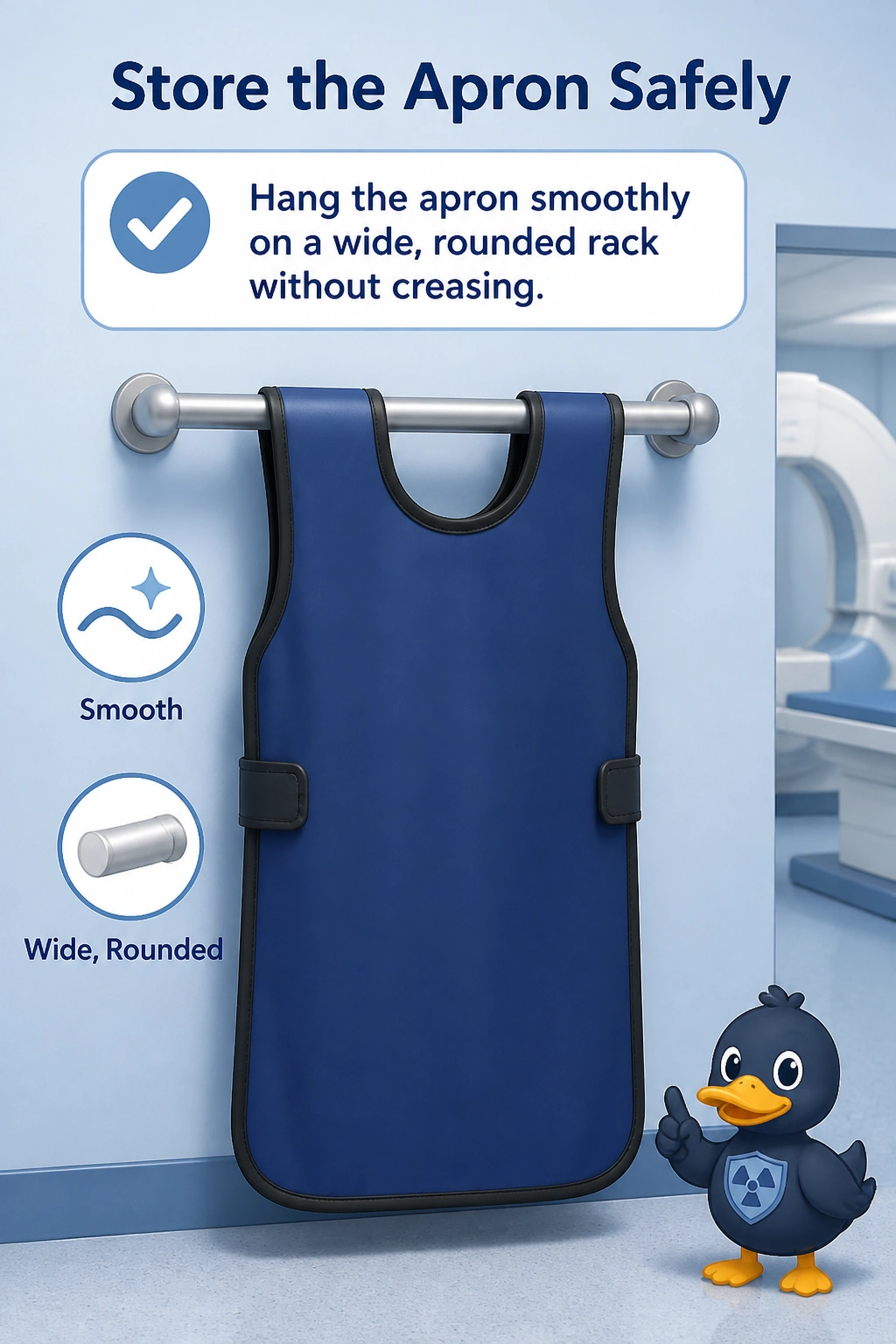
Short Explanation
Treat a lead-equivalent apron like a fragile vinyl record — once you crease it, the damage is permanent. Hanging it flat on a wide, rounded rack keeps the internal shielding sheet intact so scatter radiation cannot sneak through hidden cracks to expose you or the wearer. The trap is folding or tightly rolling it to save space, which fractures the core and silently ruins its protection.
Full Explanation
To preserve radiation-shielding integrity when an apron is still used, you should Hang the apron smoothly on a wide, rounded rack without creasing. Although routine patient shielding is no longer recommended per ADA 2024, this storage method remains correct if an apron is still used. Lead-equivalent and lead-free composite aprons contain thin, flexible metallic-impregnated layers that fracture along sharp bends, creating invisible gaps that allow scatter radiation to pass through to expose the wearer. By contrast, Fold the apron neatly into thirds and stack it inside a closed cabinet introduces sharp, repeated creases that rapidly crack the internal attenuating material. Similarly, Roll the apron tightly around a narrow rod and secure it with a strap places concentrated bending stress on the inner layers, accelerating material fatigue and splitting. Likewise, Drape the apron over a sharp wall hook by its neck-collar fastening tab concentrates the apron's heavy weight on a tiny point, stretching and tearing both the outer vinyl cover and the internal shielding core. As a caveat, small cracks are often invisible under the outer fabric cover and can only be detected radiographically or fluoroscopically. For an operational check, inspect the apron visually for surface tears and expose a quick test radiograph if creasing is suspected.
Prefer to study offline? Printable PDF study book + test engine ($7.50, unofficial). These questions stay free here.