
Just before exposing a digital bitewing radiograph, a dental assistant notices that the X-ray tubehead arm slowly drifts downward after positioning. What is the appropriate radiation-protection response?
Select an answer to reveal the explanation.
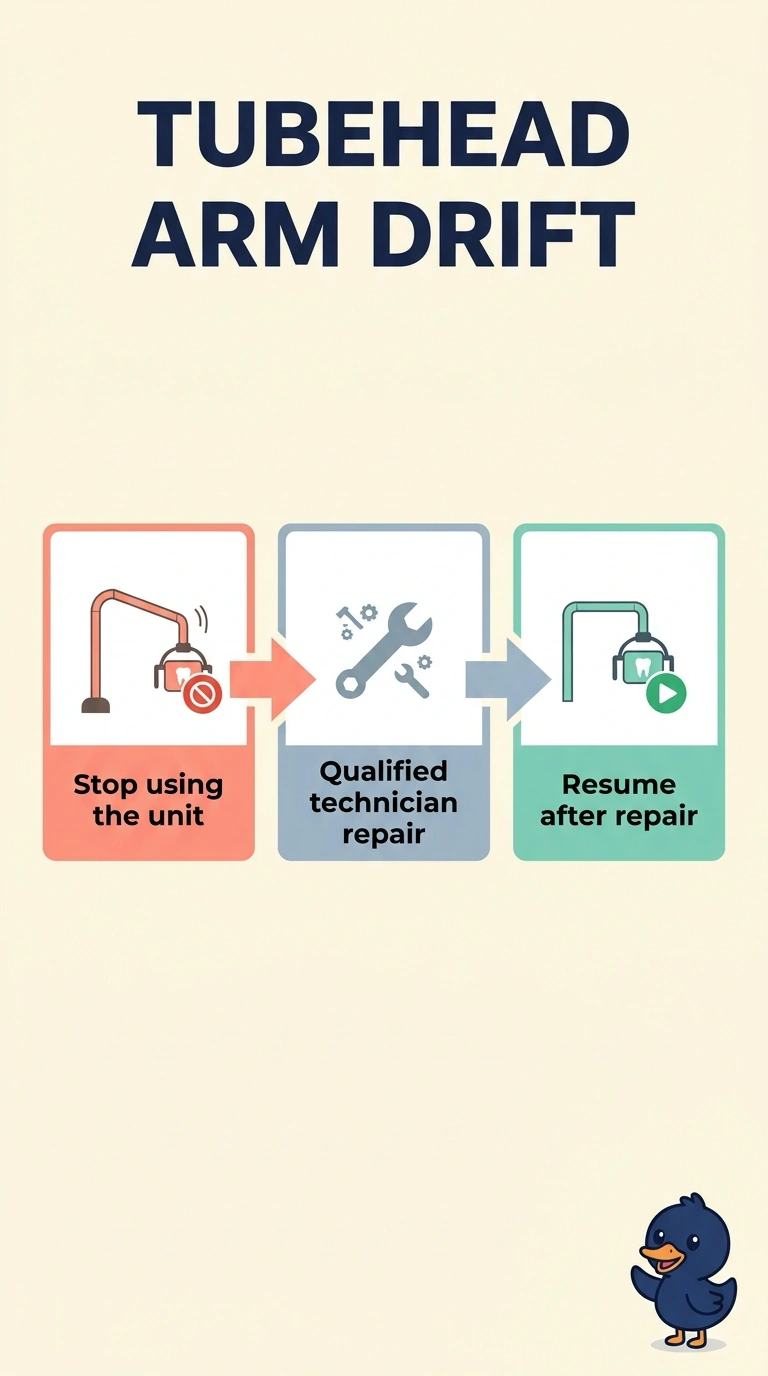
Short Explanation
Don’t turn yourself into a human tripod for a drifting X-ray arm. Stop using the unit and have a qualified technician repair it; holding the PID or bracing the tubehead puts you close to scatter and possible tubehead leakage radiation. Safety means keeping yourself out of the exposure area, not holding equipment steady.
Full Explanation
Radiation-protection standards prohibit dental staff from holding or stabilizing the X-ray tubehead or position-indicating device during an exposure: doing so places you close to scatter radiation from the patient and possible leakage radiation from the housing. Stop using the unit and have a qualified technician repair the drifting arm before further patient exposures. Holding the PID steady with a lead-gloved hand does not shield your arm, torso, or eyes from scatter near the patient and the primary beam, and it does not meet operator-distance requirements. Bracing the tubehead arm with a shoulder also puts you beside the patient, where you are exposed to secondary radiation. Taping the tubehead housing to the wall bracket is unreliable; the arm may still move during exposure, causing motion blur and unnecessary retakes. If another properly functioning X-ray unit is available in an adjacent operatory, you can move the patient there rather than delay care. As a practical check, test the extension-arm tension before positioning the patient, and tag any unit with a drifting arm out of service immediately.
Prefer to study offline? Printable PDF study book + test engine ($7.50, unofficial). These questions stay free here.