
According to the Law of Bergonie and Tribondeau, which type of human cell exhibits the highest sensitivity to ionizing radiation during diagnostic dental exposures?
Select an answer to reveal the explanation.
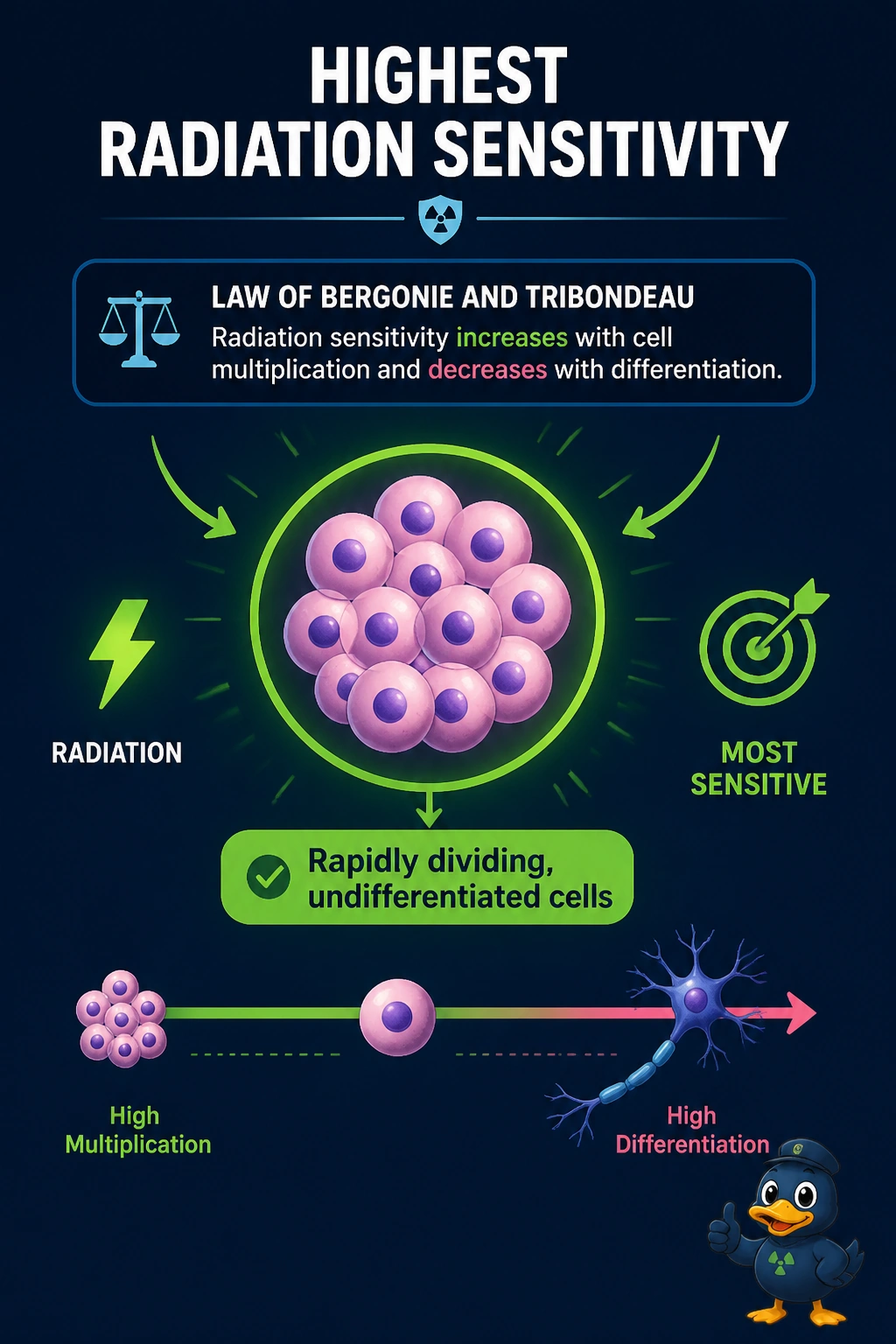
Short Explanation
Think of cells like wet cement versus cured concrete: fast-moving, unfinished cells are far easier to disrupt than settled adult tissue. That is why rapidly dividing, undifferentiated cells top your radiation-sensitivity list, while mature nerve and muscle cells are much more resistant.
Full Explanation
The Law of Bergonie and Tribondeau states that cellular radiosensitivity is directly proportional to mitotic activity and inversely proportional to the degree of cellular differentiation. Consequently, Rapidly dividing, undifferentiated cells—such as bone marrow stem cells, basal epithelial cells, and reproductive cells—are the most vulnerable to ionizing radiation damage. Choosing Mature, non-dividing skeletal muscle cells identifies tissue that is fully differentiated and mitotically inactive, making it comparatively radioresistant. Selecting Highly specialized adult brain neurons also names terminally differentiated cells that do not undergo routine cell division and thus show low radiosensitivity. Choosing Slowly dividing cortical osteocytes describes mature bone cells encased in mineralized matrix with minimal mitotic turnover compared with blood-forming marrow. As a clinical caveat, because growing children have a higher proportion of rapidly dividing tissues, pediatric patients require strict adherence to selection criteria and collimation to minimize cumulative exposure. For an operational check, review patient age and clinical indications before ordering any radiographic series so only necessary images are acquired.
Prefer to study offline? Printable PDF study book + test engine ($7.50, unofficial). These questions stay free here.