
While reviewing a digital periapical radiograph of a mandibular canine, you notice severe horizontal overlap between the canine and first premolar crowns, even though the premolar bitewing showed open contacts. How should you adjust the horizontal angulation for the canine retake?
Select an answer to reveal the explanation.
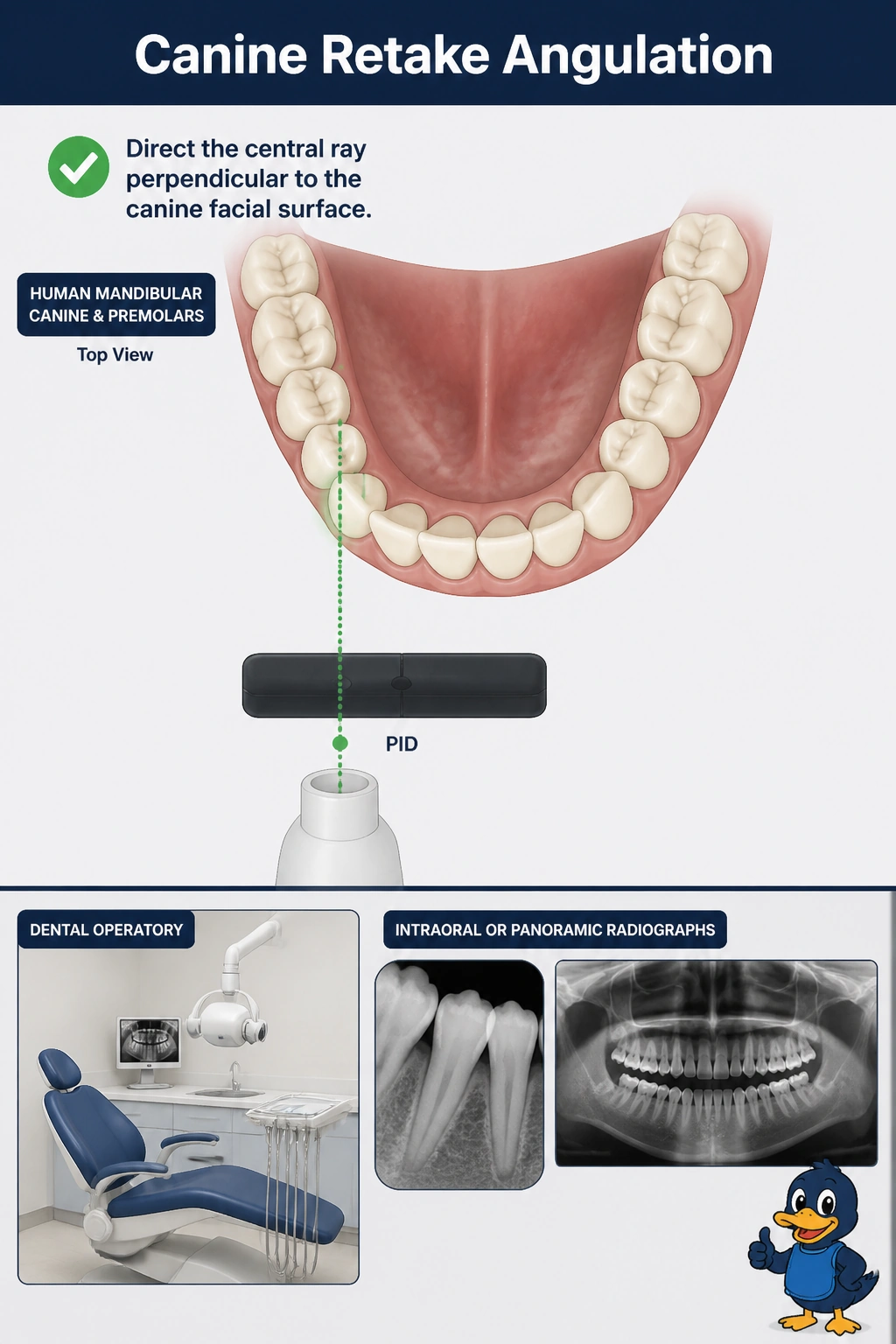
Short Explanation
Because the canine sits right at the corner of the dental arch, aiming from the side of the premolars guarantees overlap. To open the contacts, you need to swing the tubehead around so the beam hits the canine's facial surface squarely.
Full Explanation
To eliminate horizontal overlap on a canine periapical retake, you should Direct the central ray perpendicular to the canine facial surface. Because the canine sits at the curvature between the anterior and posterior segments of the arch, its interproximal contacts angle differently than the premolars, so aiming perpendicular to the canine's facial surface and the receptor plane directs the beam straight through the embrasures. Choosing to Increase the negative vertical angulation by 15 degrees changes only the vertical tilt of the PID, which alters tooth length rather than fixing horizontal contact overlap. Choosing to Shift the PID posteriorly to align with the molar contacts directs the beam even more obliquely across the canine-premolar contact and worsens the overlap. Choosing to Rotate the sensor horizontally into a bitewing position prevents capturing the long canine root apex and does not correct the horizontal beam angle. One caveat is that rigid wired sensors can be difficult to seat at the arch curve without touching the lingual mucosa. As an operational check, sight down the open end of the PID from above the patient to confirm the beam aligns perpendicular to the receptor and through the canine-premolar contact before exposing.
Prefer to study offline? Printable PDF study book + test engine ($7.50, unofficial). These questions stay free here.