
When positioning an adult patient in a digital panoramic unit using the laser alignment guides, how should the dental assistant orient the patient's Frankfort horizontal plane before starting the exposure?
Select an answer to reveal the explanation.
Short Explanation
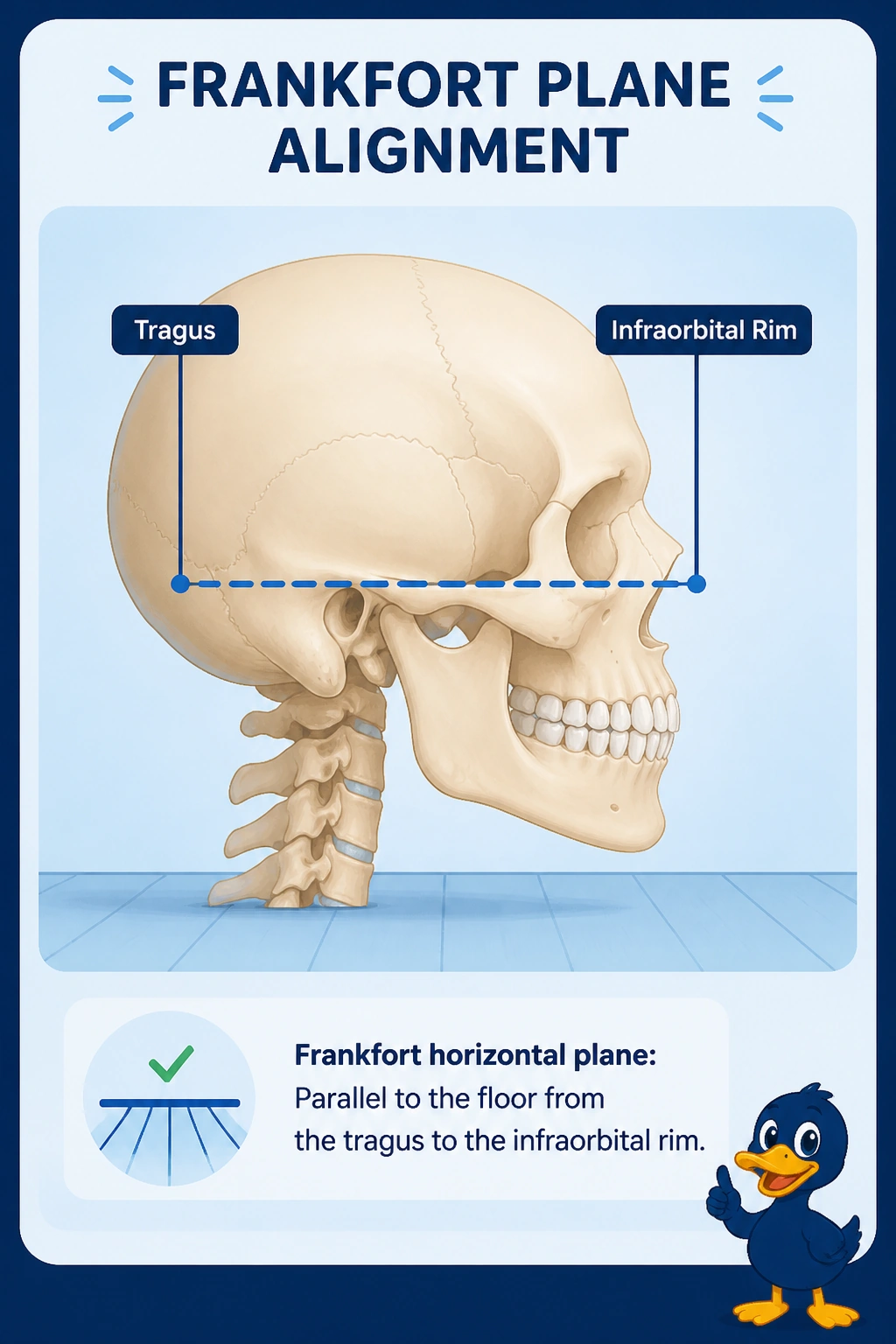
Keep the Frankfort horizontal plane level, like a horizon, so you position the dental arches cleanly within the focal trough. Avoid tilting the patient's head upward or downward, which can bend the occlusal plane and blur the anterior teeth.
Full Explanation
For a diagnostically accurate digital panoramic image, orient the Frankfort horizontal plane parallel to the floor, from the tragus to the infraorbital rim. Keeping this anatomical plane level positions the maxillary and mandibular arches symmetrically within the curved focal trough, producing a gentle smile curve of the occlusal plane and sharp visualization of the condyles and incisors. Tilting the plane upward fifteen degrees from the ear canal to the nasal tip tips the chin too high, flattening the occlusal plane and projecting the hard palate over the maxillary roots. Tilting it downward fifteen degrees toward the patient's chest tips the chin too low, creating an exaggerated V-shaped smile and cutting off the condyles. Perpendicular to the floor through the patient's midline describes the midsagittal plane rather than the horizontal reference line. As an exam caveat, some manufacturers use the ala-tragus line instead, so check the specific laser guide instructions. As a practical check, step back before leaving the room and verify that the horizontal laser beam aligns with both the tragus and the lower orbital rim.
Prefer to study offline? Printable PDF study book + test engine ($7.50, unofficial). These questions stay free here.