
After scanning a photostimulable phosphor (PSP) plate from a bitewing series, you see a very faint, washed-out image showing the plate's internal backing marker superimposed over the teeth. What most likely caused this error?
Select an answer to reveal the explanation.
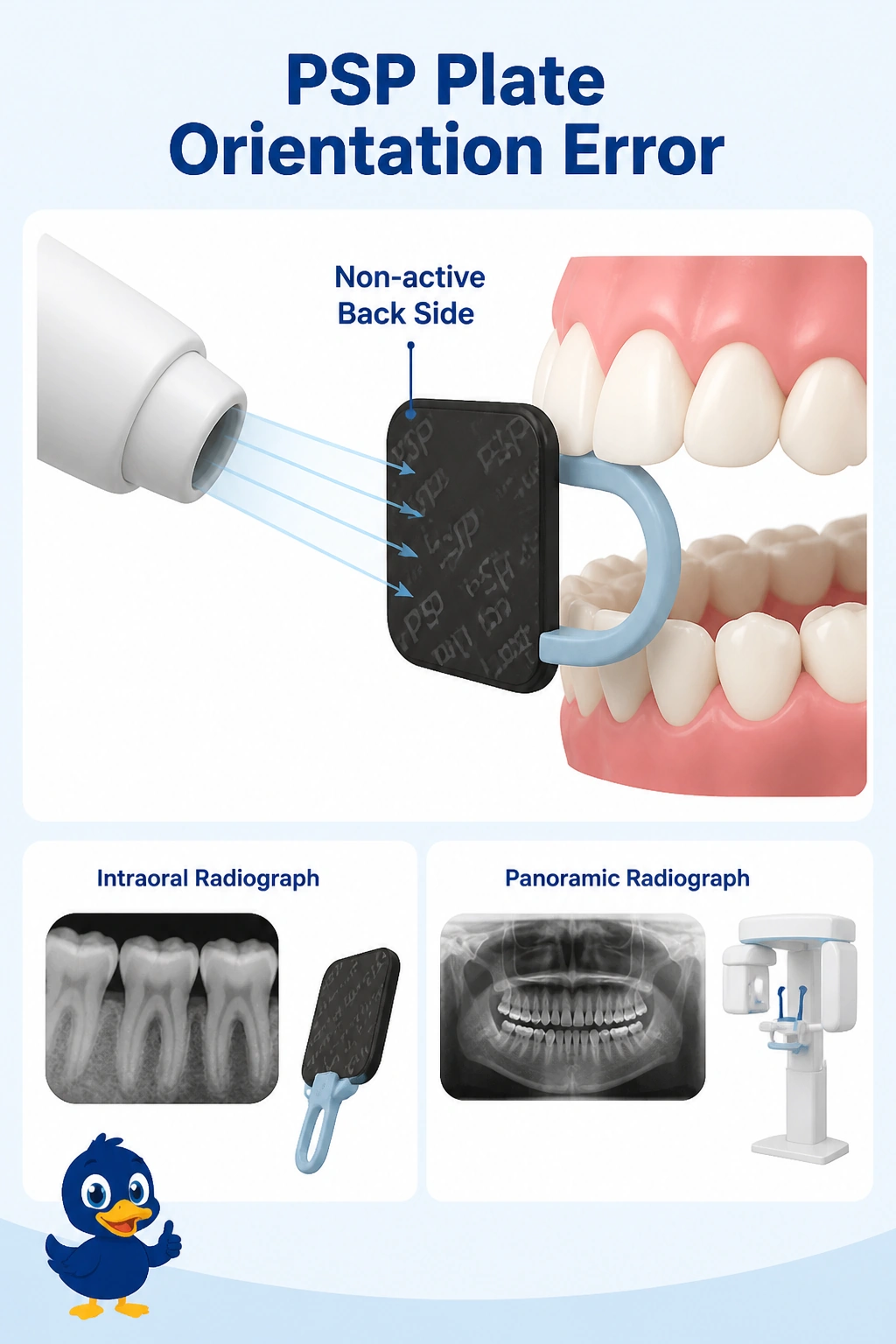
Short Explanation
Just like putting a solar panel face-down, a backward PSP plate blocks X-ray energy before it reaches the phosphor layer. Do not mistake that faint image with a backing marker for simple underexposure, because your plate was simply facing the wrong direction.
Full Explanation
This artifact occurs when Placing the non-active back side of the PSP plate toward the X-ray beam. Because the plate's rigid backing layer and metal or magnetic retrieval marker sit between the tubehead and the active phosphor coating, they attenuate the primary beam and imprint the backing marker onto a pale, washed-out image. Exposing the plate to bright operatory light before scanning partially erases stored energy and lowers overall density, but it does not imprint the plate's internal backing marker. Using a pediatric exposure preset on a large adult patient causes quantum mottle and a grainy, underexposed appearance across the trabecular bone without a backing-marker shadow. Scanning the PSP plate twice without running the erasure light produces a double-exposure artifact with two different sets of teeth superimposed rather than a single faint image with a backing pattern. One caveat is that some barrier envelopes have clear windows on only one side to help confirm orientation before sealing. As an operational check, verify that the printed or marked non-active side of the PSP plate faces away from the teeth and toward the tubehead-opposite side of the barrier envelope before seating it in the mouth.
Prefer to study offline? Printable PDF study book + test engine ($7.50, unofficial). These questions stay free here.