
While reviewing several consecutive digital bitewing radiographs scanned from different photostimulable phosphor (PSP) plates, you notice an identical, thin straight white line running across every image in the exact direction the plates travel through the scanner. What is the most likely cause?
Select an answer to reveal the explanation.
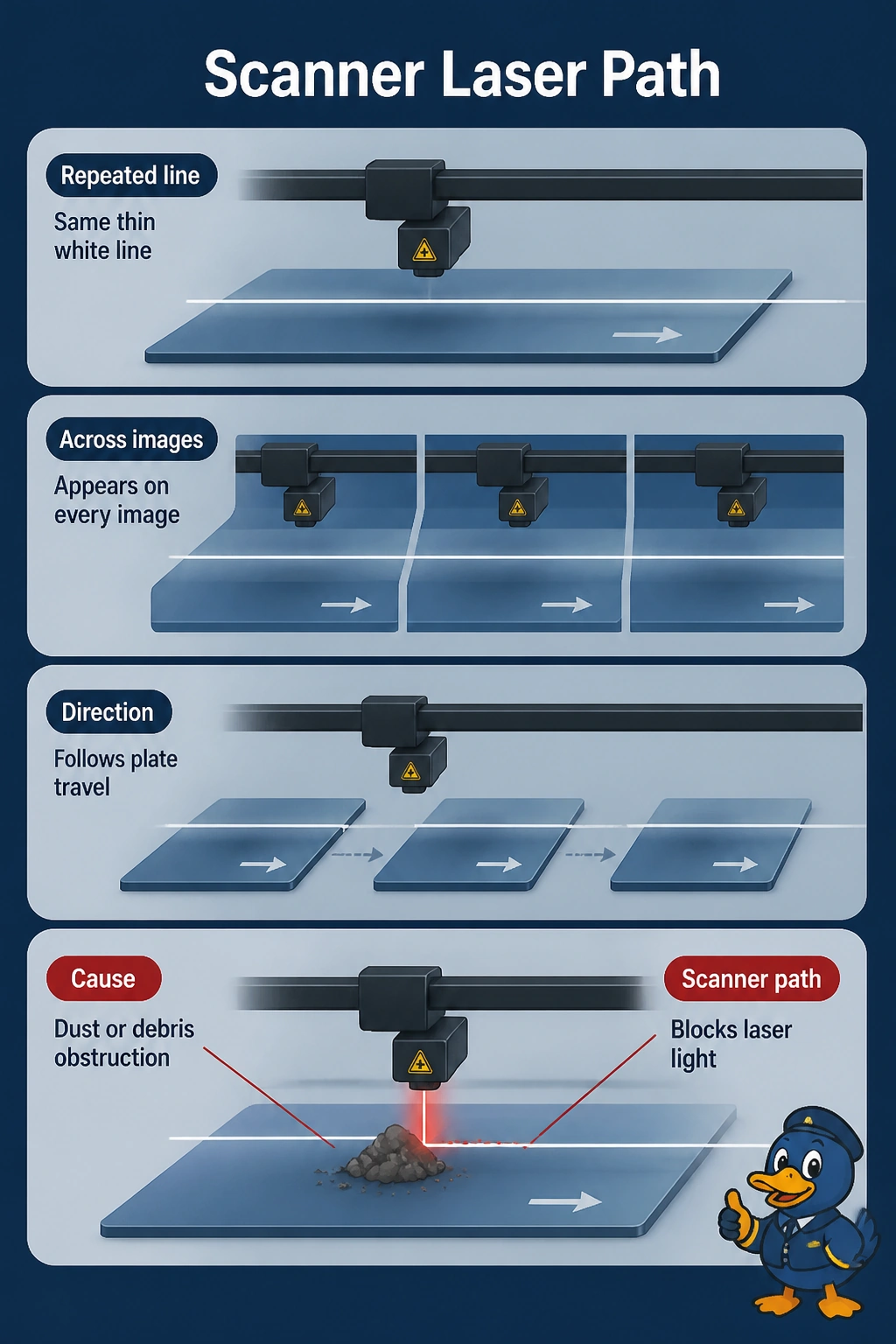
Short Explanation
When you see the same straight white line on scans from different plates, the problem is likely inside your scanner, not on the plates. Dust blocking the laser path leaves an identical streak across scans, unlike damage to one plate.
Full Explanation
Dust or debris obstructing the scanner’s laser light path blocks the reading laser at a fixed point across the transport mechanism, producing an identical, straight radiopaque line along the travel direction on consecutive scans from different plates. A bent photostimulable phosphor plate placed into a narrow arch causes localized stretching, blurring, or crescent-shaped artifacts on that bent plate rather than an identical straight line across multiple plates. Incomplete erasure of the previous patient’s exposure produces a double-exposure image with superimposed teeth from an earlier radiograph, not a thin, uniform white streak. A deep physical scratch etched into the phosphor coating creates a permanent radiopaque line on that specific damaged plate alone, not across different plates scanned consecutively. One caveat is that debris on the scanner rollers can also leave repetitive marks, so do not assume every repeated artifact comes from the optical path. As a practical check, inspect the optical window and transport rollers periodically, and follow the manufacturer’s cleaning schedule using approved optical wipes or cleaning plates before scanning the next patient’s series.
Prefer to study offline? Printable PDF study book + test engine ($7.50, unofficial). These questions stay free here.