
While reviewing a digital periapical radiograph of a mandibular second premolar, you see the root apex and surrounding periapical bone clearly, but the occlusal surface and cusp tips are cut off at the top border of the image. What most likely caused this error, and how should you correct it?
Select an answer to reveal the explanation.
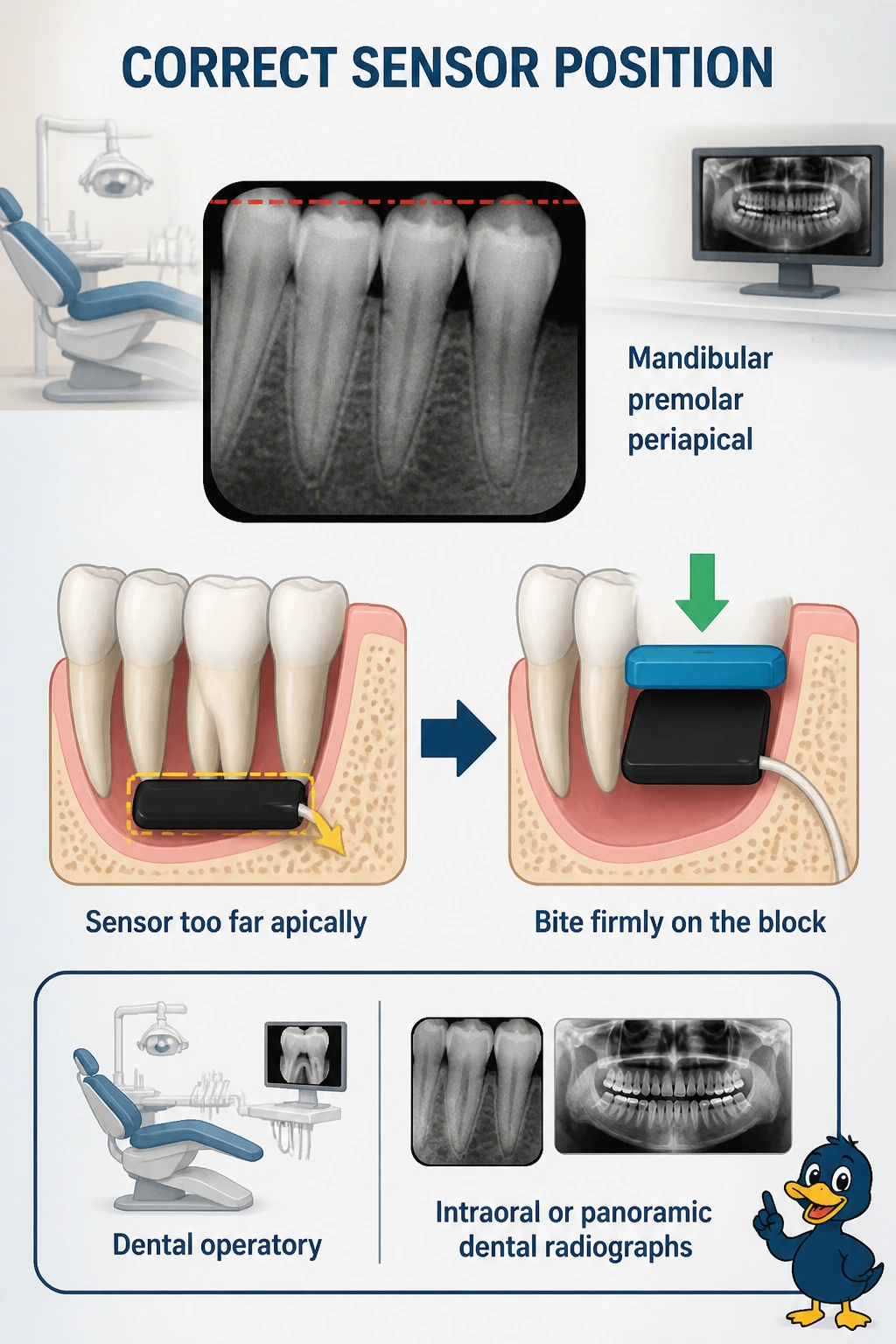
Short Explanation
If the root tip looks great while the chewing surface vanishes off the top edge, your sensor slid too deep toward the jawbone. Having the patient bite all the way down onto the bite block pulls the crown back into frame. The trap is blaming vertical angulation or seating the sensor even deeper, which either distorts root length or clips even more of the crown.
Full Explanation
When a mandibular periapical image shows the apex clearly but cuts off the occlusal crown, The sensor was seated too far apically; ensure the patient bites firmly on the block. If the patient stops biting partway or the bite block drifts away from the occlusal surface, the active area of the sensor sits too low in the mandibular sulcus, leaving the coronal portion of the tooth outside the captured frame. By contrast, The vertical angulation was too steep; decrease the downward angulation of the PID addresses foreshortening of roots rather than a missing occlusal border. Similarly, The horizontal angulation was misaligned; shift the PID mesially toward the canine corrects interproximal contact overlap, not vertical crown coverage. Finally, The sensor was placed too far coronally; seat the receptor deeper into the floor of the mouth describes the fix for clipped root apices, which would worsen a clipped crown error. As a caveat, patients with sore teeth or a shallow floor of the mouth may hesitate to close completely, causing the holder to lift. For an operational check, inspect the bite block visually before stepping away to confirm the cusp tips rest flush against the biting surface.
Prefer to study offline? Printable PDF study book + test engine ($7.50, unofficial). These questions stay free here.