
After exposing a digital periapical radiograph on a large adult patient using pediatric exposure settings, you notice the image appears washed out with a grainy, salt-and-pepper appearance across the trabecular bone. What caused this digital image artifact?
Select an answer to reveal the explanation.
Short Explanation
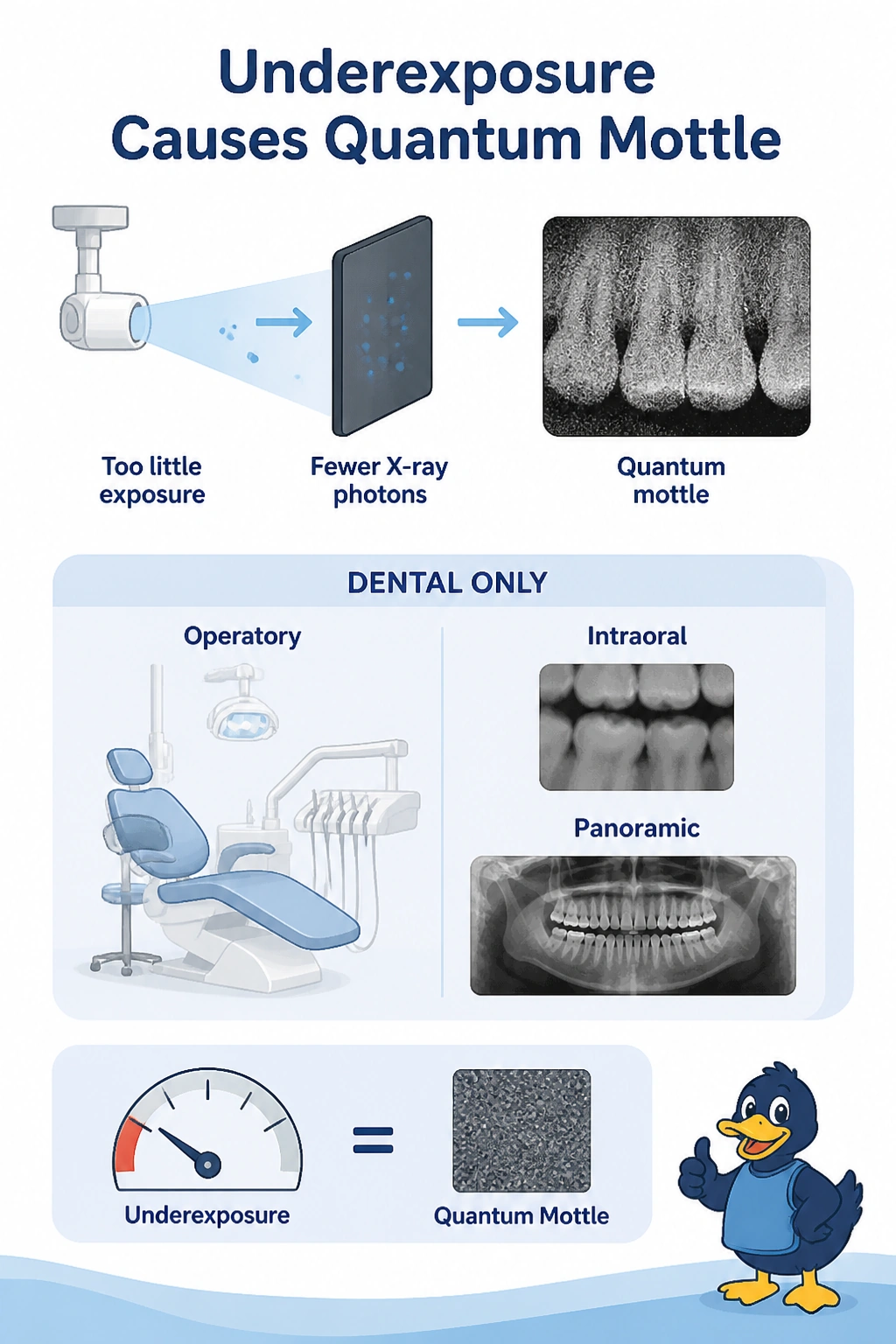
If a digital radiograph looks washed out and grainy like static on an old TV, your sensor was starved for X-ray photons. The trap is blaming motion or scatter fog, which blur outlines or darken contrast rather than creating a salt-and-pepper texture.
Full Explanation
Underexposure resulting in quantum mottle occurs when too few X-ray photons reach the digital sensor—such as using pediatric settings on a large adult—producing statistical fluctuations in photon detection that appear as a grainy, noisy, salt-and-pepper image. Excessive kilovoltage peak causing scatter fog raises overall beam penetration and Compton scatter, which reduces image contrast into shades of gray rather than creating photon-starved graininess. Patient movement during the exposure interval produces uniform blurring and double-edged outlines across tooth structures rather than a speckled noise pattern. Improper horizontal angulation of the tubehead causes overlapping of adjacent proximal tooth surfaces without altering photon density across the receptor. As a caveat, software brightness and contrast adjustments cannot restore diagnostic detail lost to severe underexposure, because the underlying signal-to-noise ratio is too low. Perform an operational check by confirming that patient size selection and exposure time match the adult anatomical region before repeating the radiograph.
Prefer to study offline? Printable PDF study book + test engine ($7.50, unofficial). These questions stay free here.