
While reviewing a digital periapical radiograph of a mandibular first molar with a deep restoration and a history of pulpitis, a clinician observes a localized, well-defined radiopaque mass of dense bone surrounding the distal root apex along with a widened periodontal ligament space. Which condition does this finding most likely represent?
Select an answer to reveal the explanation.
Short Explanation
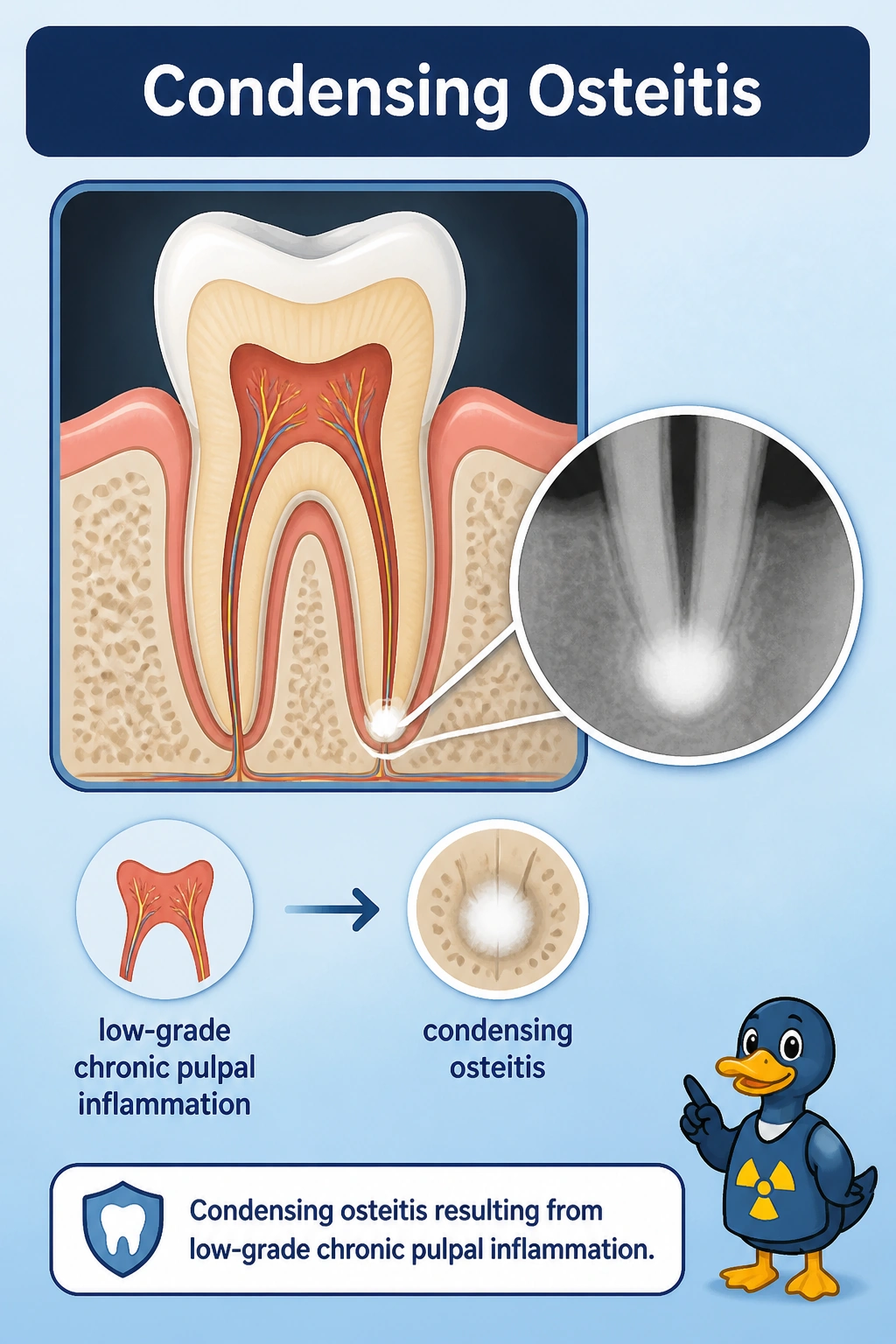
When a tooth's nerve simmers with low-grade inflammation, the surrounding bone sometimes builds a dense, protective wall around the root tip. The trap is calling every white patch at a molar apex a harmless dense bone island. Because you see a deep restoration and a widened periodontal ligament space, condensing osteitis is the likely culprit.
Full Explanation
Condensing osteitis resulting from low-grade chronic pulpal inflammation is a reactive proliferation of dense periapical bone triggered by persistent irritation from a carious or deeply restored tooth. It characteristically appears around the apex of a mandibular molar alongside a widened periodontal ligament space or an unresolving pulpitis. Idiopathic osteosclerosis unrelated to pulpal inflammation presents as a localized radiopacity in an otherwise healthy jaw, typically attached to a vital tooth with a completely normal periodontal ligament space and no deep restoration. A complex odontoma formed from calcified enamel and dentin appears as an amorphous mass of tooth-like density surrounded by a distinct radiolucent rim, rather than reactive bone sclerosis continuous with the root apex. A salivary stone superimposed over the mandibular molar apex represents a sialolith in the floor of the mouth that shifts position on occlusal or parallax views and does not cause a widened periodontal ligament space. As a caveat, periapical bone sclerosis can persist as a bony scar even after successful endodontic therapy. Always perform pulp vitality testing and review the tooth's restorative history before diagnosing.
Prefer to study offline? Printable PDF study book + test engine ($7.50, unofficial). These questions stay free here.