
An adult patient with a narrow, V-shaped maxillary arch experiences sharp discomfort when you try to place a standard Size 2 digital sensor for central incisor periapical images. Which receptor size should you switch to for these anterior exposures?
Select an answer to reveal the explanation.
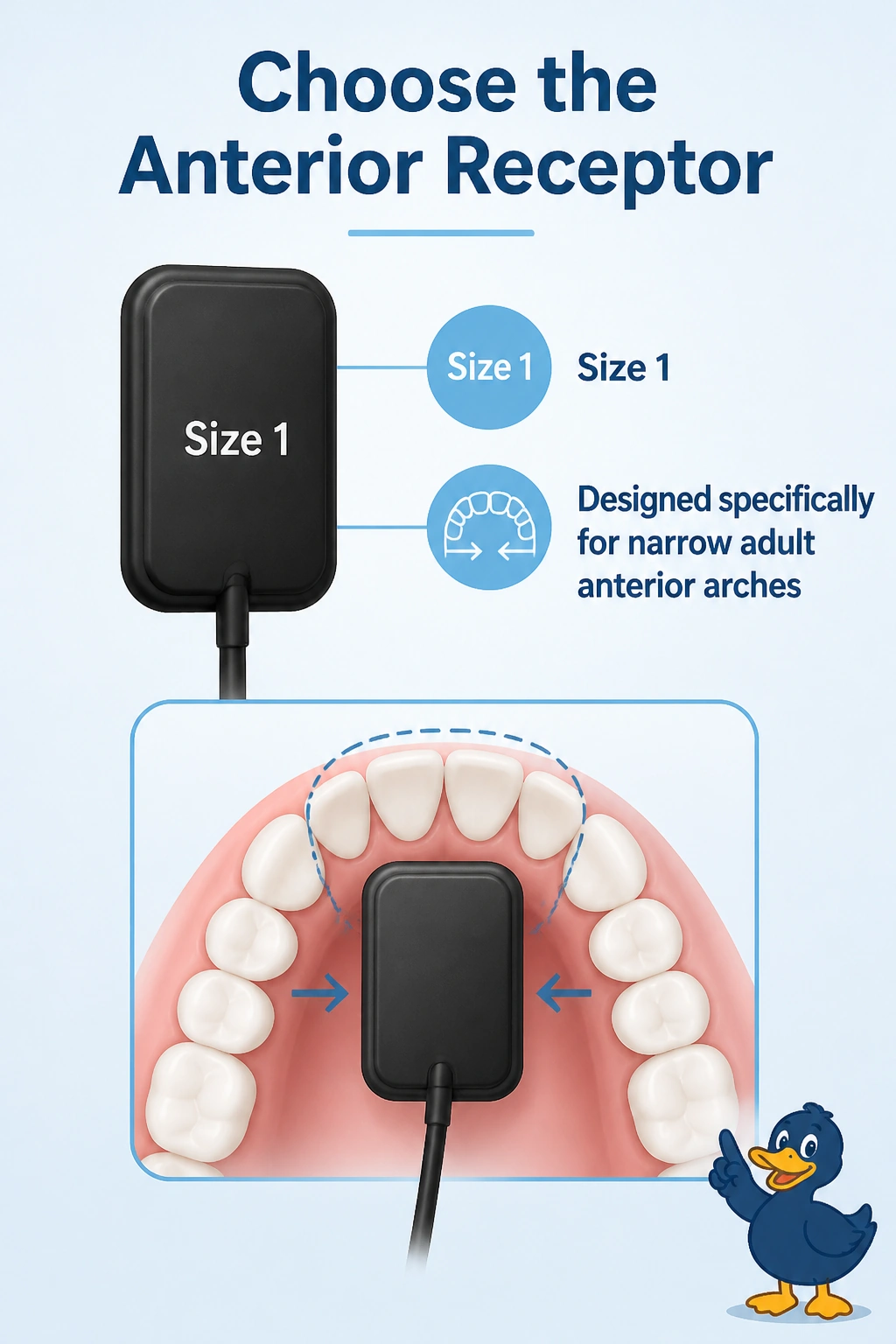
Short Explanation
Think of intraoral sensors like shoes—forcing a wide fit into a narrow space only causes pain and crooked placement. Switching to a Size 1 receptor gives you a narrower profile that seats comfortably in an adult anterior arch without sacrificing root length. The common trap is grabbing a pediatric Size 0 sensor, which often cuts off tall adult incisor apices.
Full Explanation
A Size 1 receptor designed specifically for narrow adult anterior arches solves the width problem while preserving the vertical height needed to capture full maxillary incisor roots and periapical bone. Because adult anterior teeth sit in a tighter curve than posterior teeth, a narrower receptor seats closer to the palate and aligns parallel to the long axis of the tooth with less patient discomfort. A Size 0 receptor intended for primary dentition is narrow enough to fit, yet its shorter vertical dimension frequently clips the root apices of adult canines and central incisors. A Size 3 receptor used to capture premolars and molars is an extra-long bitewing format that is far too wide for the anterior curvature and unsuitable for periapical root coverage. A Size 4 receptor used for cross-sectional arch views is an occlusal receptor designed to span the entire dental arch rather than isolate individual anterior teeth. Caveat: even with the narrower receptor, shallow palates or prominent frenum attachments may still require cotton-roll stabilization or a slight shift toward the midline to keep the sensor parallel. Operational check: before exiting the operatory, verify that the entire crown, incisal edge, and surrounding periapical bone beyond the apex are visible on the monitor.
Prefer to study offline? Printable PDF study book + test engine ($7.50, unofficial). These questions stay free here.