
A patient with large, bony bilateral mandibular tori needs a digital periapical radiograph of the mandibular premolar region. Pressing the rigid sensor directly against the lingual mucosa over the torus causes sharp pain and prevents proper seating. How should you modify receptor placement?
Select an answer to reveal the explanation.
Short Explanation
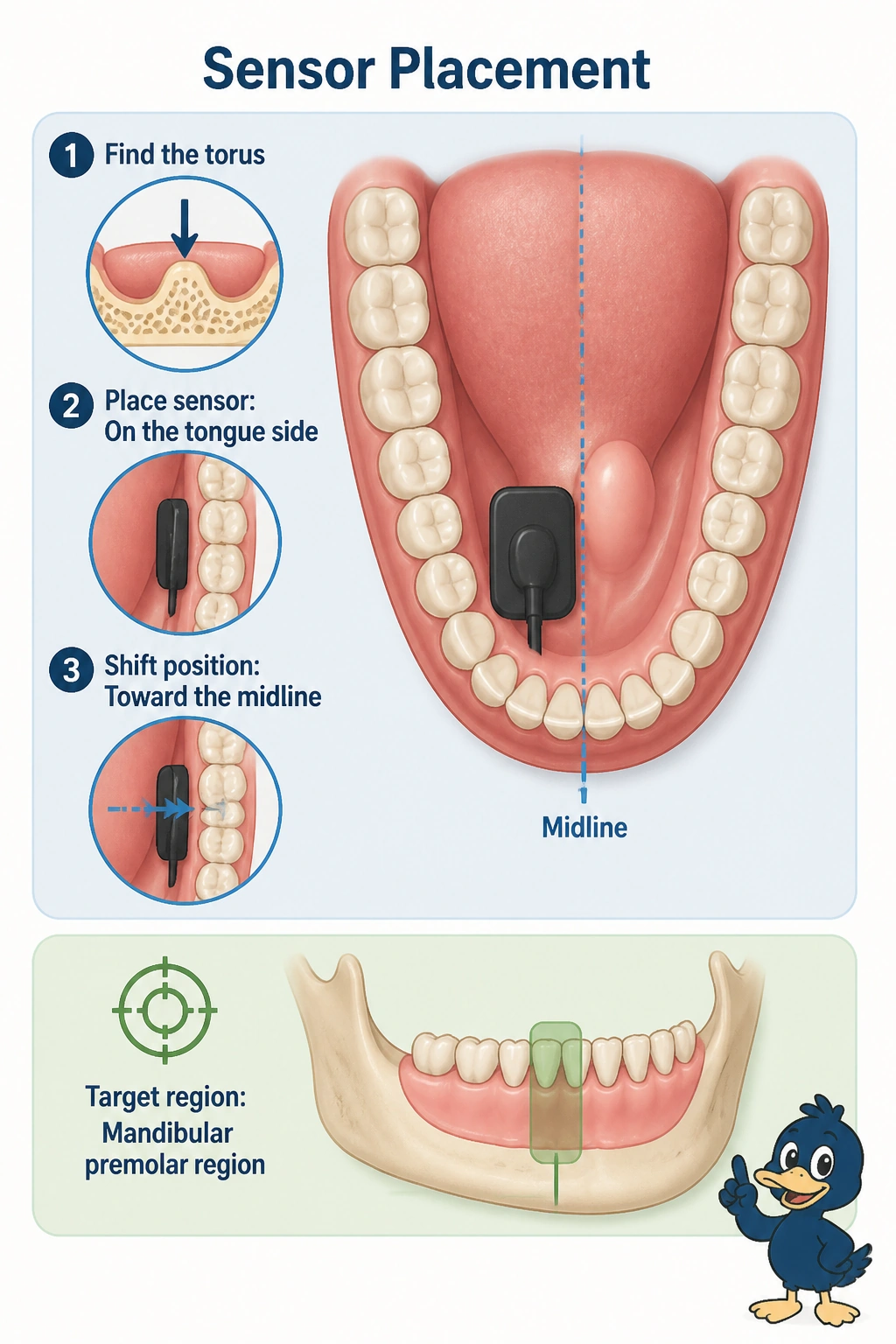
When a patient has big bony tori on the lower jaw, jamming the rigid sensor onto the thin gum tissue over the bump hurts and tilts your shot. The trap is forcing the receptor closer to the teeth when you actually need to tuck it past the torus toward the tongue. Slide it medially and your patient stays comfortable.
Full Explanation
In patients with prominent lingual mandibular tori, the overlying mucosa is thin and easily traumatized by a rigid digital sensor, so you should Position the sensor on the tongue side of the torus toward the midline. Placing the receptor medial to the bony prominence keeps it upright in the deeper floor of the mouth, prevents painful impingement against the torus, and preserves parallel alignment with the premolar long axes when using a long PID. Choosing to Switch to a horizontal bitewing tab and reduce the vertical angulation will not capture the premolar root apices and periapical bone needed for a periapical image. Attempting to Tilt the sensor horizontally flat along the floor of the mouth creates severe vertical foreshortening or misses the roots altogether. Telling the assistant to Ask the patient to press the sensor firmly against the torus with a finger causes acute pain, risks bending or slipping, and exposes the patient's finger unnecessarily to the primary beam. As a caveat, moving the sensor slightly toward the midline increases object-to-receptor distance, so maintaining a longer PID in the paralleling technique helps minimize magnification. For an operational check, ask the patient to relax the tongue slightly while seating the holder medial to the torus and confirm comfort before stepping out to expose.
Prefer to study offline? Printable PDF study book + test engine ($7.50, unofficial). These questions stay free here.