
A patient begins to gag as soon as a posterior periapical sensor holder touches the posterior palate during a full-mouth series. Which chairside approach best helps the patient tolerate posterior receptor placement without abandoning the diagnostic image?
Select an answer to reveal the explanation.
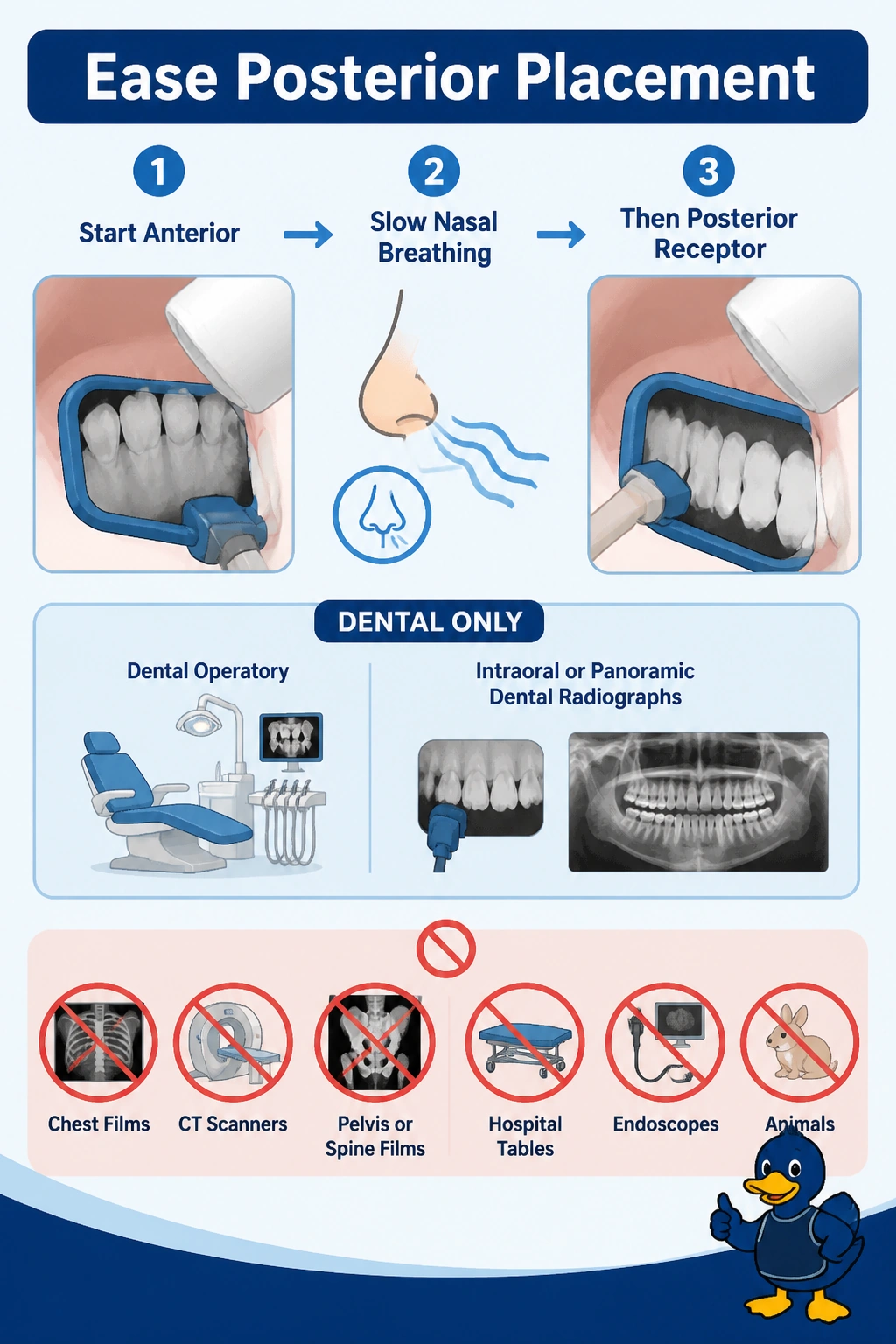
Short Explanation
You can ease your patient into posterior placement by starting with anterior views and coaching slow nasal breathing, which helps reduce anxiety and improve tolerance. Gradual desensitization works better than increasing exposure time, asking your patient to hold their breath, or beginning with a mandibular molar receptor.
Full Explanation
The gag reflex can be triggered by tactile stimulation of the soft palate and posterior tongue, as well as by patient anxiety, so desensitizing and distracting the patient improves tolerance during posterior digital imaging. Start with anterior views and coach slow nasal breathing during placement: anterior projections are easier to tolerate, build confidence, and steady nasal breathing relaxes the soft palate. Increasing the exposure time so the patient only has to hold the sensor once causes overexposure and raises the chance of motion blur while the patient struggles not to gag. Asking the patient to hold their breath and tilt their head far backward can heighten panic and cause saliva to pool toward the oropharynx, worsening the gag trigger. Placing the mandibular molar receptor before attempting anterior views confronts the most sensitive trigger zone before rapport and confidence are established. As an exam caveat, once a posterior sensor is positioned, avoid sliding it back and forth across the palate; place it decisively and remove it promptly after exposure. As a practical check, have the aiming ring and PID pre-positioned nearby before inserting the sensor so exposure occurs within seconds.
Prefer to study offline? Printable PDF study book + test engine ($7.50, unofficial). These questions stay free here.