
While reviewing a digital panoramic image, you notice a large, blurred radiopaque shadow of a hoop shape projecting high on the opposite side of the jaw from the patient's left side. What is the most likely cause of this artifact?
Select an answer to reveal the explanation.
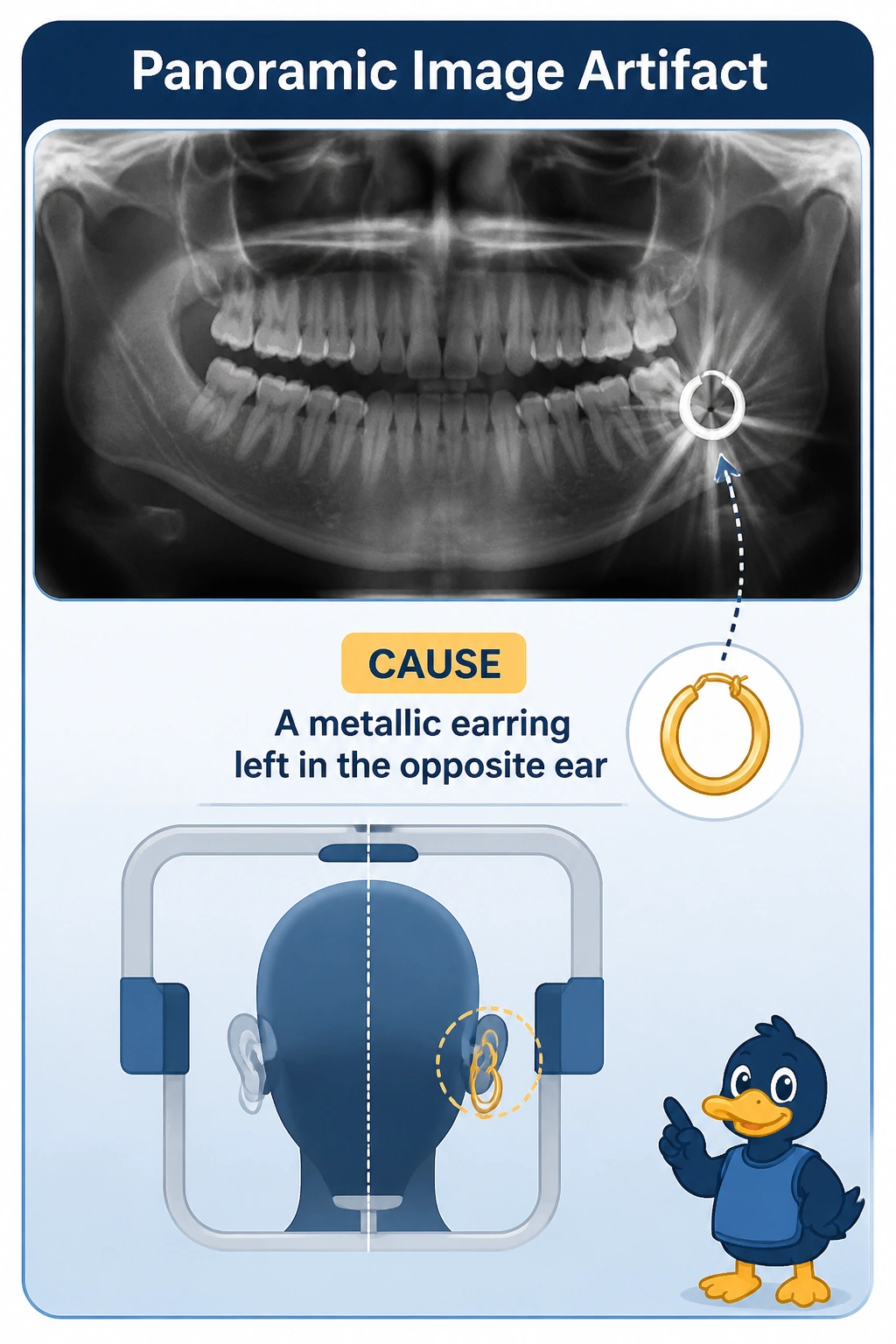
Short Explanation
Panoramic machines rotate around your head, so dense metal on one side can cast a blurry, enlarged shadow on the opposite side. A magnified ghost ring points to metallic jewelry, such as an earring left in the opposite ear, rather than a tongue or chin positioning error.
Full Explanation
In rotational panoramic imaging, dense objects between the X-ray source and the rotation center may be penetrated twice as the tubehead travels around you. A metallic earring left in the opposite ear creates a classic ghost image that appears higher, larger, and more blurred on the contralateral side because the earring lies outside the focal trough during part of the sweep. If your tongue is not pressed to the palate, the image shows a dark radiolucent band across the maxillary root apices, not a discrete radiopaque ring. A chin tipped too far downward creates an exaggerated smile line and may superimpose the hyoid bone over the anterior mandible, rather than producing a contralateral hoop shadow. Being positioned too far forward in the bite makes the anterior teeth appear narrow and blurred and can cause premolar overlap, but does not generate a metallic ghost artifact. As an exam caveat, remember that a ghost image is typically magnified, blurred, and projected higher on the opposite side from the object. For a practical check, inspect both ears for earrings before positioning the patient and making the exposure.
Prefer to study offline? Printable PDF study book + test engine ($7.50, unofficial). These questions stay free here.