
After a steam autoclave cycle finishes, a dental assistant removes a pouch of reusable digital sensor holders and sees that the external chemical indicator stripe on the outside of the pouch has changed color. What does this external color change confirm?
Select an answer to reveal the explanation.
Short Explanation
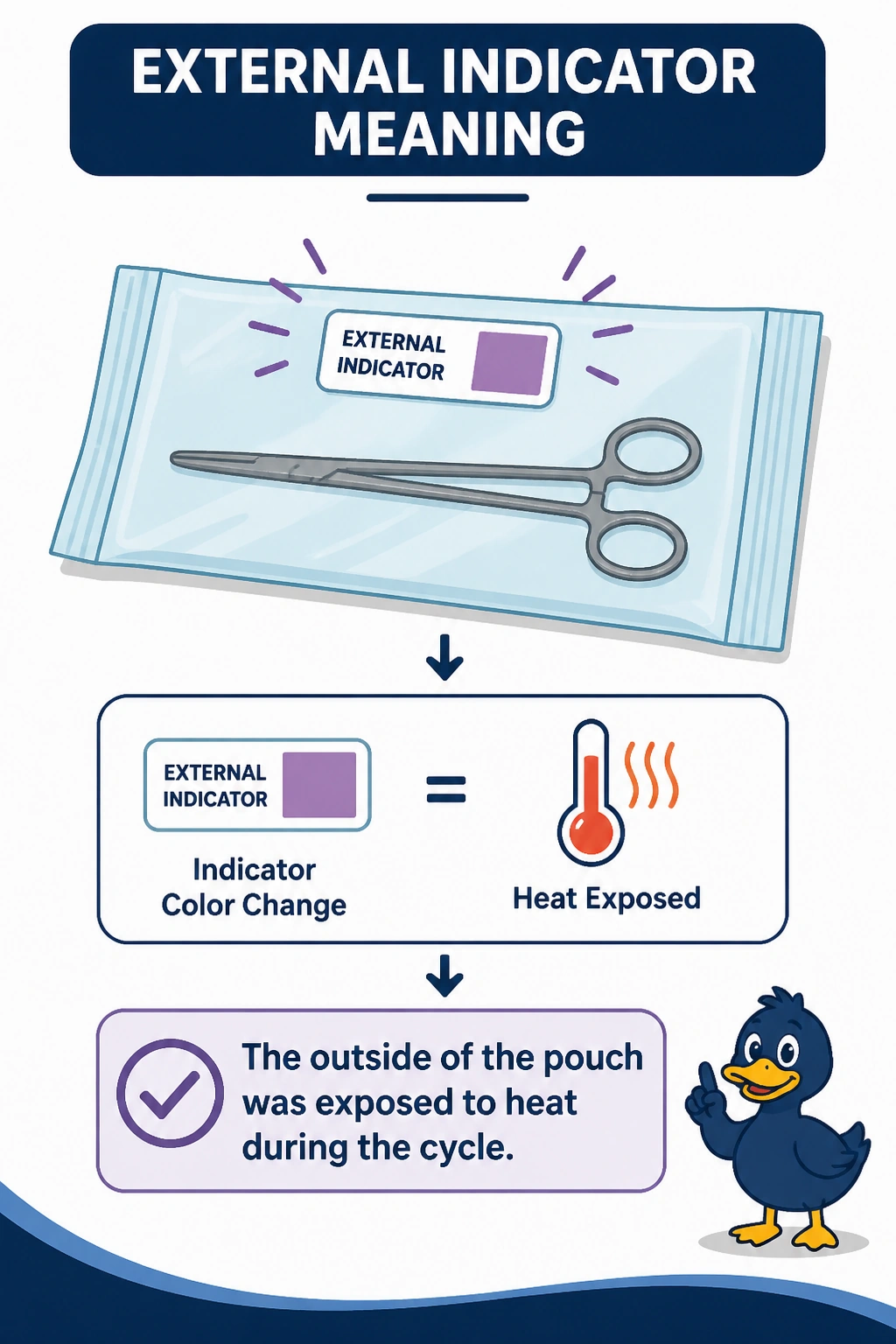
An external indicator stripe is like a tan line—it proves your pouch was out in the heat, not that the job inside is finished. It only confirms surface heat exposure, whereas the trap is treating that outside color change as proof of true sterility inside the package.
Full Explanation
According to CDC infection control guidelines for dental healthcare settings, external chemical indicators (such as heat-sensitive ink stripes or autoclave tape) are process indicators used to separate processed packages from unprocessed ones. Their color change confirms one specific fact: The outside of the pouch was exposed to heat during the cycle. Concluding that The holders inside the pouch are completely sterile and ready for use is incorrect because an external stripe cannot verify conditions inside the sealed barrier. Assuming that The autoclave achieved full steam penetration inside the sealed pouch confuses an external process indicator with an internal chemical indicator placed inside each package. Claiming that All bacterial endospores on the sensor holders have been destroyed overstates what any chemical indicator can demonstrate, because only biological monitoring with spore strips directly verifies sterilization efficacy. As a caveat, an external color change still occurs even if a pouch is overloaded or improperly sealed, so it never replaces internal or biological checks. For a concrete operational check, verify the mechanical cycle printout, confirm the internal chemical indicator changed inside the pouch before assembling the holder, and review the weekly biological spore test log.
Prefer to study offline? Printable PDF study book + test engine ($7.50, unofficial). These questions stay free here.