
Midway through exposing a digital bitewing series, a dental assistant needs to click the software capture button on an unbarriered operatory computer mouse and keyboard. Which action prevents cross-contamination at the workstation?
Select an answer to reveal the explanation.
Short Explanation
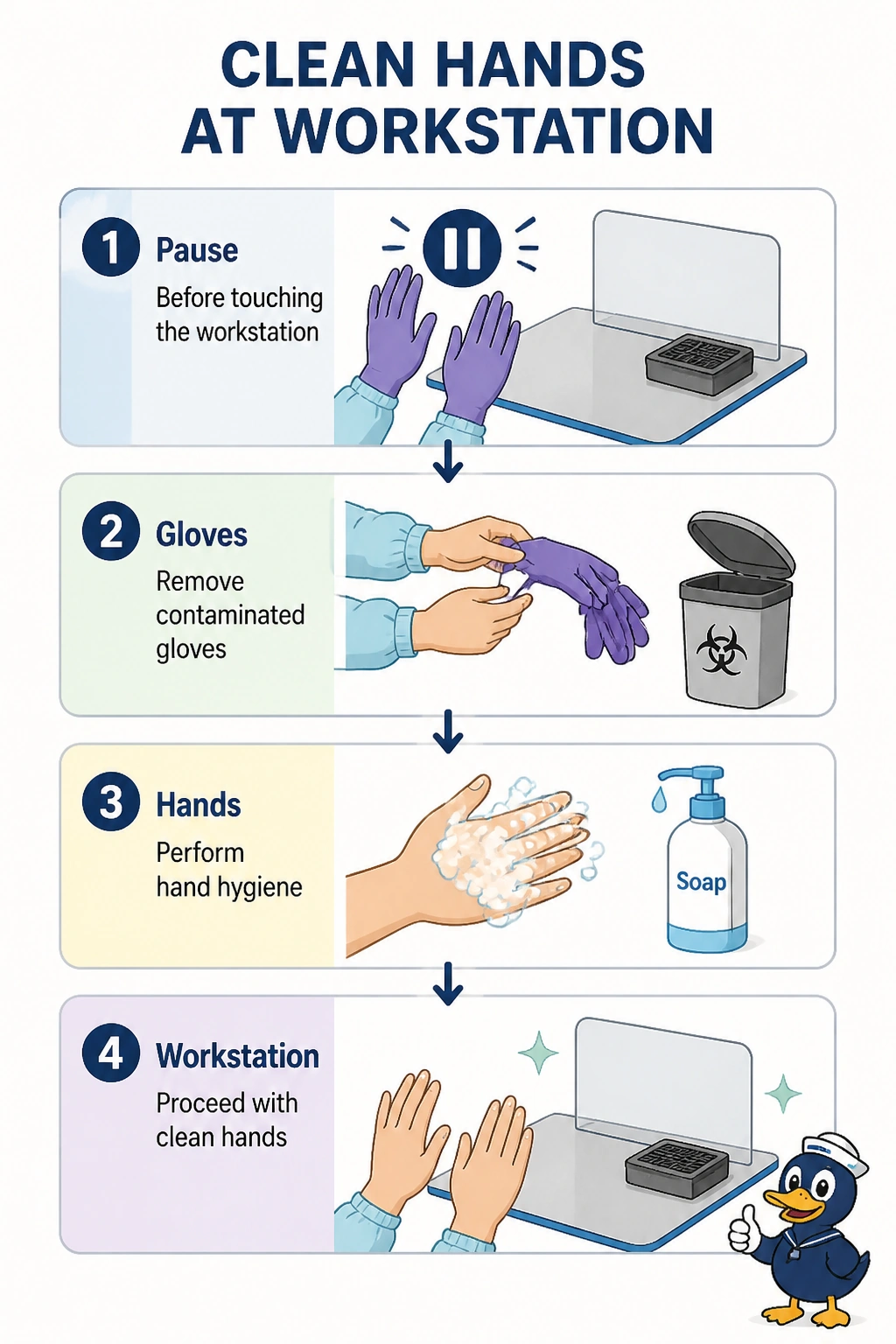
You’re right to protect the unbarriered workstation: contaminated gloves can transfer microorganisms to the mouse and keyboard. Remove your gloves and perform hand hygiene before touching the controls; a dry paper towel, gloved knuckle, or water rinse does not make contaminated gloves safe to use.
Full Explanation
Under CDC infection control guidelines for dental settings, computer keyboards and mice in the operatory are clinical contact surfaces. They should be covered with disposable, impervious barriers changed between patients or touched only with clean, uncontaminated hands. With no barrier in place, removing contaminated gloves and performing hand hygiene before using the mouse prevents transferring oral microorganisms from the patient to the workstation. Wiping the mouse with a dry paper towel after clicking fails because dry wiping neither reliably removes organic bioburden nor disinfects pathogens on the surface. Touching the mouse only with the back of a gloved knuckle still transfers saliva and microorganisms from contaminated gloves to the unprotected surface, risking contamination for future users. Rinsing gloved hands with water before touching the mouse is unacceptable because single-use examination gloves must not be washed or reused; water does not reliably decontaminate them and may compromise glove integrity. As an exam caveat, if contaminated gloves touch an unbarriered mouse by mistake, clean and disinfect it with an EPA-registered intermediate-level disinfectant before the next patient. As a practical check, place fresh disposable barriers over the keyboard and mouse before seating the patient, or keep clean overgloves staged at the workstation.
Prefer to study offline? Printable PDF study book + test engine ($7.50, unofficial). These questions stay free here.