
A dental assistant who regularly exposes digital intraoral radiographs and reprocesses contaminated sensor holders completed initial OSHA Bloodborne Pathogens Standard (29 CFR 1910.1030) training upon hire. How often must the employer provide refresher training to maintain compliance?
Select an answer to reveal the explanation.
Short Explanation
Think of bloodborne pathogens training like an annual smoke-detector battery check that keeps your safety habits sharp year after year. The trap is waiting for a new piece of equipment or an exposure incident before refreshing the team.
Full Explanation
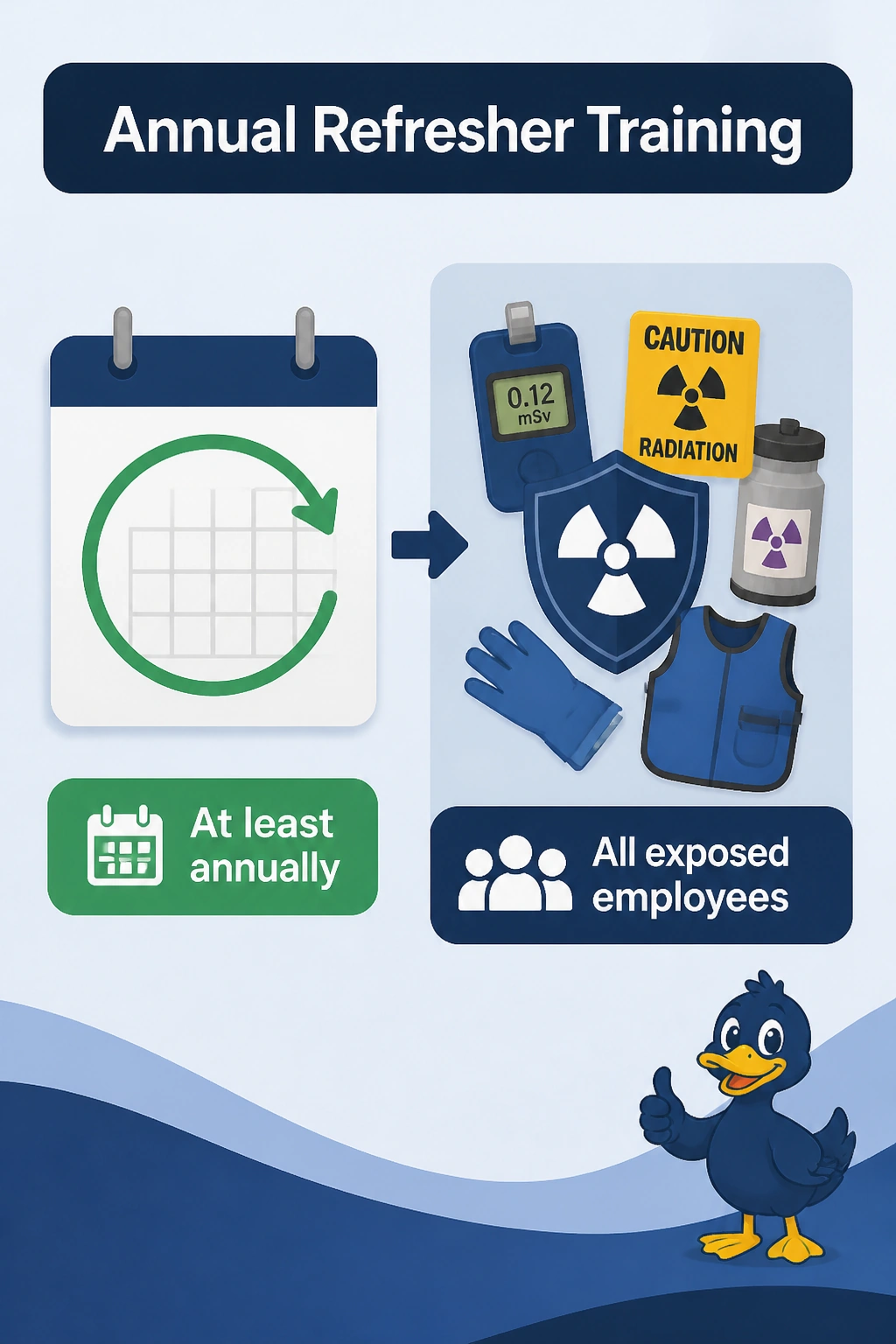
Under the OSHA Bloodborne Pathogens Standard (29 CFR 1910.1030), employers must provide training at the time of initial assignment and At least annually for all exposed employees, which includes dental assistants who handle saliva-contaminated digital sensors and holders. Annual training ensures that staff stay current on standard precautions, personal protective equipment, and post-exposure protocols. Only when a new X-ray sensor model is purchased is incorrect because while task-specific updates are required when new procedures or devices affect exposure, they do not replace the mandatory yearly schedule. Every three years upon license renewal confuses federal OSHA workplace training rules with state-level continuing education cycles for dental credentials. Only after an occupational exposure incident occurs is reactive rather than preventive and violates the standard's requirement for ongoing annual education. As a compliance caveat, additional training is also required whenever modified tasks or new equipment introduce new occupational exposure risks between annual sessions. For an operational check, confirm that your office maintains dated training records showing the date, contents, trainer qualifications, and attendee names for each annual session.
Prefer to study offline? Printable PDF study book + test engine ($7.50, unofficial). These questions stay free here.