
A newly hired dental assistant arrives for clinical orientation wearing long artificial acrylic fingernails before assisting with intraoral digital radiography. According to CDC dental infection control guidelines, what hand-hygiene standard applies to fingernails?
Select an answer to reveal the explanation.
Short Explanation
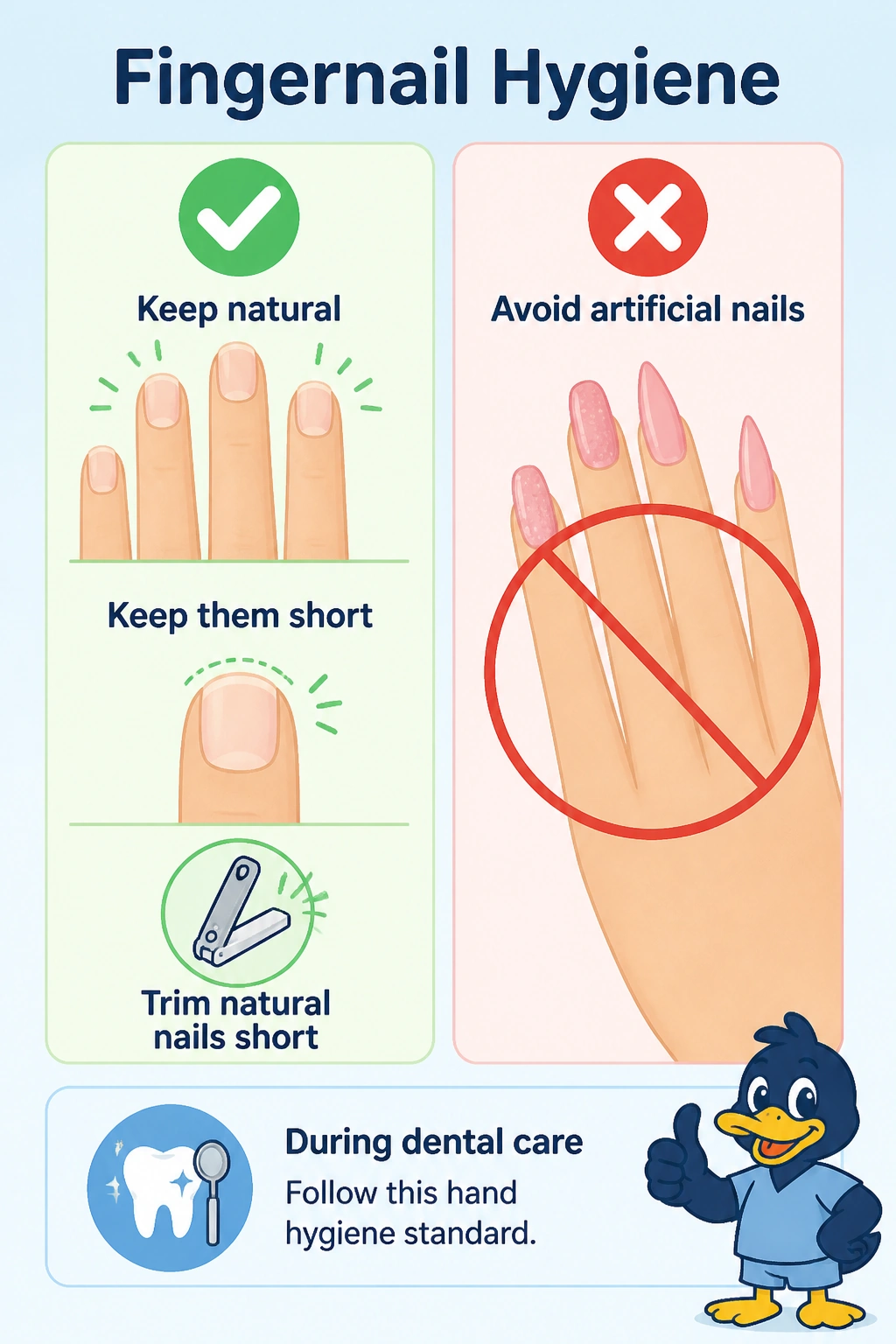
Long or artificial nails look harmless until they puncture a glove or trap microbes where soap cannot reach, putting your patients at risk. The trap is thinking extra gloves or sanitizer can compensate for nail length when CDC guidance calls for short natural nails.
Full Explanation
Keeping natural fingernails short and avoiding artificial nails is recommended by CDC dental infection control guidelines because subungual areas harbor high concentrations of microorganisms and long or artificial nails are more likely to tear exam gloves during intraoral sensor placement. Double-gloving with two pairs of nitrile exam gloves during sensor placement does not eliminate the microbial reservoir beneath artificial nails and reduces tactile sensitivity needed for gentle intraoral positioning. Applying an alcohol-based hand rub over intact gloves between patients violates single-use glove rules and risks degrading the glove material. Switching to heavy-duty utility gloves when positioning intraoral sensors is inappropriate because utility gloves are reserved for instrument cleaning and surface disinfection, not intraoral patient care. One caveat is that chipped nail polish can also harbor bacteria, so natural nails should remain neatly trimmed and free of flaking polish. Before donning exam gloves for a radiographic series, inspect your nails to confirm they are short, smooth, and free of artificial enhancements.
Prefer to study offline? Printable PDF study book + test engine ($7.50, unofficial). These questions stay free here.