
A newly hired dental assistant will regularly expose intraoral digital radiographs and process contaminated sensor holders. Under the OSHA Bloodborne Pathogens Standard (29 CFR 1910.1030), what must the employer offer regarding Hepatitis B?
Select an answer to reveal the explanation.
Short Explanation
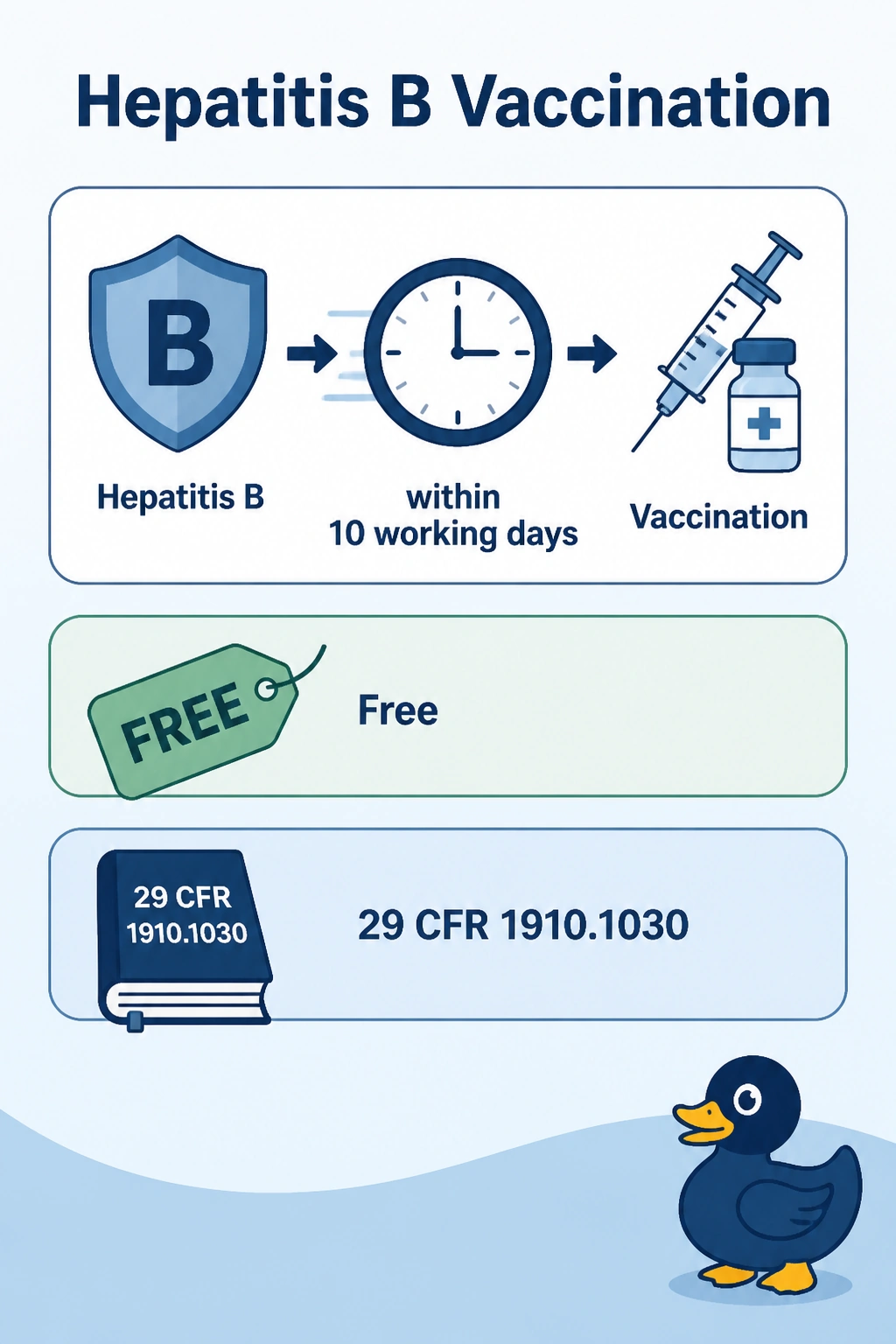
Under OSHA's Bloodborne Pathogens Standard, your employer has a strict clock and a clear rule: offer the Hepatitis B vaccine free of charge within 10 working days of starting duties. The trap is thinking the vaccine is mandatory, employee-paid, or delayed until an accident happens.
Full Explanation
Free Hepatitis B vaccination within 10 working days of initial assignment is required under the OSHA Bloodborne Pathogens Standard (29 CFR 1910.1030) for all employees with reasonably anticipated occupational exposure to blood or saliva, after required training. Mandatory vaccination paid by the employee via payroll is incorrect because the employer must bear the full cost of the vaccine series and employees retain the right to decline by signing a declination form. Free vaccination only after an exposure incident occurs violates the standard's preventive mandate, which requires offering pre-exposure protection immediately upon job assignment rather than waiting for a splash or percutaneous injury. Annual Hepatitis B booster shots for all clinical staff are not mandated by OSHA; routine boosters are not required for immunocompetent responders who completed the series and demonstrated immunity. As a caveat, an employee who initially declines the vaccine can still request it later at no cost while working in an exposed role. Perform an operational check by confirming that new clinical staff receive bloodborne pathogens training and vaccination documentation during onboarding.
Prefer to study offline? Printable PDF study book + test engine ($7.50, unofficial). These questions stay free here.