
While positioning an intraoral sensor for a coughing patient, a dental assistant receives a visible splash of blood-tinged saliva directly into one eye. According to OSHA Bloodborne Pathogens Standard (29 CFR 1910.1030), what is the required immediate action and follow-up?
Select an answer to reveal the explanation.
Short Explanation
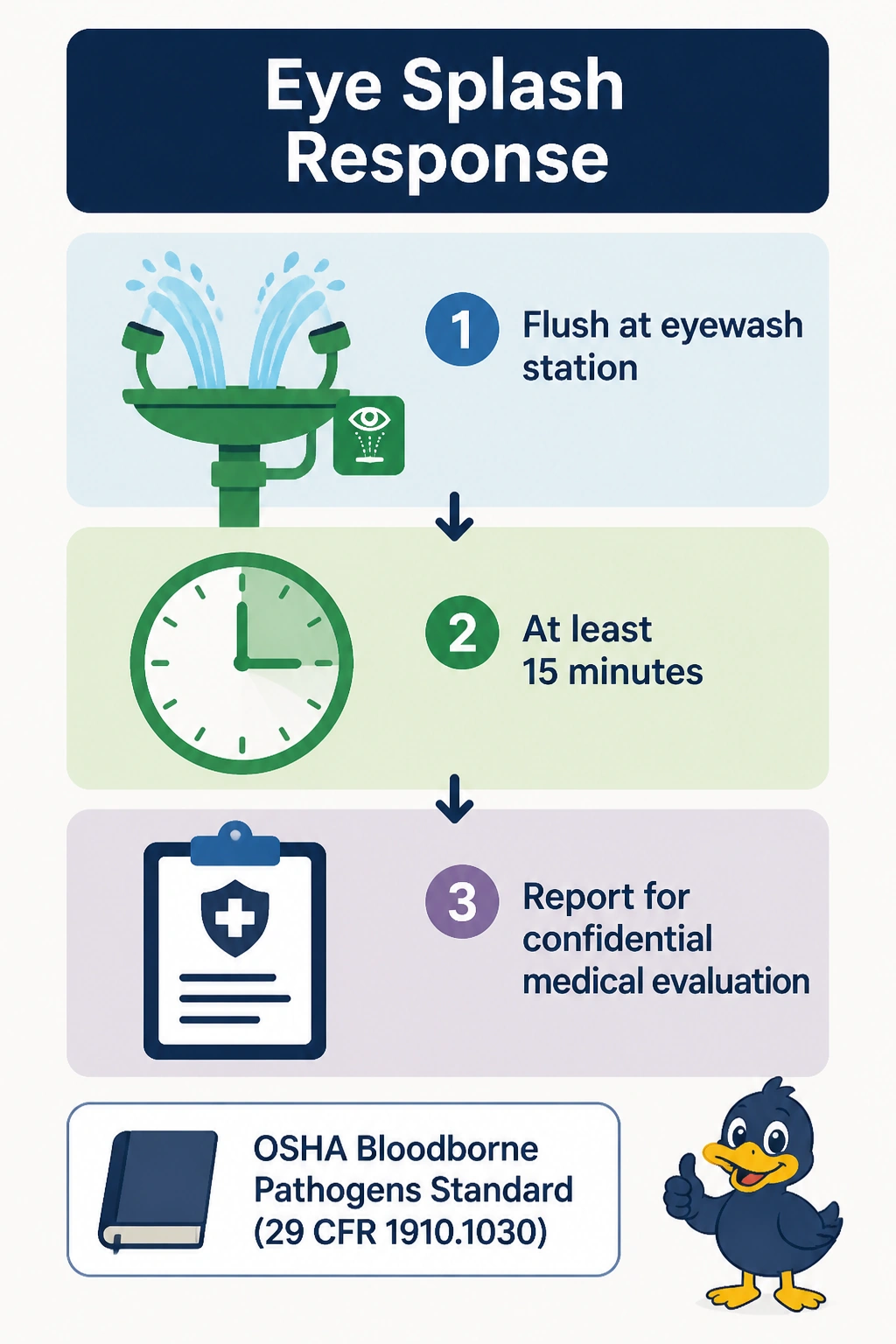
When contaminated fluid hits your eye, the clock starts ticking immediately—never wait until the end of the appointment. Under OSHA rules, you must flush the eye right away at an eyewash station and then undergo a confidential post-exposure medical evaluation. The common trap is delaying care to finish the radiograph or using improvised rinses instead of a full eyewash flush.
Full Explanation
Mucous membrane exposure to blood or saliva carries a risk of bloodborne pathogen transmission, so OSHA 29 CFR 1910.1030 mandates immediate decontamination followed by prompt medical follow-up. The required protocol is: "Flush the eye immediately at an eyewash station for at least 15 minutes and report for confidential medical evaluation" so the employer can document the route of exposure, identify the source patient if feasible, and arrange baseline testing and post-exposure prophylaxis counseling. Choosing to "Wipe the eye with a sterile gauze pad, finish the remaining exposures, and log the incident at shift end" leaves infectious material in contact with the conjunctiva and delays time-sensitive medical assessment. Deciding to "Rinse the eye briefly with bottled drinking water and apply an over-the-counter antiseptic eye drop" fails to provide continuous, high-volume irrigation and introduces unapproved chemicals onto irritated ocular tissue. Opting to "Wash the face with antimicrobial soap and wait to see if redness develops before notifying the dentist" ignores that bloodborne infections can be transmitted without immediate local inflammation. As a clinical caveat, this exposure could likely be prevented by wearing protective eyewear with solid side shields whenever spatter or coughing is anticipated. For an operational check, inspect the operatory eyewash station weekly to confirm unobstructed access and clear water flow before clinical sessions begin.
Prefer to study offline? Printable PDF study book + test engine ($7.50, unofficial). These questions stay free here.