
After a steam autoclave cycle finishes, a dental assistant opens the door and notices that several paper-plastic sterilization pouches containing reusable sensor aiming rings are visibly damp. According to CDC dental infection control guidelines, what should the assistant do before storing these packs?
Select an answer to reveal the explanation.
Short Explanation
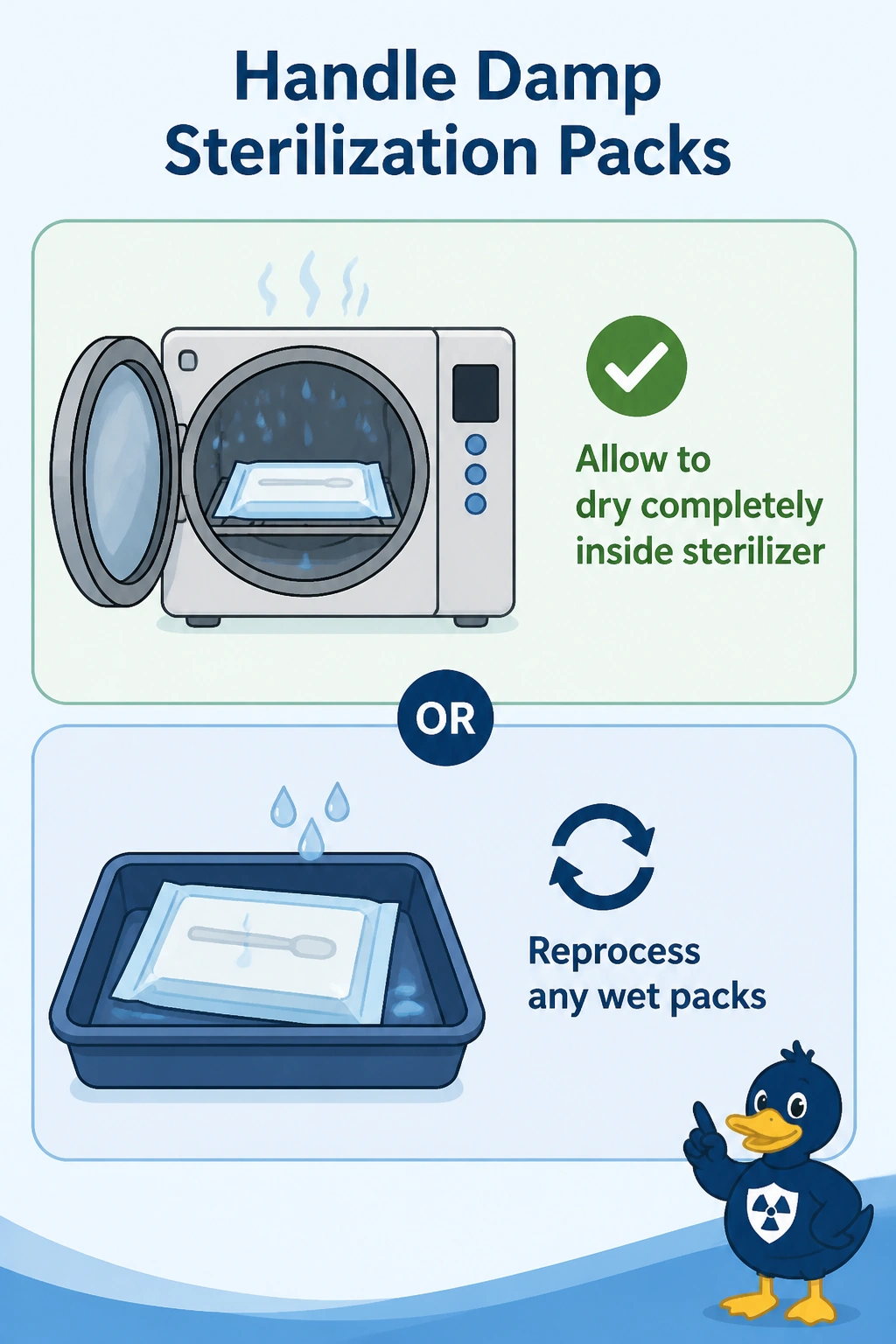
A damp sterilization pouch acts like a wet paper wick, pulling bacteria straight through the paper barrier the moment you touch it. The trap is thinking a quick wipe or air-drying on a shelf keeps the contents sterile. Let packs dry completely inside the autoclave chamber, or re-pouch and reprocess any pack that comes out wet.
Full Explanation
Allow packs to dry completely inside the sterilizer or reprocess any wet packs because moisture compromises the microbial barrier of paper-plastic sterilization pouches. When paper fibers are damp, microorganisms from hands or countertops can wick directly through the packaging and contaminate the sterilized sensor holders inside. Wipe the outside of the pouches with a clean paper towel and store them fails because touching or wiping wet paper transfers contaminants and leaves the underlying fibers saturated. Place the damp pouches in a closed cabinet so they finish air-drying allows moisture to linger against shelf surfaces and traps humidity inside the storage area, promoting wicking. Open the pouches immediately and transfer the holders to a clean tray breaks the sterile barrier entirely, exposing the semicritical holders to environmental contamination before patient use. As a caveat, overloading the autoclave chamber or stacking pouches flat without space between them commonly prevents proper drying during the cycle. Confirm that the sterilizer's drying phase has completed and inspect every pouch for dry, intact seals before moving packs to clean storage.
Prefer to study offline? Printable PDF study book + test engine ($7.50, unofficial). These questions stay free here.