
After dismissing a patient, a dental assistant notices visible saliva on the uncovered X-ray unit control panel switches. What is the proper procedure for disinfecting this clinical contact surface?
Select an answer to reveal the explanation.
Short Explanation
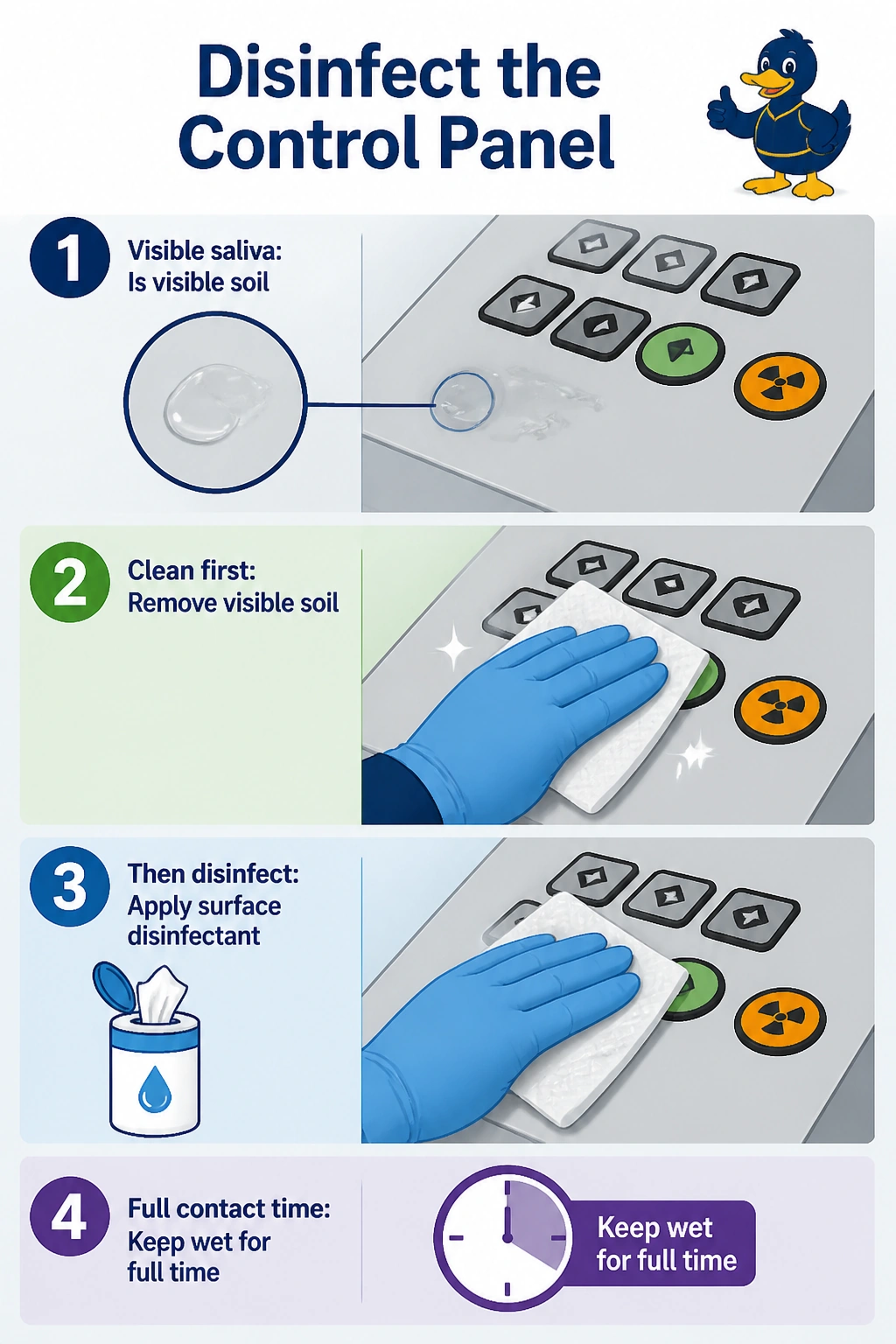
You’re right to clean visible soil before applying disinfectant for the full contact time. A quick spray-and-wipe can leave microbes shielded by saliva, while a fresh barrier placed over soil leaves the surface underneath contaminated.
Full Explanation
Per CDC dental infection control guidance, clean visible soil first, then apply an EPA-registered hospital disinfectant with a tuberculocidal (intermediate-level) claim for the full contact time on its label. Saliva and other organic matter can shield microorganisms and inactivate disinfectants, so pre-cleaning and keeping the surface wet for the required time are essential. Spraying the surface once and wiping it dry immediately with clean gauze skips pre-cleaning and does not allow the required wet contact time. Applying an alcohol-based hand rub and letting it evaporate is ineffective because hand rubs are not EPA-registered surface disinfectants and evaporate too quickly for intermediate-level disinfection. Covering the soiled area with a fresh plastic barrier without wiping it down traps infectious material underneath and risks cross-contamination when the barrier is removed. One exam caveat: spraying electrical switches directly can damage circuitry, so use a disinfectant wipe or apply the product to gauze first. As a practical check, place an impervious barrier over the control panel before seating the next patient; if it tears, clean and disinfect the surface before replacing it.
Prefer to study offline? Printable PDF study book + test engine ($7.50, unofficial). These questions stay free here.