
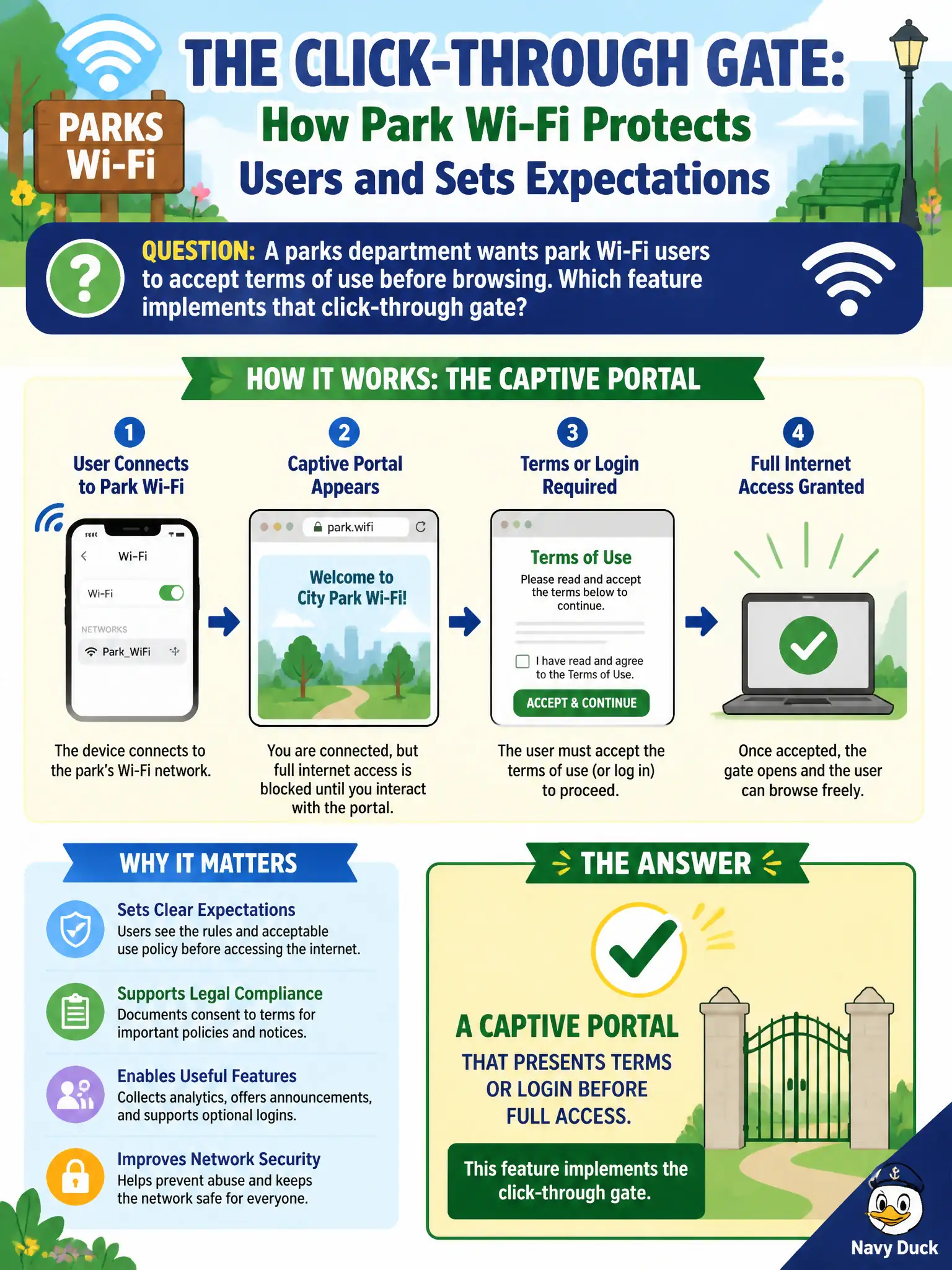
A parks department wants park Wi-Fi users to accept terms of use before browsing. Which feature implements that click-through gate?
Select an answer to reveal the explanation.
Short Explanation
Terms before TikTok means a captive portal—the little web gate that pops before the internet opens. Antenna gain, band steering, and airtime fairness do not show a terms page.
Full Explanation
When a parks department wants park Wi-Fi users to accept terms of use before browsing, a captive portal that presents terms or login before full access is the feature that implements that click-through gate. The portal intercepts initial HTTP/HTTPS navigation (per platform design) and releases the client after acceptance or authentication. RF features and QoS knobs do not display legal or AUP language to citizens.
Passive antenna gain on the park AP only fails because gain affects RF coverage, not terms presentation. Band steering with no redirect page fails by concept: steering moves clients between bands; it does not show an acceptable-use page. Airtime fairness without any web intercept fails because fairness scheduling does not implement a click-through policy gate.
Exam caveat: map the requirement “accept terms” to captive portal, not to RF optimization features that happen to be on the same AP.
Operational check: enable the captive portal on the park guest SSID; connect a phone; confirm the terms page appears before free browsing; accept and verify internet works; record portal URL/profile name in the parks WLAN runbook. In park deployments, confirm the portal profile is bound to the correct guest SSID and that walled-garden/DNS allowances match the parks design so citizens actually reach the terms page on cellular-assisted or captive-aware clients.