
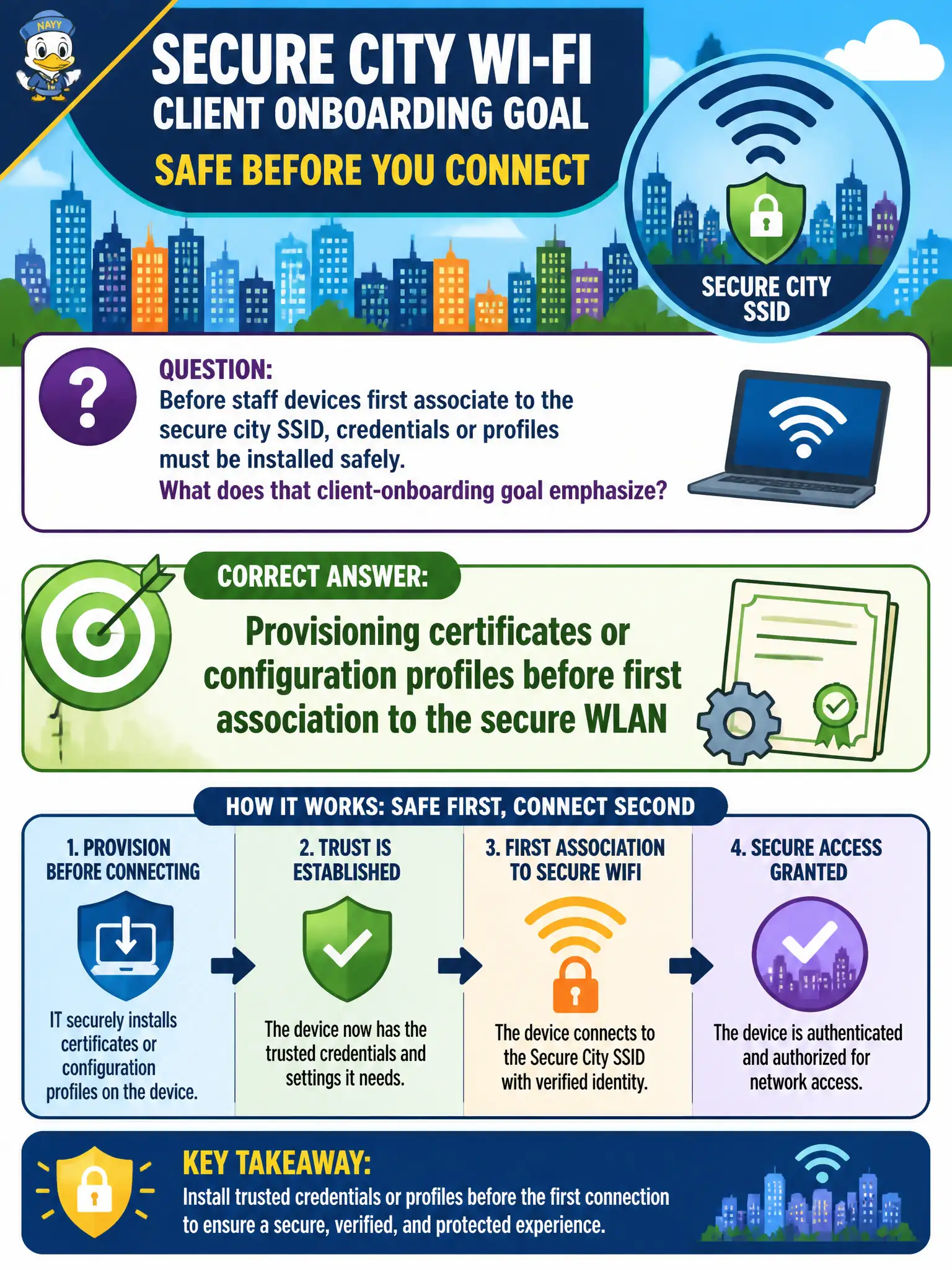
Before staff devices first associate to the secure city SSID, credentials or profiles must be installed safely. What does that client-onboarding goal emphasize?
Select an answer to reveal the explanation.
Short Explanation
Onboarding means certificates or profiles land before the secure SSID handshake—not after users guess the PSK off the intranet. WEP while you wait is a museum exhibit, not a process.
Full Explanation
Before staff devices first associate to the secure city SSID, client onboarding must emphasize provisioning certificates or configuration profiles before that first association. Secure Enterprise WLANs expect the laptop or phone to already possess the credentials, trust anchors, and SSID profile needed for 802.1X; discovering those materials only after failed joins leads to insecure workarounds. Municipal onboarding programs therefore stage PKI and MDM profiles on a controlled path prior to production SSID use. Posting the staff PSK on the intranet homepage after association fails reintroduces shared-secret risk and teaches users to chase passwords instead of completing enrollment. Allowing unlimited failed 802.1X attempts without enrollment tooling creates noise and lockout risk without fixing root cause. Using only WEP while onboarding tickets are printed is a cryptographic museum exhibit, not an acceptable temporary process for city staff devices. Exam caveat: onboarding networks themselves must be constrained—an open “enrollment” SSID without segmentation can become an easy attack platform if left too permissive. Operational check: wipe a lab staff laptop, run the approved enrollment workflow, confirm certificates and Wi-Fi profiles land before first join, then verify the device associates to the secure SSID without users manually entering a staff PSK.