
A shared parks-and-recreation staff PSK for a WPA2-Personal SSID appears on a public paste site. Beyond immediate key rotation, which risk statement is most accurate?
Select an answer to reveal the explanation.
Short Explanation
A shared Wi-Fi password on the Internet is a spare building key taped to the front door. Anyone can walk onto the staff WLAN, and captured handshakes get easier to abuse. Rotating the key is mandatory; pretending Personal mode is immune is fantasy.
Full Explanation
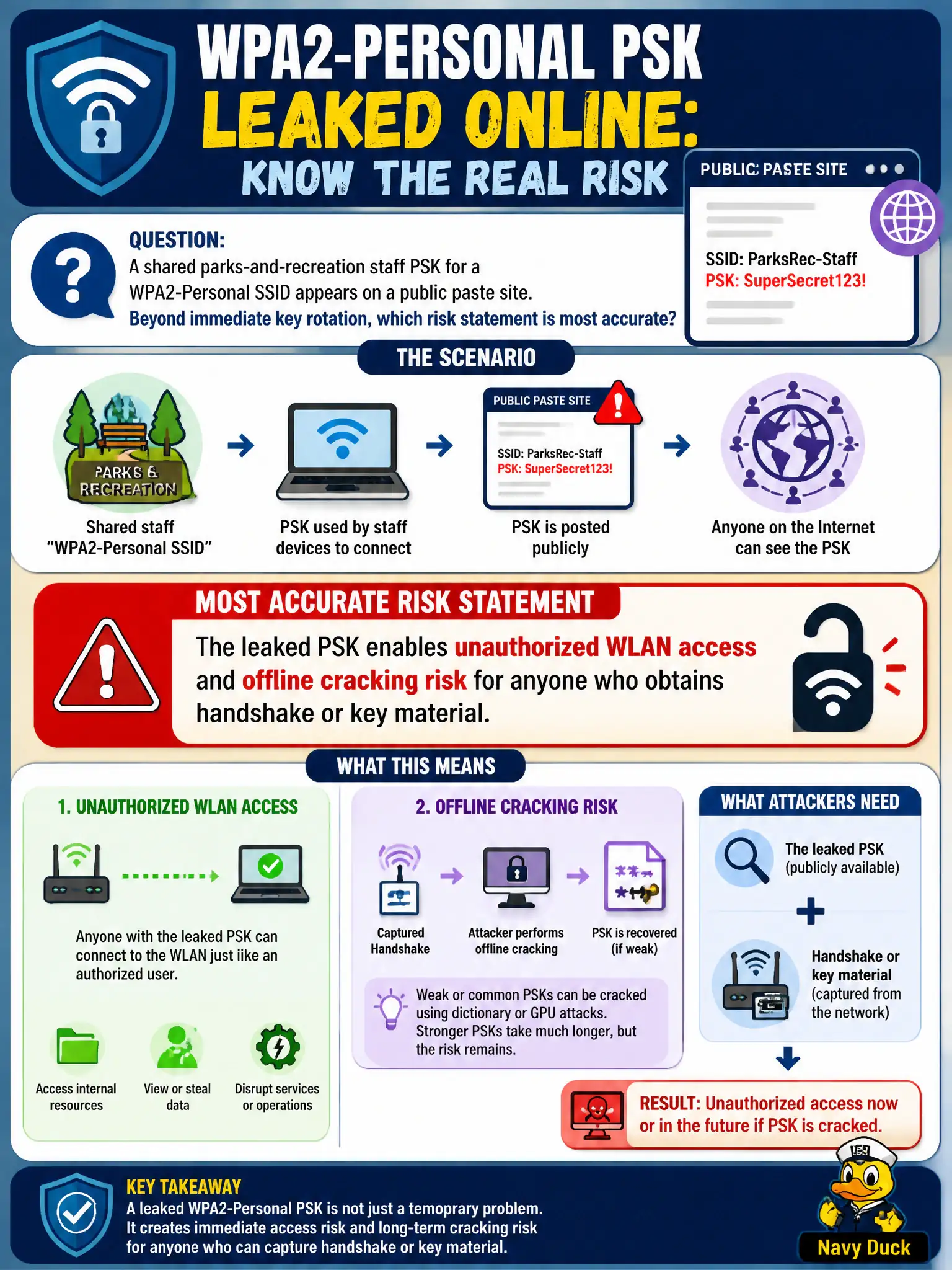
When a shared parks-and-recreation staff PSK for a WPA2-Personal SSID appears on a public paste site, beyond immediate key rotation the most accurate risk statement is that the leaked PSK enables unauthorized WLAN access and offline cracking risk for anyone who obtains handshake or key material. A published passphrase is effectively a shared secret for the entire SSID. Personal-mode PSKs can absolutely be reused by attackers when published in cleartext. Paste-site leaks are not limited to wired 802.1X; they directly impact wireless Personal mode. Publishing the PSK does not automatically upgrade the SSID to WPA3-Enterprise 192-bit security. Civic recreation networks often share one passphrase across seasonal staff, which magnifies paste-site impact until Enterprise authentication replaces the shared key. Exam caveat: rotation is mandatory after leakage, but architecture should move staff SSIDs off shared PSKs to limit blast radius of the next leak. Operational check: rotate the PSK immediately across all parks APs, force client reconnects, hunt for unknown MACs that associated with the old key, communicate the change to staff through official channels only, and schedule migration to 802.1X for parks staff WLAN.