
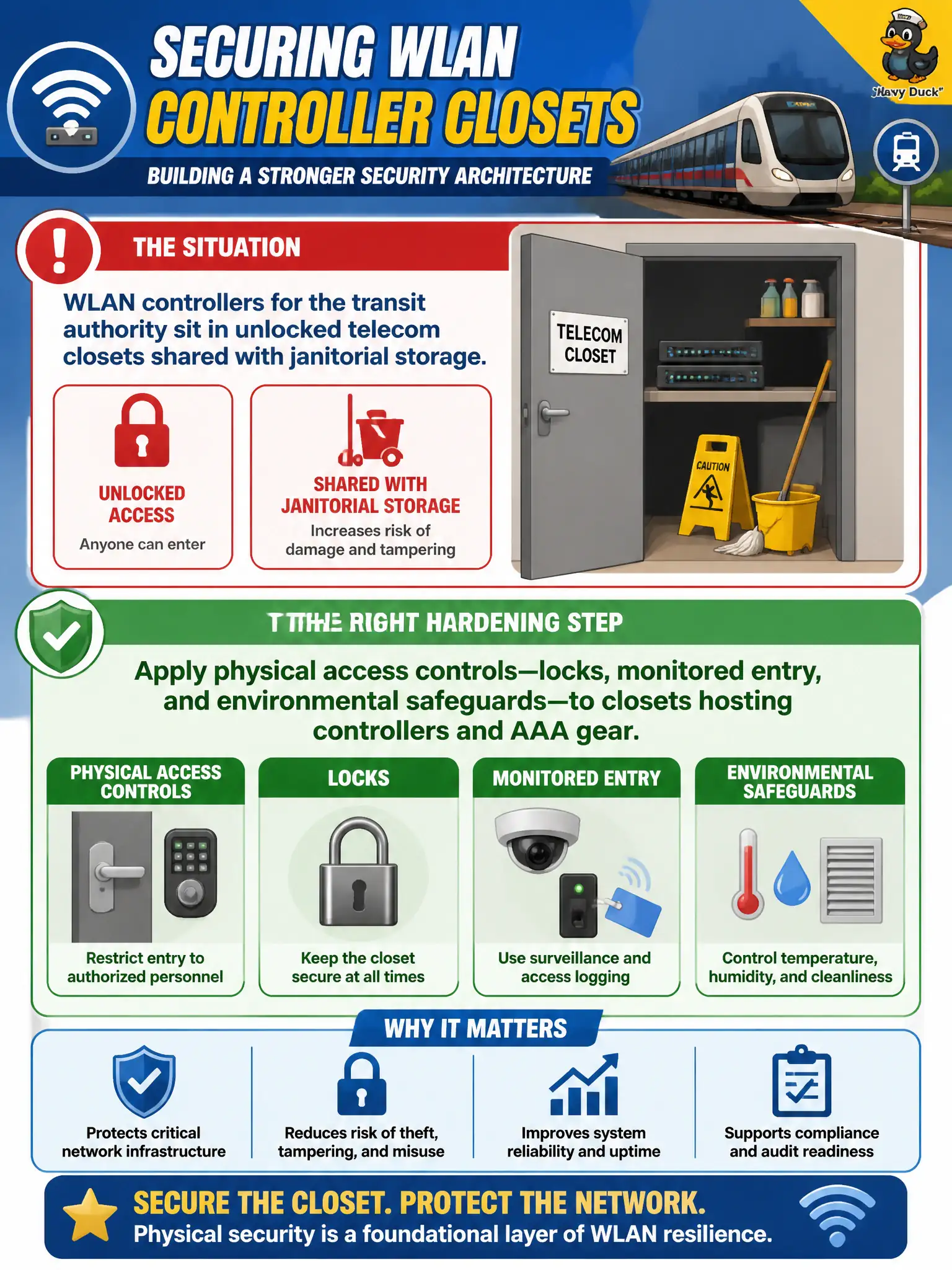
WLAN controllers for the transit authority sit in unlocked telecom closets shared with janitorial storage. Which hardening step belongs in the security architecture?
Select an answer to reveal the explanation.
Short Explanation
Anybody who can walk up and touch the controller makes air crypto look optional. Lock and monitor the closet. Public kiosks and a longer PSK do not replace physical security.
Full Explanation
WLAN controllers for a transit authority sitting in unlocked telecom closets shared with janitorial storage need physical access controls—locks, monitored entry, and environmental safeguards—for closets hosting controllers and AAA gear. Logical hardening cannot compensate for anyone who can walk up to a console or pull cables. Civic transit and public-safety wireless are high-impact physical targets.
Leaving closets unlocked so first responders can reboot controllers without badges creates uncontrolled access; use break-glass procedures instead. Moving controller consoles to public kiosks so citizens can verify uptime exposes admin interfaces. Replacing physical locks with a longer WPA2-Personal passphrase on the management SSID confuses RF secrets with physical security.
Exam caveat: physical controls include camera coverage, inventory seals, and environmental monitoring where appropriate—not only a padlock. Operational check: inspect closet locks and badge logs, attempt unauthorized entry in a controlled test with facilities, and confirm alarms or escort policy triggers. In municipal WLAN programs, capture the decision in the wireless standard and re-check it at change review so the next project inherits the same control bar instead of rediscovering the failure during an outage.