
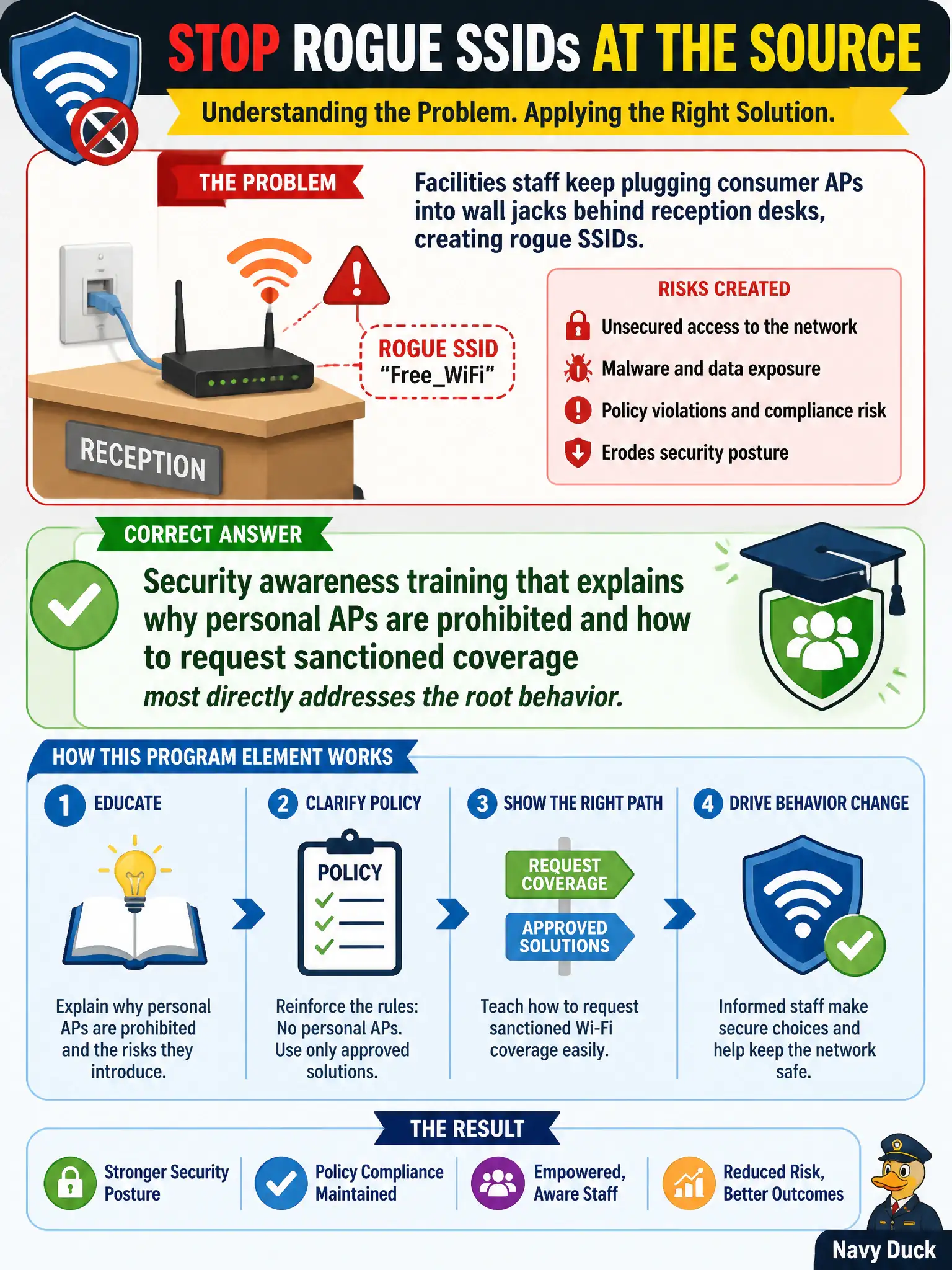
Facilities staff keep plugging consumer APs into wall jacks behind reception desks, creating rogue SSIDs. Which program element most directly addresses the root behavior?
Select an answer to reveal the explanation.
Short Explanation
Most rogue APs aren’t cartoon villains—they’re helpful people with a Best Buy bag. Train folks why home routers on city jacks are a problem and show the right way to ask for coverage. Firewalls alone don’t teach the break room.
Full Explanation
Facilities staff who plug consumer APs into wall jacks behind reception desks create rogue SSIDs that bypass municipal security design and invite evil-twin confusion for visitors. A security awareness program that explains why personal APs are prohibited and how to request sanctioned coverage addresses the root behavior—people solving a coverage complaint with home gear—rather than only chasing RF symptoms after the fact. Civic front desks and lobbies are classic sites for this shadow-IT pattern.
Adding firewall rules alone without human-factors training leaves the behavioral driver intact and the next desk still buys a travel router. Congratulating staff for “improving” coverage with home routers reinforces the wrong incentive. Disabling switchport security so rogue APs always obtain PoE removes a key wired control that should complement awareness.
Exam caveat: awareness must be paired with an easy sanctioned request path; training without a coverage ticket process still pushes people toward consumer APs. Operational check: deliver targeted awareness to facilities and reception roles, publish the official coverage-request procedure, and verify port security or 802.1X still blocks unauthorized APs while tracking rogue ticket trends.