
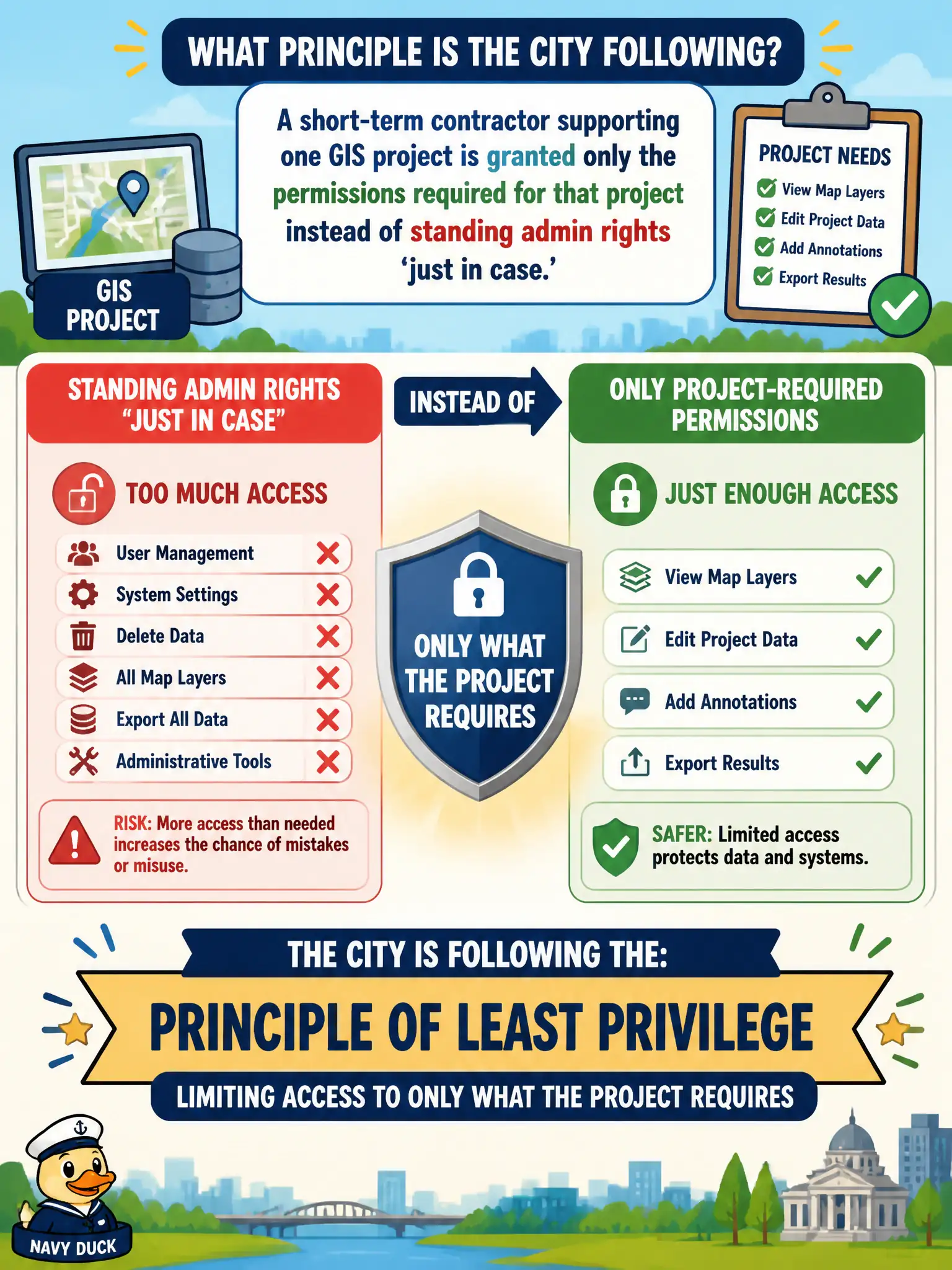
A short-term contractor supporting one GIS project is granted only the permissions required for that project instead of standing admin rights 'just in case.' Which principle is the city following?
Select an answer to reveal the explanation.
Short Explanation
Give the contractor the keys to that one GIS closet—not the master ring for city hall. Least privilege means only what the job needs, nothing 'just in case.' Standing admin and shared break-glass passwords in a wiki are how temporary help becomes a permanent risk.
Full Explanation
The principle of least privilege grants only the permissions required for a task—nothing more. Giving a short-term GIS contractor access limited to that project instead of standing admin rights "just in case" exemplifies least privilege and reduces insider and credential-theft blast radius across the city’s cloud estate.
Maximum privilege so contractors can troubleshoot any unrelated subscription violates the principle. Permanent owner roles on day one for all temporary staff create lasting risk. Shared break-glass passwords in a public project wiki add credential exposure on top of over-privilege.
Exam caveat: least privilege applies to humans and service identities; time-bounding (JIT/temporary elevation) strengthens it for contractors. Regular access reviews catch privilege creep.
Operational check: create a project-scoped role for the GIS contractor, set an expiry date, deny subscription-wide admin, review access at project end, and revoke promptly. Sample other contractor accounts quarterly for excess rights.
For every contractor engagement, require an access plan naming systems, roles, start/end dates, and data classes; refuse “owner just in case” requests that violate least privilege on municipal subscriptions.