
A seasonal park reservation system must minimize idle cost between tourist peaks. Which provisioning approach best fits?
Select an answer to reveal the explanation.
Short Explanation
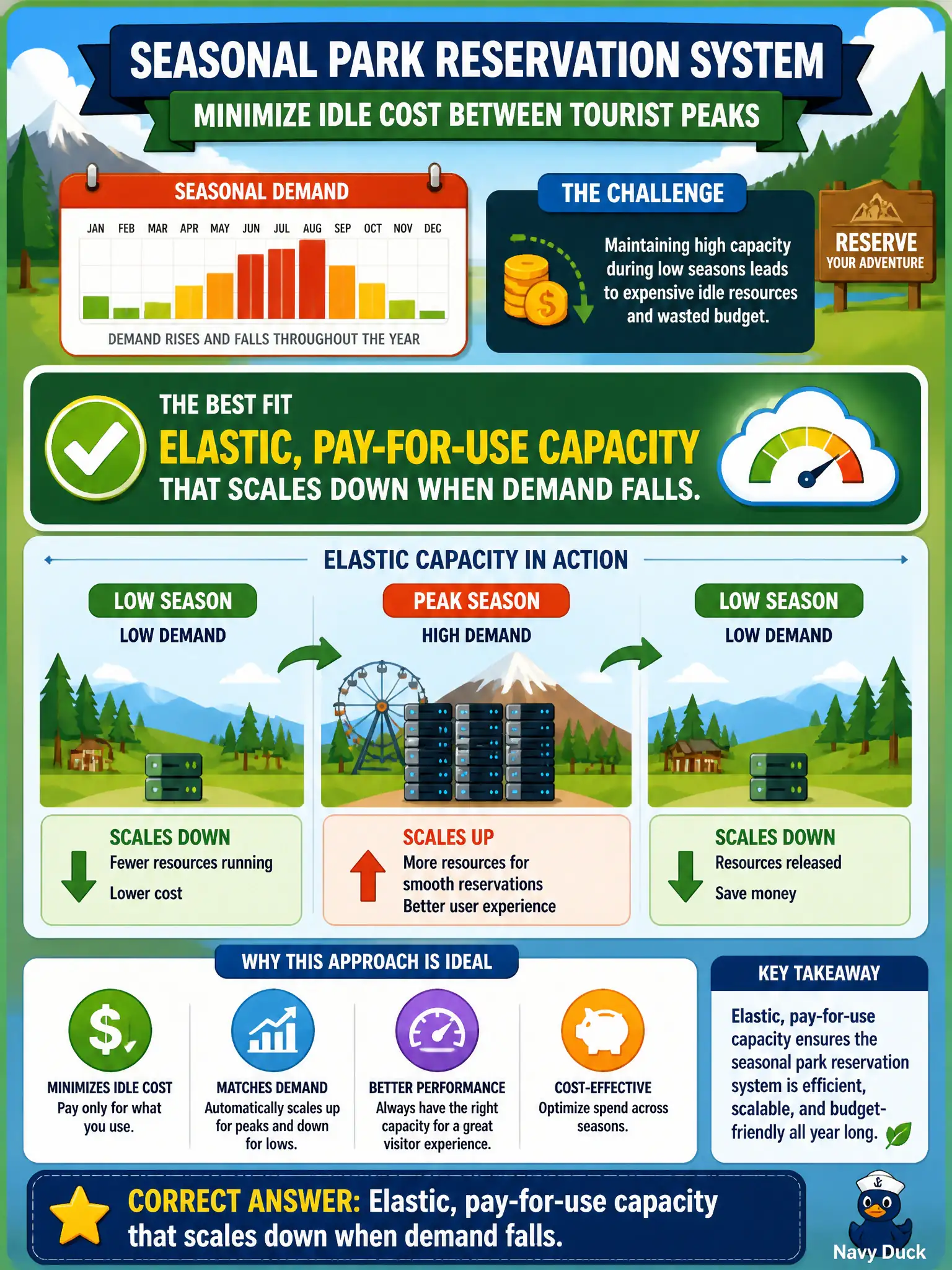
Tourist season is a summer festival; winter should not pay for the full carnival lights. Elastic pay-for-use lets the reservation system shrink when the parks go quiet.
Full Explanation
Elastic, pay-for-use capacity that scales down when demand falls best minimizes idle cost for a seasonal park reservation system between tourist peaks. Cloud elasticity aligns municipal spend with actual citizen demand. Always-on maximum reserved footprint sized only for peak day fails idle-cost minimization. Dedicated on-premises clusters left powered for off-season idle fail the same economic goal. Fixed bare-metal leases that cannot change for three years lock in waste between seasons. Exam caveat: seasonal or variable demand stems usually point to elastic provisioning over static peak-sized capacity. Operational check: define scale-in policies that shrink after tourist peaks, set budgets and anomaly alerts, load-test peak weekends, and confirm reservation checkout still meets SLOs when scaled out. In municipal platform operations, record the chosen control and the rejected alternatives in the change record so future on-call engineers understand the failure modes avoided for citizen services. Re-check the decision after the next provider feature change or compliance update to ensure the same answer still holds for the city's estate. Confirm monitoring, access reviews, and backup coverage still align with the selected approach before closing the civic hypercare period.