
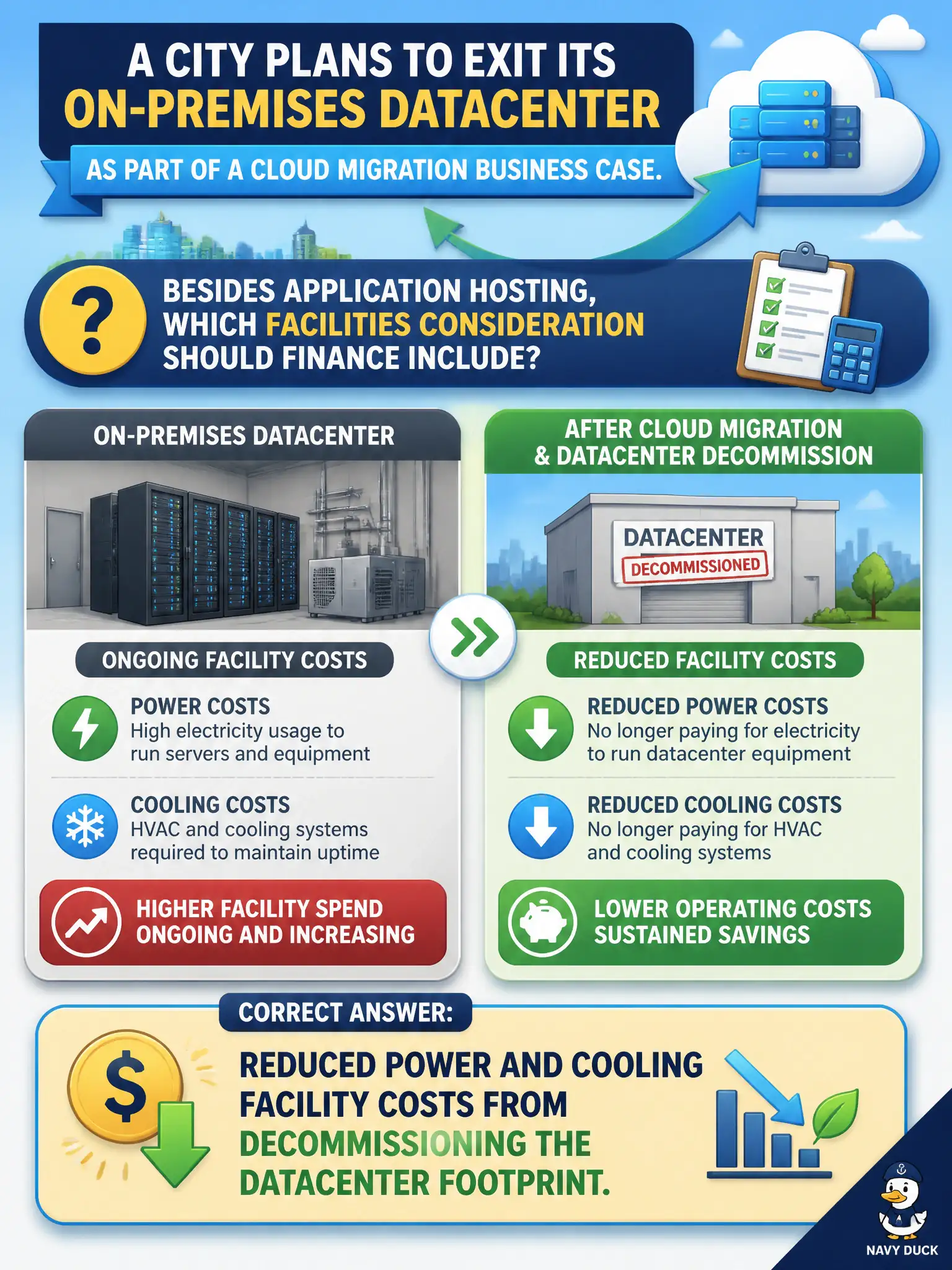
A city plans to exit its on-premises datacenter as part of a cloud migration business case. Besides application hosting, which facilities consideration should finance include?
Select an answer to reveal the explanation.
Short Explanation
Shutting the old server room is like turning off the lights and the air conditioner in a warehouse you no longer rent. The cloud OpEx story should also credit the power and cooling you stop paying for on-prem.
Full Explanation
Cloud migration business cases should include facilities considerations such as reduced power and cooling costs when an on-premises datacenter footprint is decommissioned. Exiting city-owned halls frees utilities and related operating expense beyond the application hosting line item. Mandatory purchase of identical diesel generators for every public cloud region fails as an invented requirement and misses the facilities savings point. Guaranteed elimination of all network egress charges forever fails; egress often remains a cloud cost to model, not a guaranteed zero. Automatic refund of every prior hardware warranty after the first VM launches fails as fantasy finance. Exam caveat: business-case items may include environmental and facilities savings alongside cloud run rates—do not ignore CapEx/OpEx facility lines when the stem mentions datacenter exit. Operational check: inventory rack power and cooling allocations to be retired, coordinate facilities shutdown milestones with workload waves, and update municipal budgets so savings are tracked rather than absorbed silently. In municipal platform operations, record the chosen control and the rejected alternatives in the change record so future on-call engineers understand the failure modes avoided for citizen services. Re-check the decision after the next provider feature change or compliance update to ensure the same answer still holds for the city's estate.