
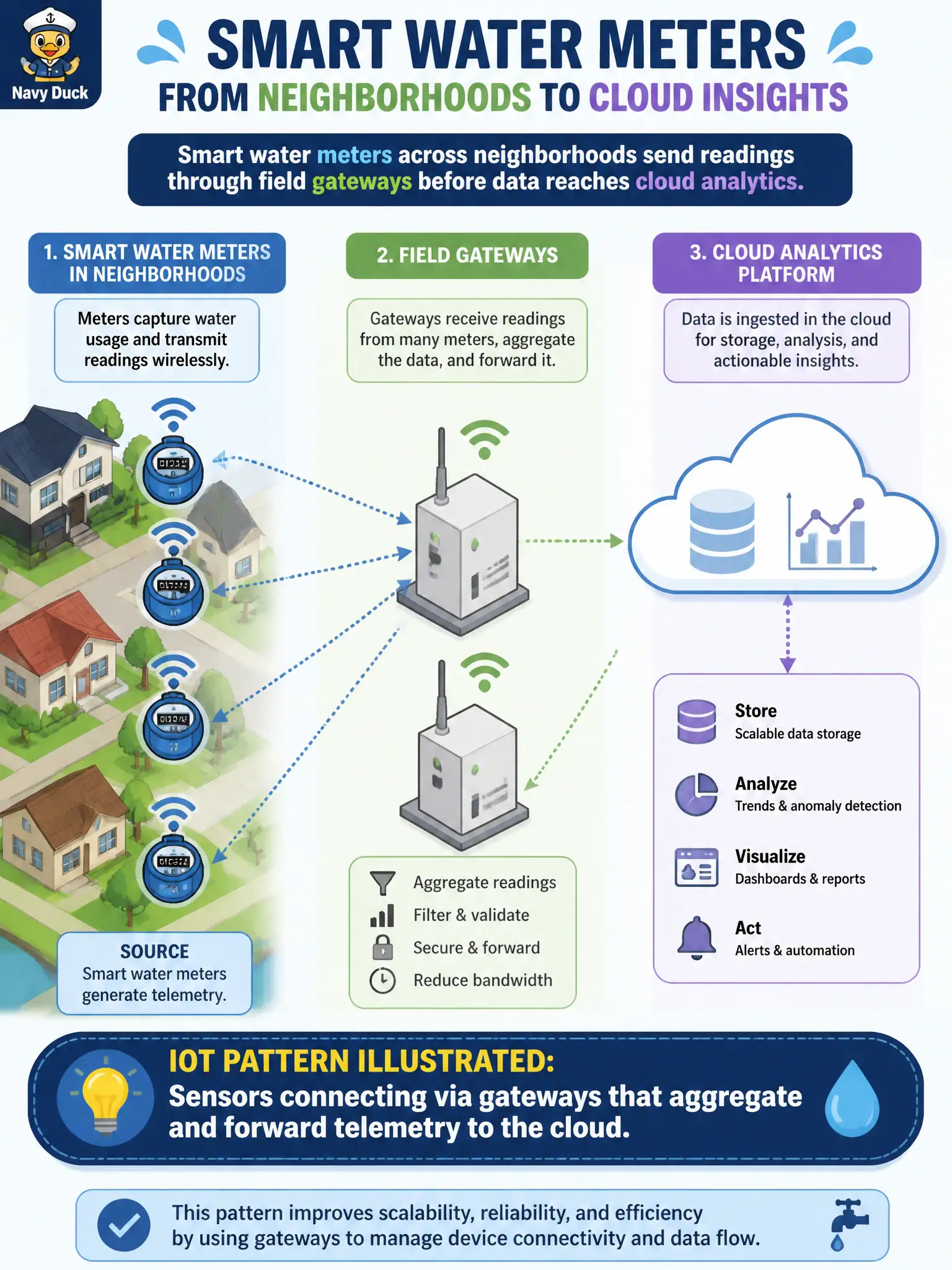
Smart water meters across neighborhoods send readings through field gateways before data reaches cloud analytics. Which IoT pattern does this illustrate?
Select an answer to reveal the explanation.
Short Explanation
Each meter is a little sensor out in the neighborhood; the gateway is the neighborhood mailman who collects readings and ships them up to the cloud. That sensors-to-gateways-to-cloud pattern is classic IoT. It is not a print spooler or a photo CDN.
Full Explanation
IoT architectures commonly place sensors behind field gateways that aggregate, filter, buffer, or protocol-translate telemetry before forwarding it to cloud analytics platforms. Smart water meters across neighborhoods sending readings through field gateways into cloud analytics illustrate that sensors-plus-gateway ingestion pattern used throughout municipal utilities and public works. Mainframe batch jobs that never leave a single on-premises LPAR are not an IoT gateway ingestion pattern. Desktop print spoolers inside city hall offices do not aggregate neighborhood meter telemetry for analytics. CDN edge caches serving static tourism photos optimize web content delivery for browsers, not meter-to-cloud telemetry ingestion from constrained field devices. Exam caveat: gateways address constrained devices, intermittent local connectivity, and protocol impedance matching—do not assume every sensor speaks directly to a public cloud API over the open internet. Operational check: inventory meters and gateways by neighborhood, encrypt telemetry in transit, authenticate gateways to the cloud ingest endpoint, monitor gateway health and backlog, patch gateway firmware on a schedule, and validate analytics latency from meter read to operator dashboard against utility response SLAs.