
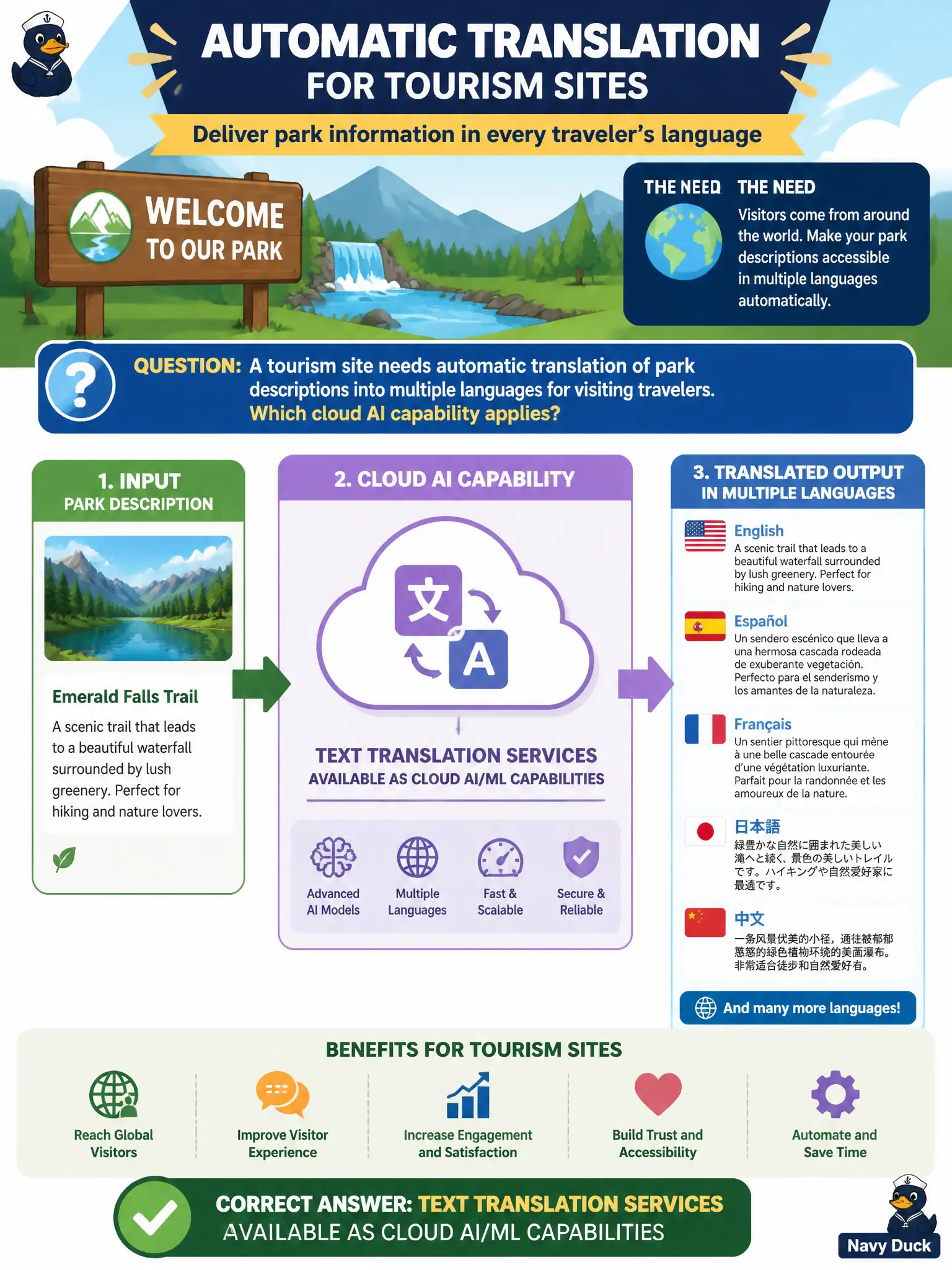
A tourism site needs automatic translation of park descriptions into multiple languages for visiting travelers. Which cloud AI capability applies?
Select an answer to reveal the explanation.
Short Explanation
Tourists should not need a pocket dictionary for every park plaque. Cloud translation services turn the English blurb into other languages automatically. That is an AI capability you call — not a networking trick or hand-typing marathon.
Full Explanation
Cloud text translation services convert content between languages as managed AI/ML capabilities, allowing a tourism site to present park descriptions to visiting travelers without maintaining an in-house translation engine or waiting on slow manual cycles for every page update. Automatic translation of park copy into multiple languages is a direct fit for that capability. Manual retyping by staff into every language with no automation fails scale and freshness when parks update hours, closures, or safety notices. Filesystem compression algorithms that shrink binaries do not translate natural language. Layer-2 VLAN tagging segregates network traffic and has nothing to do with multilingual content delivery. Exam caveat: treat machine translation as assistive—review critical legal, accessibility, or safety wording with humans, and do not confuse translation APIs with network segmentation features. Operational check: integrate translation into the content pipeline for park pages, cache results to control cost, flag safety and regulatory text for human review, monitor API quotas during peak tourist seasons, and serve translated pages quickly—often behind a CDN—with a clear language selector.