
A municipal cemetery-plot map analysis must move from ambiguity findings to testability notes to completeness checks, with a person signing off after each hop. Which prompting technique should the tester select?
Select an answer to reveal the explanation.
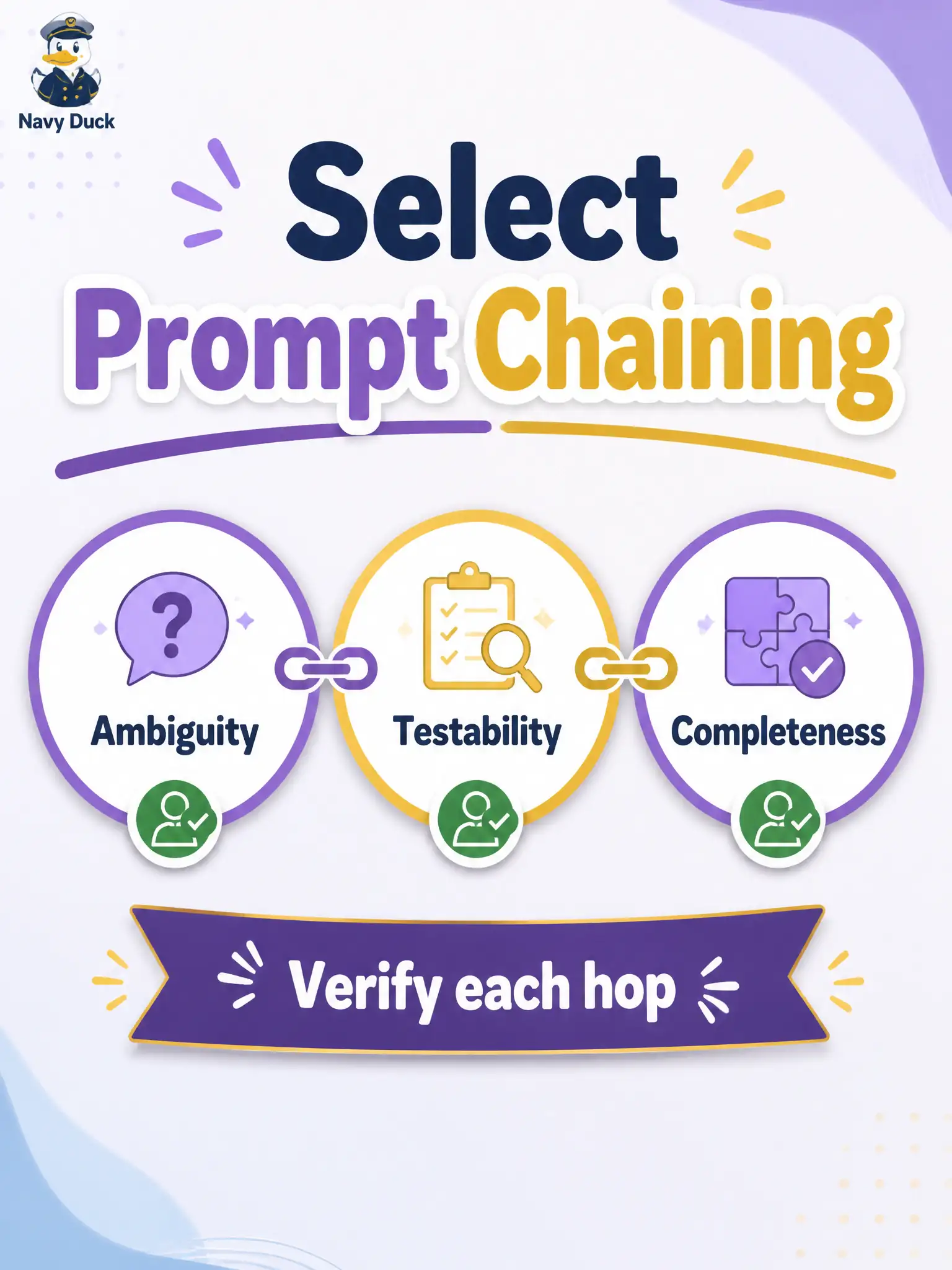
Short Explanation
Complex analysis that needs a human stamp between steps is a chain—not a one-blast answer. Split ambiguity, testability, and completeness, and check each link.
Full Explanation
A municipal cemetery-plot map analysis that must move from ambiguity findings to testability notes to completeness checks, with a person signing off after each hop, calls for prompt chaining that decomposes the work and allows human verification at each step. Civic burial-plot systems affect sensitive public records, so staged analysis with sign-offs reduces fluent-but-wrong leaps. Few-shot prompting with unrelated highway-toll examples as the only technique fails because wrong-domain examples mis-steer format and skip staged verification. Zero-shot prompting that demands the entire analysis in one unverified reply fails the required human gates between hops. Vendor fine-tuning of a commercial chatbot SKU before any analysis begins fails by concept: fine-tuning is not the prompting technique for decomposed civic analysis with checkpoints. Exam caveat: chaining is the technique when work is sequenced with human verification between stages. Operational check: run ambiguity→testability→completeness prompts in order, require plot-office sign-off after each civic artifact, and refuse to advance until the prior hop’s defects are corrected. Keep civic stakeholders informed of residual risk and re-check the decision after the next monitoring cycle so public service quality remains auditable.