
A community-clinic booking tester needs extreme appointment combinations without using last week’s real patient rows. Which GenAI design ask is appropriate?
Select an answer to reveal the explanation.
Short Explanation
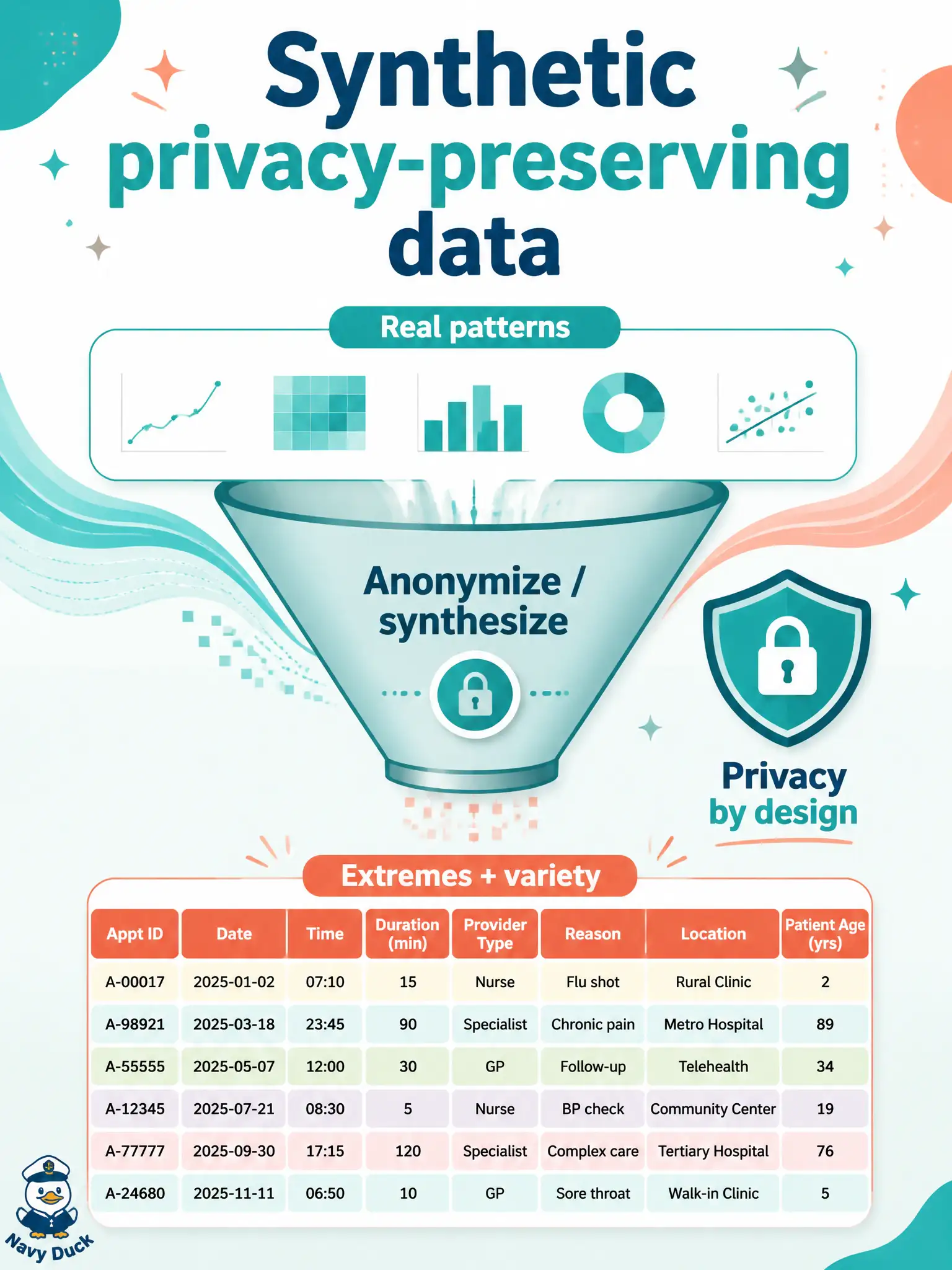
Real patient rows are locked medical charts; testers need realistic props instead. Ask GenAI for privacy-preserving synthetic data that still hits extremes and varied booking conditions. Invent the combinations—do not replay last week’s clinic list.
Full Explanation
A community-clinic booking tester who needs extreme appointment combinations without using last week’s real patient rows should ask GenAI for representative, privacy-preserving synthetic test data covering extremes and varied conditions. Civic health systems must exercise edge bookings while protecting resident identities under privacy expectations. Pasting production patient rows into the prompt so the model memorizes real identities fails because it exposes personal data and trains poor stewardship habits. Asking only for GDPR legal opinions without generating any test data fails by goal: legal commentary is not synthetic dataset design for booking extremes. Requesting jailbreak payloads that extract hidden system-prompt secrets fails because that is LLM-as-SUT attack work, not privacy-safe test-data design for the clinic application. Exam caveat: distinguish synthetic data generation for the application under test from both production-data leakage and adversarial prompt attacks on the model. Operational check: specify fields and extreme combinations without real PHI, generate synthetic rows, scan outputs for accidental real identifiers, and have clinic privacy stewards approve the civic test dataset before use in shared environments.