
A county health-inspection pack includes a generated script and a severity table from an LLM. Which mitigation is essential before the pack is used?
Select an answer to reveal the explanation.
Short Explanation
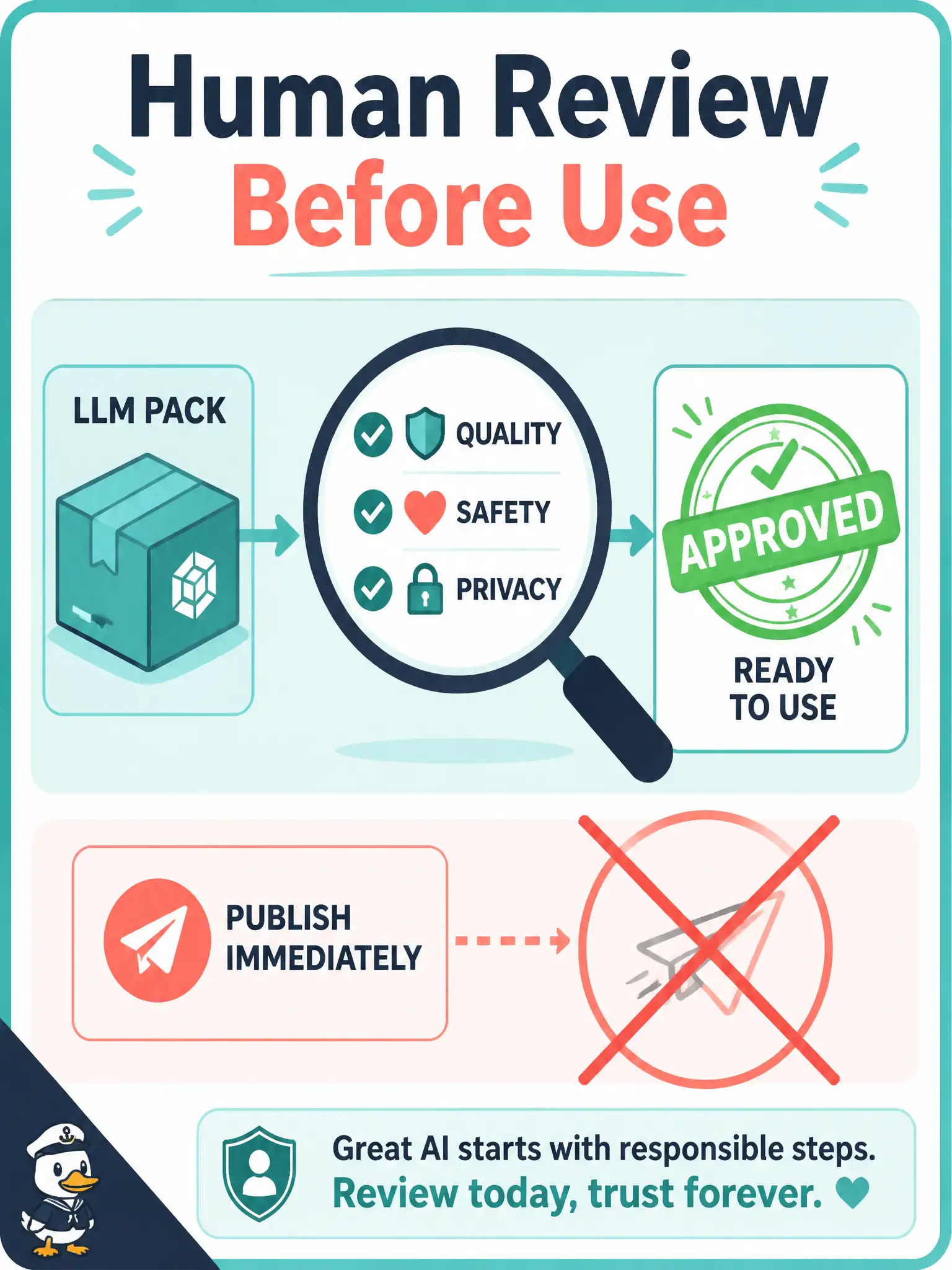
Generated scripts are like a trainee’s first inspection notes—useful only after a supervisor checks them. Systematic human review catches bad steps, wrong severities, privacy leaks, and risky code before the pack goes live. Speed and seed reruns are not that safety net.
Full Explanation
County health-inspection packs that include LLM-generated scripts and severity tables require systematic human review of the generated output for quality, safety, and privacy leaks before use. Trainee notes need a supervisor; GenAI packs need the same civic discipline.
Publishing immediately for sprint velocity fails by trading resident safety for speed. Disabling human review because GenAI is “inherently unbiased” fails both ethically and factually. Replacing review with a single random-seed rerun fails because reproducibility controls do not assess correctness, safety, or privacy.
Exam caveat: systematic review means structured checks against the inspection basis—not a casual skim of fluent text.
Operational check: checklist review for severity alignment, PII, and unsafe steps; dual control on high-severity health items; retain reviewer identity on the pack; block CI promotion until review status is pass. Health-inspection GenAI packs need a written review rubric covering severity fidelity, unsafe steps, and privacy leaks, with the reviewer’s identity retained beside the pack version. Sprint velocity goals must not waive that gate for “small” severity-table regenerations that still affect public-health signaling.