
A municipal pothole-report tester is about to paste a full citizen export—phones and emails included—into an LLM just to draft three cases. Which mitigation principle should guide the prompt?
Select an answer to reveal the explanation.
Short Explanation
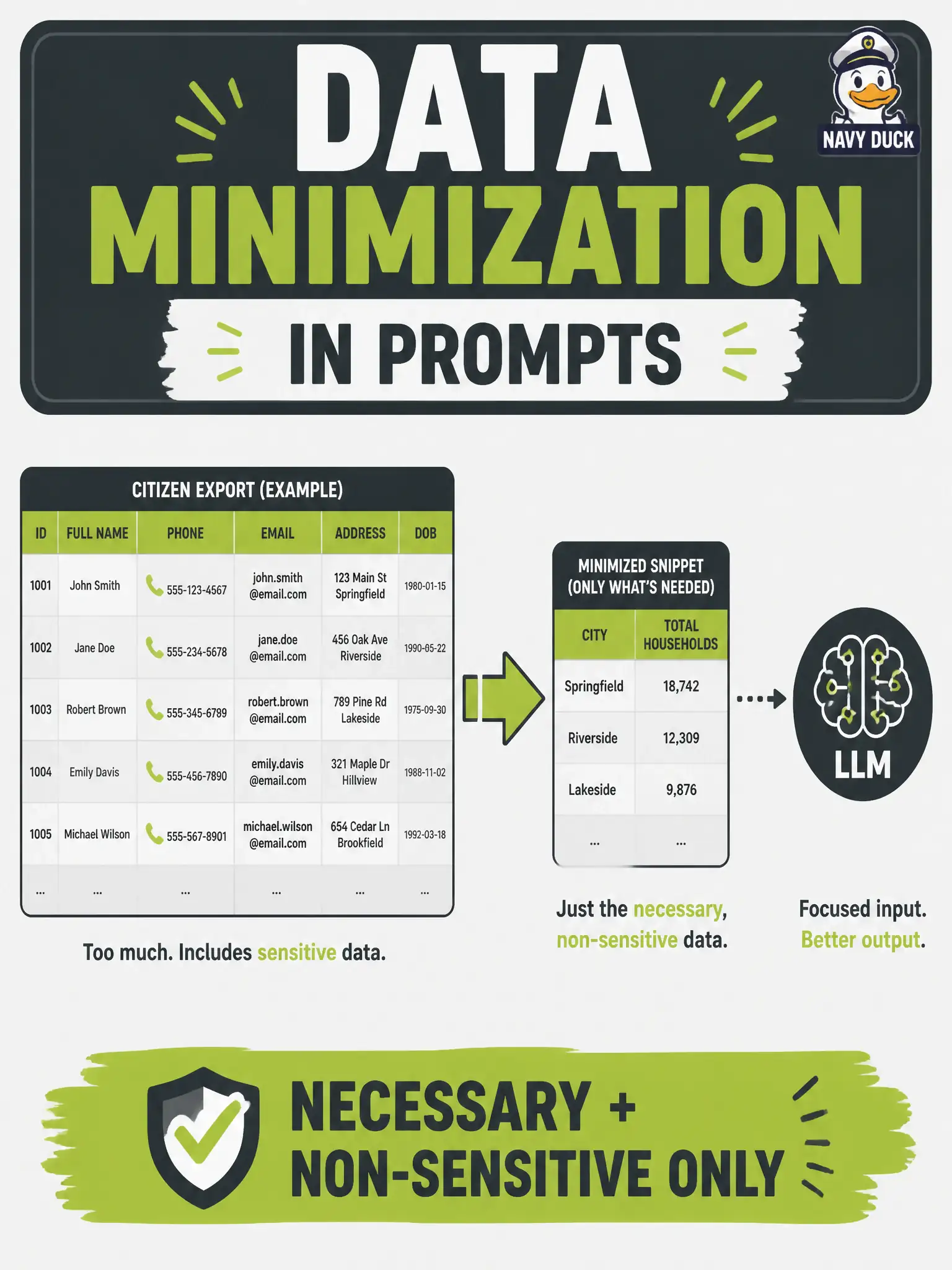
You do not need the whole citizen phone book to draft three pothole cases. Data minimization means feed only what is necessary and non-sensitive—and skip sensitive fields unless the law clearly allows it. Dumping the full export is the opposite habit.
Full Explanation
Pothole-report drafting does not require a full citizen export with phones and emails. Data minimization—use only the necessary amount of non-sensitive data, and avoid sensitive data unless legally permitted—should guide the prompt. Three cases need scenarios, not the whole phone book.
Always including the complete production export fails by concept and by privacy practice. Preferring RAG so personal data never needs review fails because retrieval does not automatically erase minimization duties. Raising temperature to scramble identifiers fails because sampling heat is not a redaction control.
Exam caveat: minimization is about necessity and sensitivity, not about crippling test design—use realistic but non-sensitive substitutes.
Operational check: define a pothole prompt template with synthetic contact fields; block paste of export CSVs into the LLM path; legal-review any exception; delete interim prompt logs that accidentally captured live phones or emails. Pothole drafting templates should ship with synthetic phones and emails filled in, and DLP rules should block live citizen-export CSV paste into the LLM prompt box. Wire DLP on the pothole drafting workstation to alert when phone or email patterns appear in prompt drafts, then coach the tester to switch to the synthetic template.