
A municipal court-scheduling strategy requires weekday, evening, and interpreter-assisted bookings, but the LLM’s synthetic data is weekday-English only. How should the tester identify this problem?
Select an answer to reveal the explanation.
Short Explanation
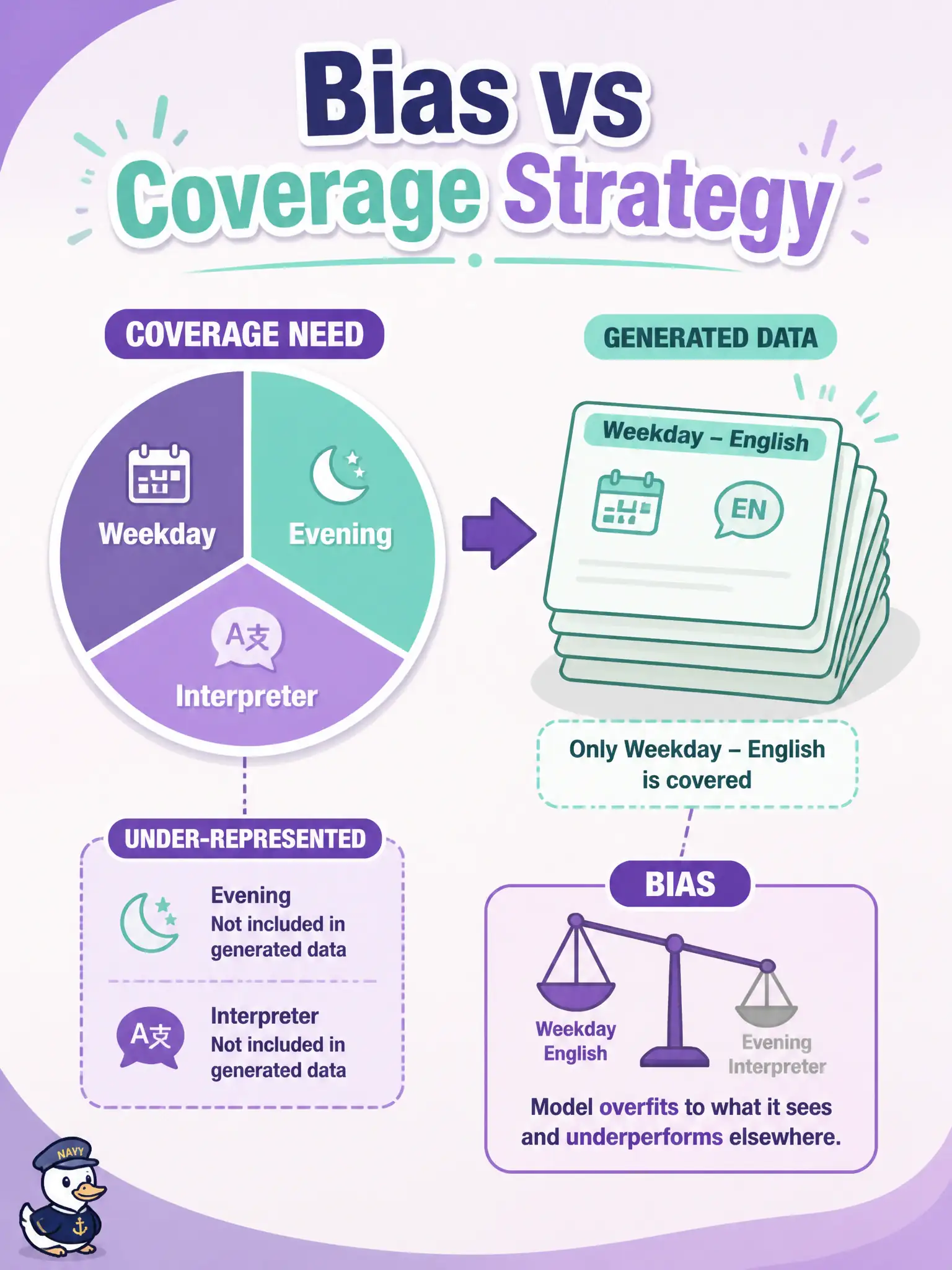
Coverage called for evenings and interpreters; the data only showed weekday English. That mismatch against the strategy is bias in the generated testware.
Full Explanation
When a municipal court-scheduling strategy requires weekday, evening, and interpreter-assisted bookings, but the LLM’s synthetic data is weekday-English only, the tester should identify the problem as bias by reviewing whether synthetic data fairly represents the defined coverage strategy. Civic courts must serve evening and interpreter-assisted residents; skewed data under-tests those publics. Calling it a reasoning error because one booking step is out of order fails when the stem’s issue is population skew versus strategy, not step order. Calling it non-determinism because a second run might add evenings fails as hopeful and not a detection method. Calling it successful because weekday cases still execute fails coverage fairness. Exam caveat: bias detection includes checking synthetic data against the agreed coverage strategy. Operational check: compare generated booking personas to the civic strategy matrix, regenerate with evening and interpreter constraints plus local language samples, and block exit until representation matches court access commitments. Retain the municipal audit note so later testers can see why the decision protects public service quality and fairness. Retain the municipal audit note so later testers can see why the decision protects public service quality and fairness.