
A community-college registration planner receives this from an LLM: “If the waitlist is full, night labs close; night labs are closed; therefore the waitlist is full.” Which defect type is this?
Select an answer to reveal the explanation.
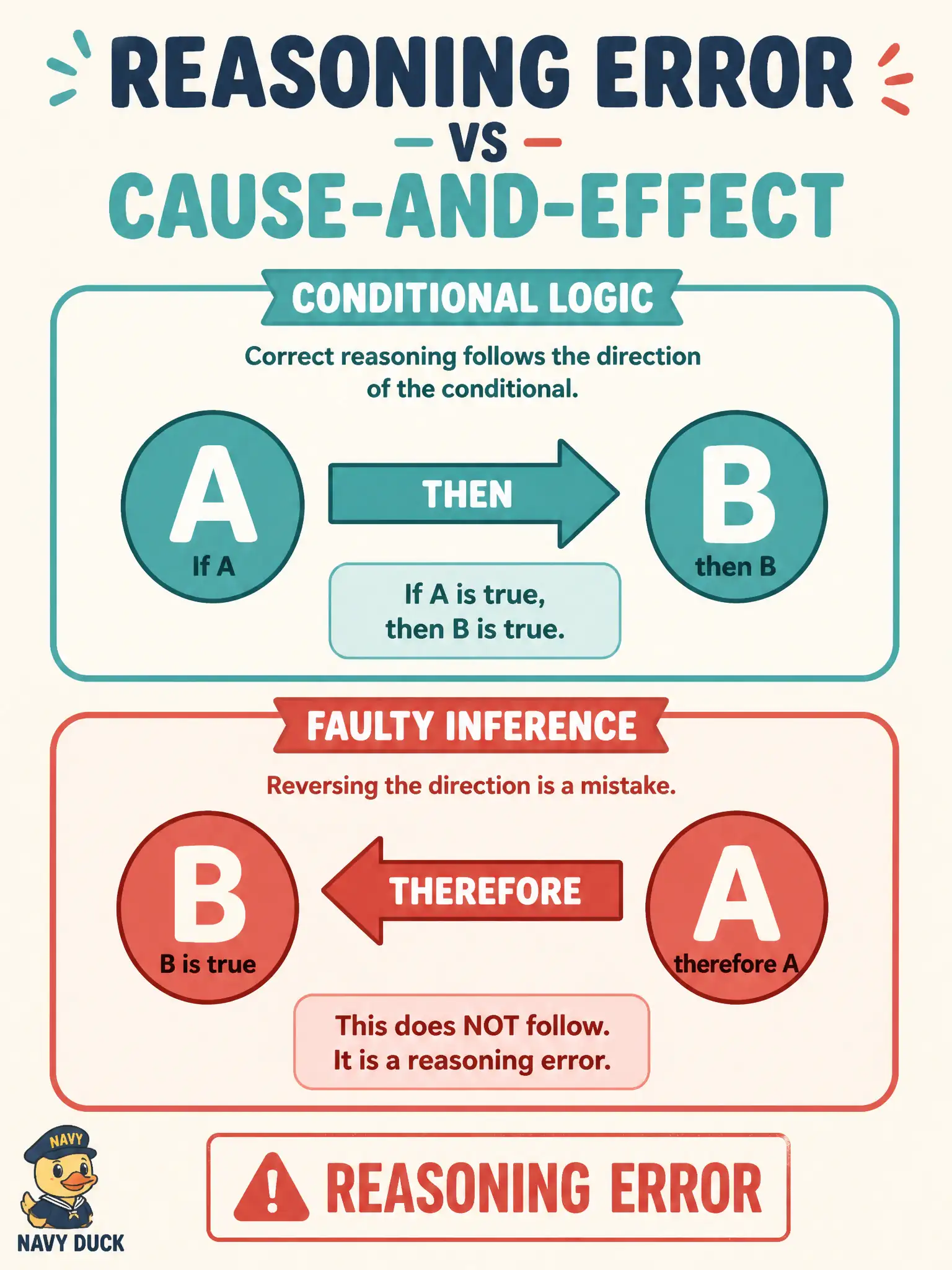
Short Explanation
Reversing an if-then is like blaming the empty parking lot for the store being closed. The model mangled logic—that is a reasoning error, not an invented extra feature.
Full Explanation
When a community-college registration planner receives “If the waitlist is full, night labs close; night labs are closed; therefore the waitlist is full,” the defect type is a reasoning error that misinterprets cause-and-effect or conditional logic. Civic enrollment logic that reverses implications can wrongly close labs or mis-prioritize tests for public students. A hallucination inventing a night-lab surcharge fails as the class when no new fee was invented—the logic itself is invalid. Bias preferring daytime enrollment names fails as a demographic skew issue not shown here. Non-determinism from token sampling fails as the primary label for a clear logical fallacy in the output. Exam caveat: affirming the consequent / reversing conditionals are reasoning errors even when wording is fluent. Operational check: logically validate GenAI planning statements against catalog rules, reject reversed waitlist inferences, add chain-of-thought or checklist constraints, and have a registrar confirm civic lab-closure logic before acting. Retain the municipal audit note so later testers can see why the decision protects public service quality and fairness. Retain the municipal audit note so later testers can see why the decision protects public service quality and fairness.