
A community seed-library suite can open the case tracker and attach a draft pack after a tester states a goal. How does an LLM-powered agent differ from a chatbot that only answers?
Select an answer to reveal the explanation.
Short Explanation
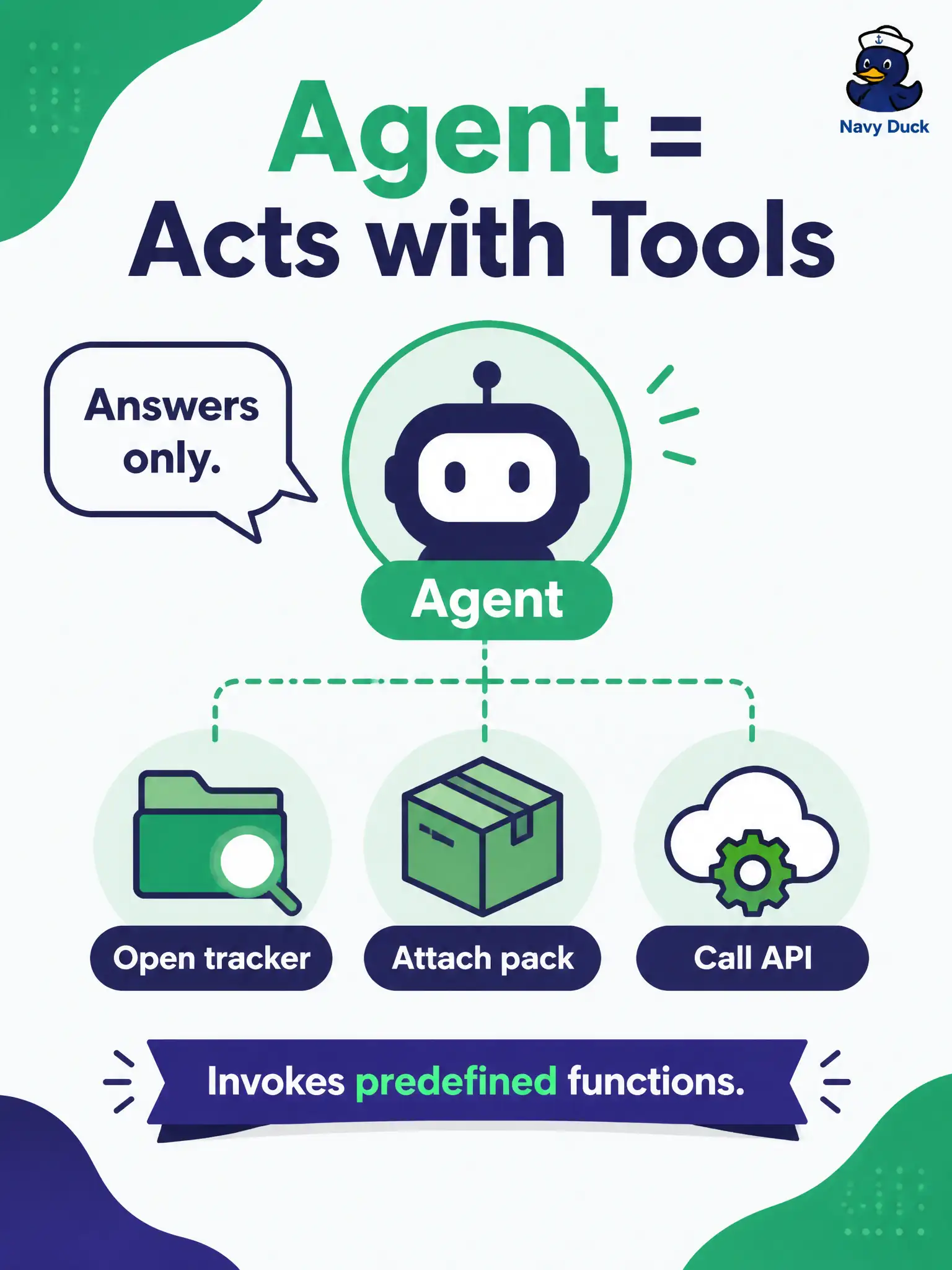
A chatbot talks; an agent also picks up tools and does the chore. Invoking predefined functions to open the tracker or attach a pack is the difference. Conversation alone is not agency.
Full Explanation
An LLM-powered agent is a specialized application that pursues a goal by invoking a predefined set of tools to interact with external systems—for example opening a community seed-library case tracker and attaching a draft pack—whereas a chatbot mainly produces conversational answers without that tool-backed action loop. Tool use is what turns language generation into workflow action inside testing. Forbidding any external function call and limiting the agent to printed definitions collapses the agent back into a passive explainer and denies the tracker-and-attach behavior the stem describes. Equating an agent with a static FAQ page that has no language model removes both the LLM and the action loop, so it is neither chatbot nor agent in the syllabus sense. Claiming an agent exists only to treat the LLM as the system under test under CT-AI confuses GenAI-for-testing infrastructure with CT-AI measurement of a model as SUT. Exam caveat: distinguish agent tool invocation from chatbot Q&A; CT-AI neuron or metamorphic work on a model-as-SUT is a different syllabus lane. Operational check: if the suite can open the tracker or attach a pack after a stated goal, classify it as agent behavior; if it only replies in chat with no tool calls, classify it as chatbot-style answering.