
A bike-share program needs the same case-generation job after every API specification drop. Which interaction model should the team prefer for that repetitive, well-defined work?
Select an answer to reveal the explanation.
Short Explanation
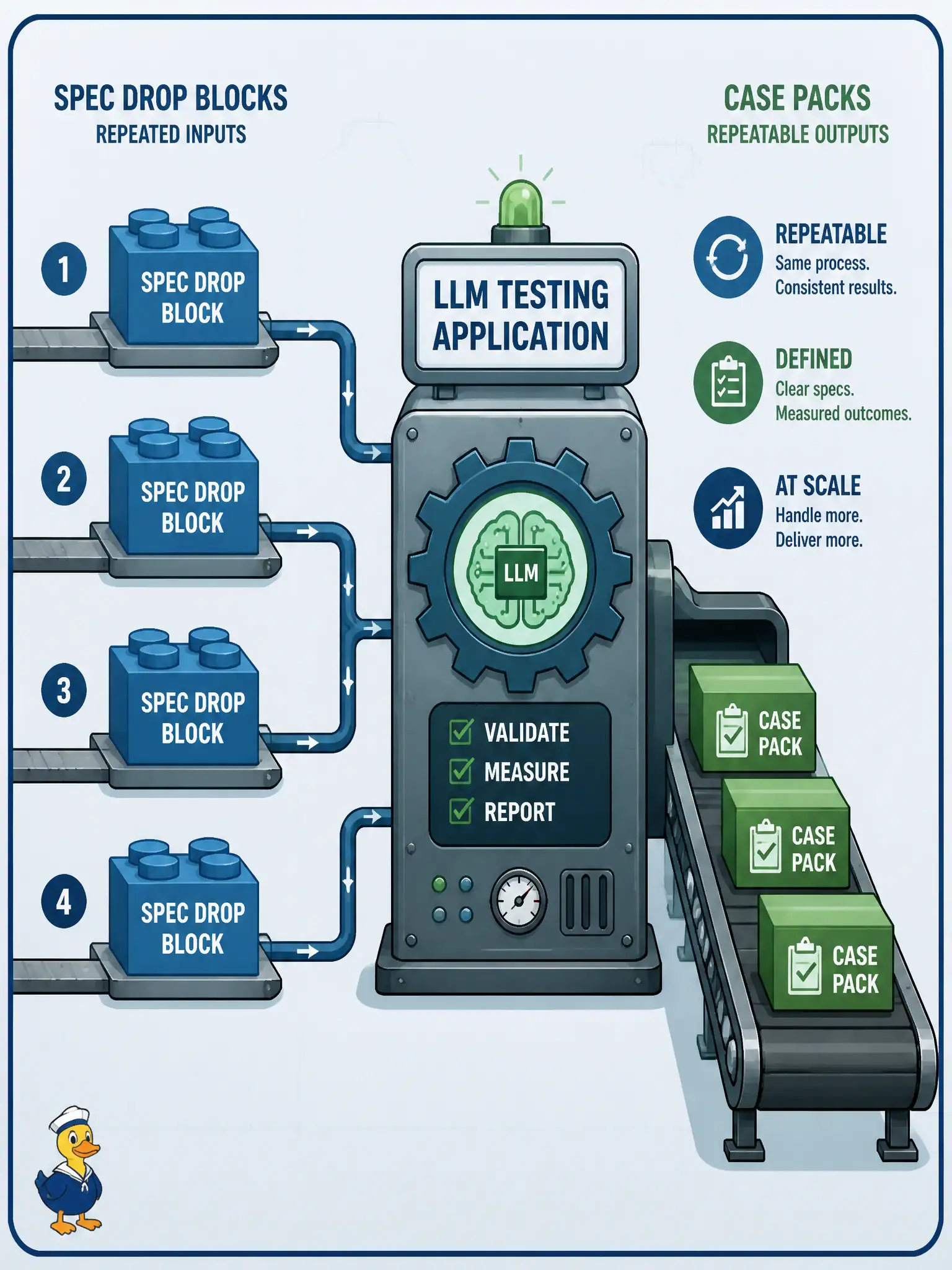
The same job after every spec drop is a factory line, not a fireside chat. An integrated LLM-powered testing application runs that defined generation reliably. Save free-form chat for questions that actually need conversation.
Full Explanation
For repetitive, well-defined case generation after every bike-share API specification drop, prefer an LLM-powered testing application integrated for repeatable generation at scale. Civic mobility APIs change often; an integrated job beats retyping prompts and preserves consistency across drops. The interaction model matches defined task plus automation, not open conversation.
An open chat pane where each engineer retypes the full prompt from scratch every drop fights scale and invites prompt drift between people. A one-off email to a vendor asking for a manual spreadsheet is neither GenAI-integrated nor repeatable in the pipeline. A red-team jailbreak session against the public bike-share chatbot misdirects into attack testing of a chat surface instead of regenerating cases from the API specification.
Exam caveat: repetitive, well-defined GenAI testing work → testing application / API integration. Chat is for flexible exploration, not the default for every specification drop.
Operational check: wire case generation to the specification-drop event or build; store the prompt template in the tool; sample-review outputs each drop; retire ad-hoc full-prompt retyping as the municipal bike-share standard path.