
A municipal night-market lead wants to drop equivalence-partitioning class because “the model covers it.” What should managers recognize instead?
Select an answer to reveal the explanation.
Short Explanation
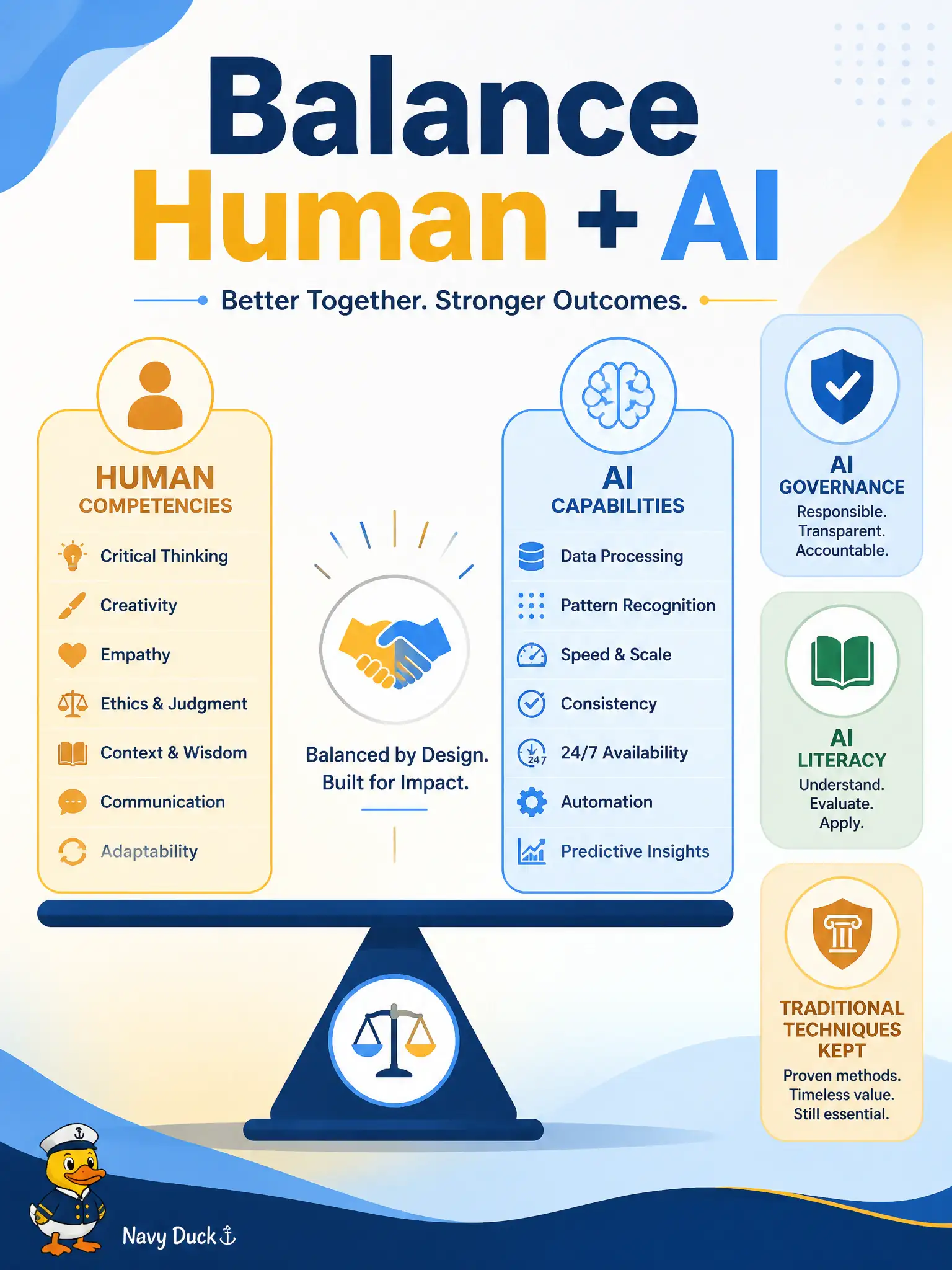
The model does not retire the craft. Managers balance people and AI, set governance for use cases, and keep traditional testing competencies alongside AI literacy. Equivalence partitioning still belongs in the toolkit.
Full Explanation
Managerial shifts include balancing human and AI capabilities, establishing AI governance for GenAI use cases, and maintaining teams’ traditional testing competencies while adding AI literacy. A municipal night-market lead who wants to drop equivalence-partitioning class because “the model covers it” should recognize that adoption adds skill; it does not scrap CTFL techniques because a model “covers it.” Traditional testing competencies cannot be retired once any LLM is available. AI governance is necessary even when the model sounds confident. AI literacy alone without CTFL technique skill leaves oracles and design judgment weak. Exam caveat: keep traditional competencies plus AI literacy under governance; confidence of the model is not a substitute. Operational check: retain equivalence-partitioning skill on the night-market team, add AI literacy, and set governance for which GenAI use cases are approved. Keep civic testware subject to the same review discipline you would apply to human-authored packs. On the written exam, prefer syllabus terminology over vendor marketing language or lab choreography. Treat fluent output as a draft until organizational quality gates and data-handling rules are satisfied.