
One municipal pop-up-stage tester already writes solid GenAI prompts, but the rest of the desk has never seen those examples. Which cultivation strategy addresses this gap?
Select an answer to reveal the explanation.
Short Explanation
Skill stuck in one head helps one desk seat. Peer learning and internal sharing spread what already works. Hide-and-hoard prompts slow the whole shop.
Full Explanation
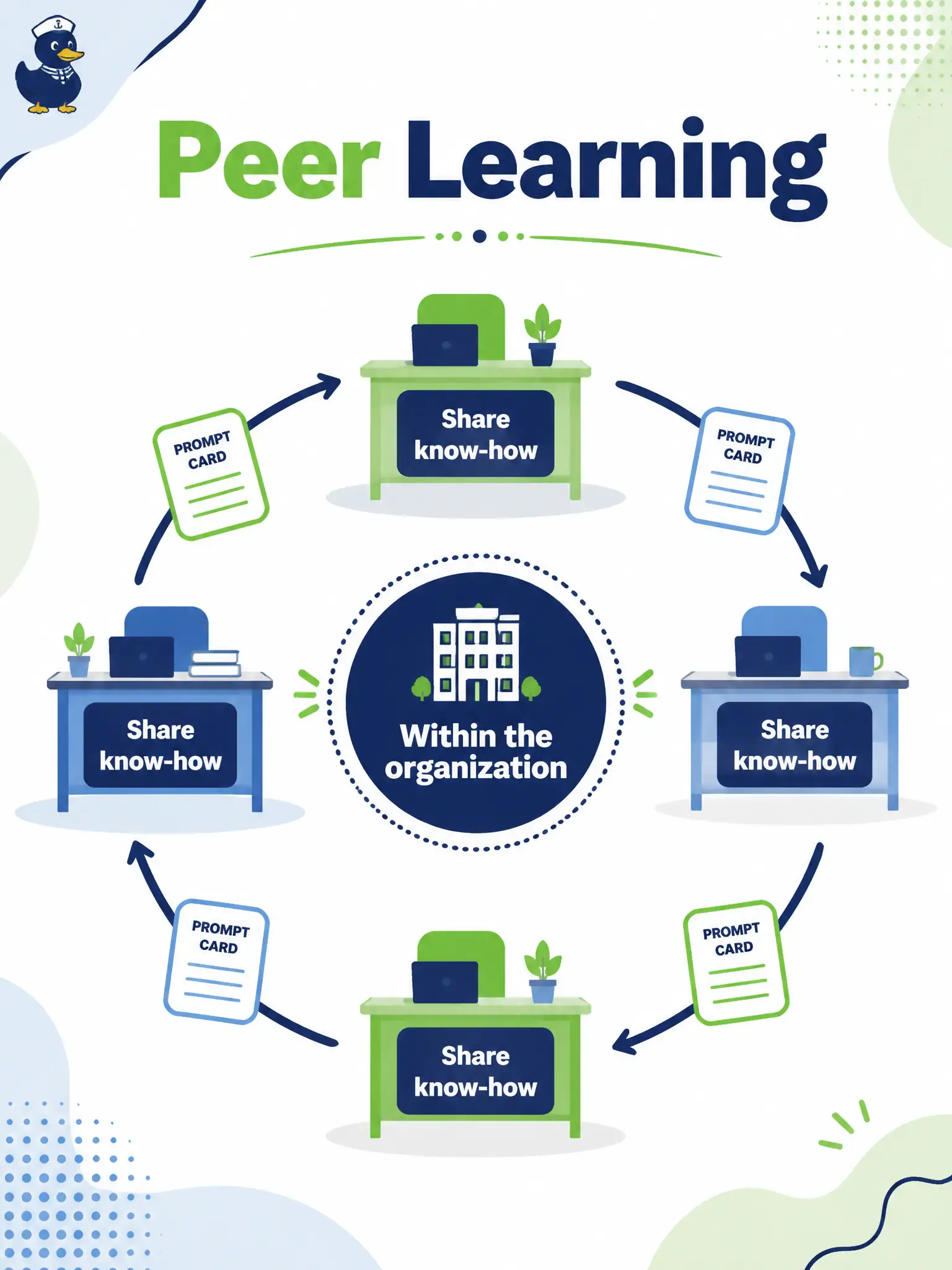
Peer learning and sharing know-how within the organization is an official cultivation strategy. When one municipal pop-up-stage tester already writes solid GenAI prompts but the rest of the desk has never seen those examples, sharing closes the gap faster than isolated invention. Keeping strong prompts private as personal competitive advantage blocks cultivation. Requiring every tester to invent prompts from scratch with no examples wastes time and spreads weak patterns. Replacing peer exchange with only external vendor webinars may help but does not substitute for internal sharing of what works on house civic tasks. Exam caveat: peer learning complements other cultivation methods; it is not optional secrecy. Operational check: schedule pop-up-stage peer sessions and share successful prompt examples across the desk under organizational norms. Keep civic testware subject to the same review discipline you would apply to human-authored packs. On the written exam, prefer syllabus terminology over vendor marketing language or lab choreography. Treat fluent output as a draft until organizational quality gates and data-handling rules are satisfied. Align the choice with GenAI-for-testing strategy rather than with CT-AI model-as-SUT measurement unless the stem asks for that lane.