
A community CNC-router booking tester treats every GenAI-generated script as safe to run without further thought. Which essential knowledge area is missing?
Select an answer to reveal the explanation.
Short Explanation
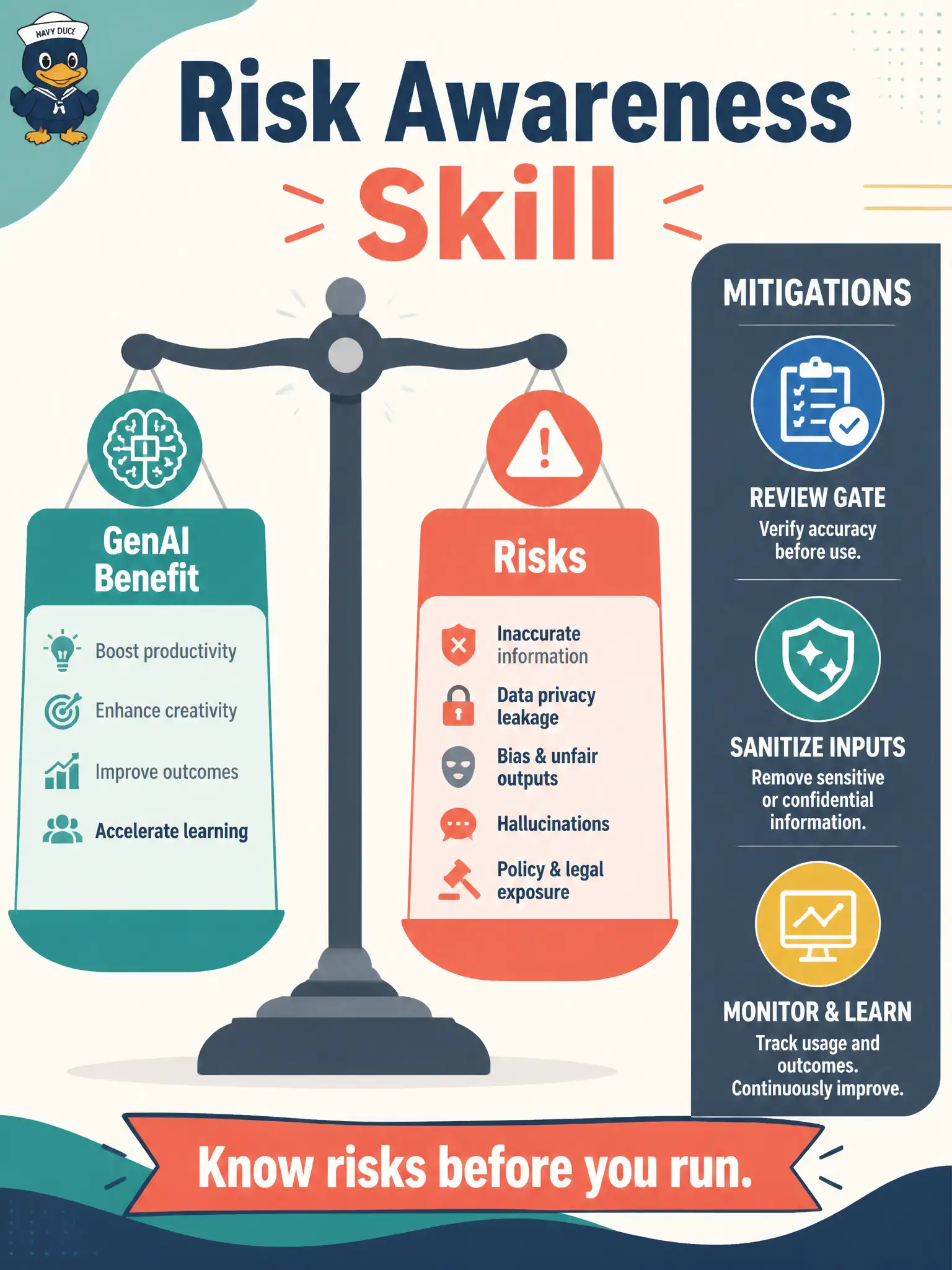
Generated scripts can look tidy and still be wrong, leaky, or unsafe to fire. Testers need risk awareness plus common mitigations—not blind trust. Knowing risks exist is the skill; the detailed catalogs live in Chapter 3.
Full Explanation
Testers need awareness of inherent GenAI risks and common mitigation strategies when using GenAI in testing. A community CNC-router booking tester who treats every GenAI-generated script as safe to run without further thought is missing that risk awareness; fluent scripts can still be wrong, unsafe, or incomplete. Memorizing every Chapter 3 risk catalog entry as a technique-selection quiz over-indexes on recall and misses practical mitigation when using GenAI for testing. Assuming generated scripts inherit safety from fluent wording is the opposite of risk awareness. Treating GenAI tools as risk-free once a sandbox account exists ignores residual hallucination, privacy, and process risks. Exam caveat: Chapter 5 asks for risk awareness and mitigations in use; it is not a pure Chapter 3 catalog quiz. Operational check: before running a GenAI-drafted CNC booking script, apply mitigations such as review, sandbox execution, and data checks rather than trusting fluency. Keep civic testware subject to the same review discipline you would apply to human-authored packs. On the written exam, prefer syllabus terminology over vendor marketing language or lab choreography. Treat fluent output as a draft until organizational quality gates and data-handling rules are satisfied.