
Testers at a community worm-bin booking desk stall a GenAI pilot because they believe the assistant will replace them. Which adoption concern should the shop recognize and address early?
Select an answer to reveal the explanation.
Short Explanation
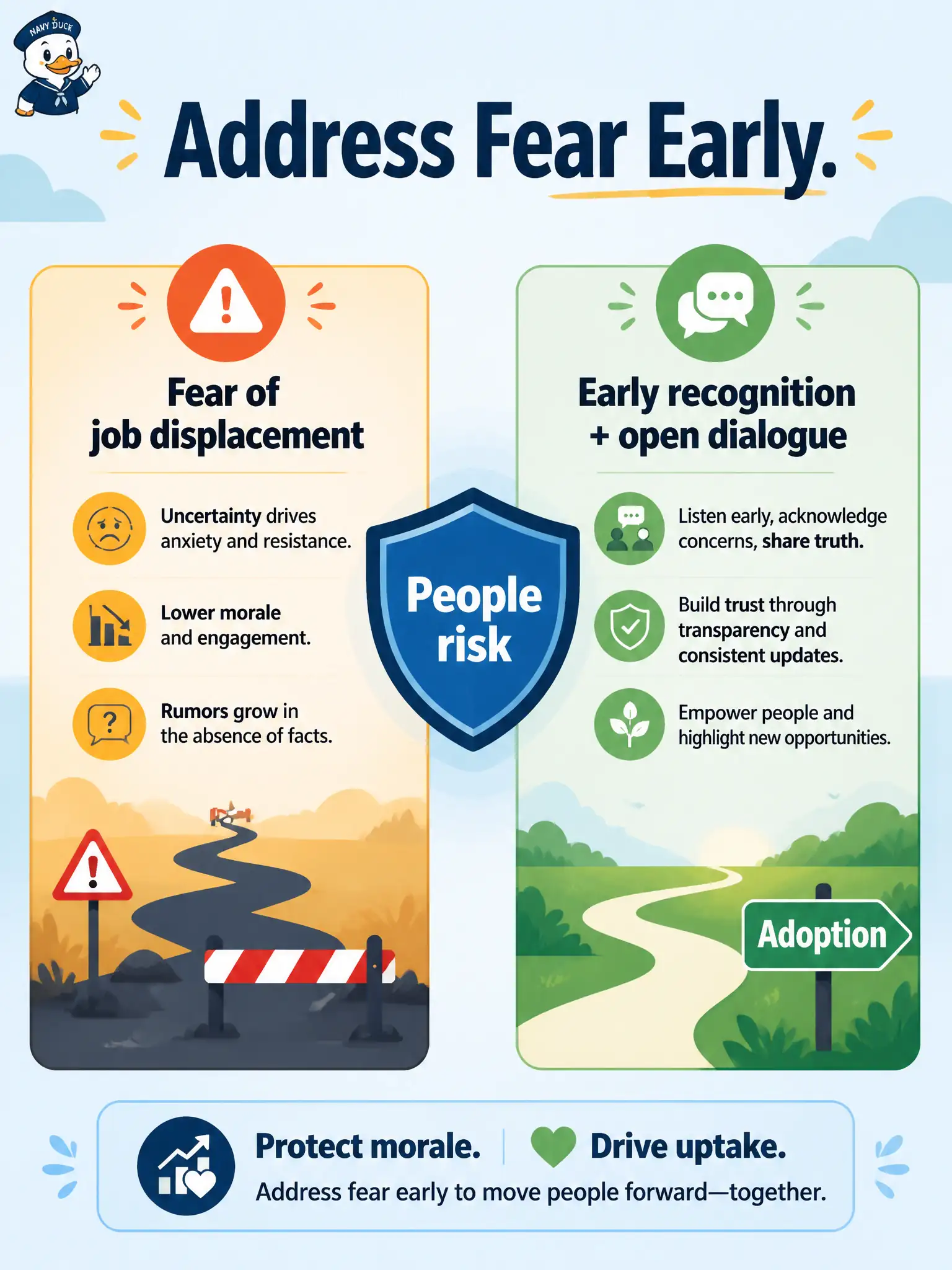
When people fear the tool will take their chair, the pilot freezes even if the tech works. Addressing job-displacement worry early protects morale and adoption. That people-risk sits beside training and tooling—not neuron metrics or prompt-technique quizzes.
Full Explanation
During GenAI adoption, organizations must recognize and address early people concerns such as fear of job displacement, which can undermine uptake and team morale. Testers at a community worm-bin booking desk who stall a GenAI pilot because they believe the assistant will replace them illustrate that concern; framing GenAI as assistance rather than replacement supports healthier change. Neuron-coverage measurement of the LLM under test is a CT-AI SUT topic, not this adoption people risk. Selecting few-shot versus chain-of-thought for every prompt is a Chapter 2 technique choice, not the displacement concern. Replacing CTFL techniques with model-only generation is a competency mistake, not the named early people risk to address. Exam caveat: measuring an LLM as SUT, picking prompting techniques, or retiring traditional competencies are separate syllabus topics and do not name this adoption risk. Operational check: open an early conversation that GenAI assists worm-bin testers; pair the pilot with role clarity and skill cultivation rather than replacement messaging. Keep civic testware subject to the same review discipline you would apply to human-authored packs. On the written exam, prefer syllabus terminology over vendor marketing language or lab choreography.