
A municipal wharf-crane booking desk now runs GenAI inside daily test work, watches progress, and adjusts so the benefit lasts. Which adoption phase does this describe?
Select an answer to reveal the explanation.
Short Explanation
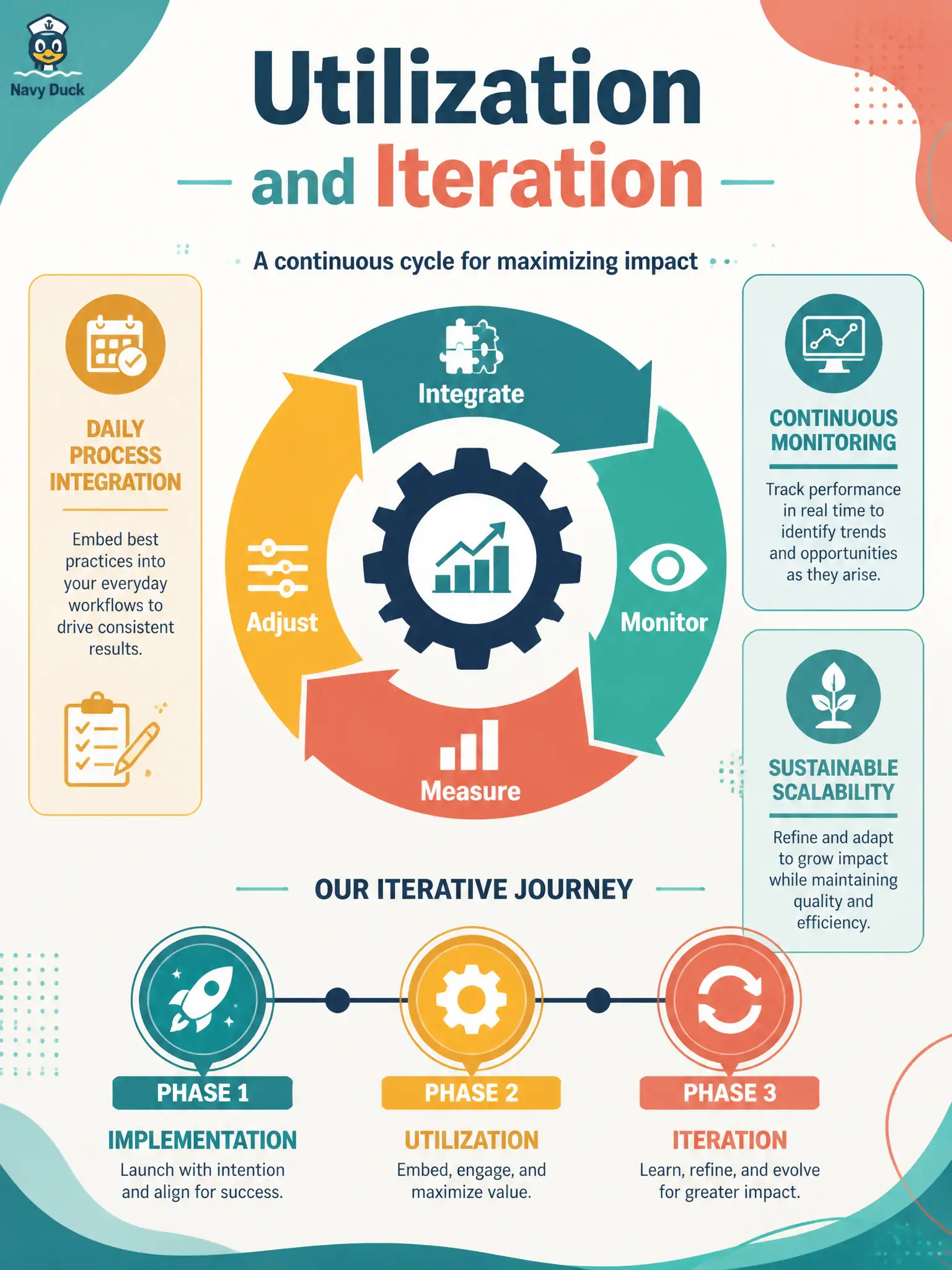
Picture the shop past the trial kitchen and into the busy dining room — GenAI is part of the daily service, and someone still tastes and tunes the menu. That ongoing integrate-monitor-adjust work is utilization and iteration. Discovery and initiation come earlier; shadow AI is unofficial sidestepping.
Full Explanation
Utilization and iteration is the advanced adoption phase: GenAI is fully integrated into daily testing, progress and tools are monitored continuously, and the transformation is measured and managed for lasting benefit and scale. A municipal wharf-crane booking desk that now runs GenAI inside daily test work, watches progress, and adjusts so the benefit lasts matches that phase. Discovery focuses on training and early experiments before lasting use cases are chosen. Initiation and usage definition ranks lasting use cases and defines how GenAI will be applied in selected activities. Shadow AI is uncontrolled personal use without organizational oversight, not an official phase. Exam caveat: utilization assumes integration and managed improvement, not informal personal tools. Operational check: if GenAI is inside daily wharf-crane testing with continuous monitoring and managed adjustment, label the phase utilization and iteration. Keep civic testware subject to the same review discipline you would apply to human-authored packs. On the written exam, prefer syllabus terminology over vendor marketing language or lab choreography. Treat fluent output as a draft until organizational quality gates and data-handling rules are satisfied.