
Midway through investigating a phishing alert on one hospital clinic workstation, a SOC analyst discovers that the attacker also accessed a shared administrative account used across three regional facilities. How should the analyst update case documentation at this stage?
Select an answer to reveal the explanation.
Short Explanation
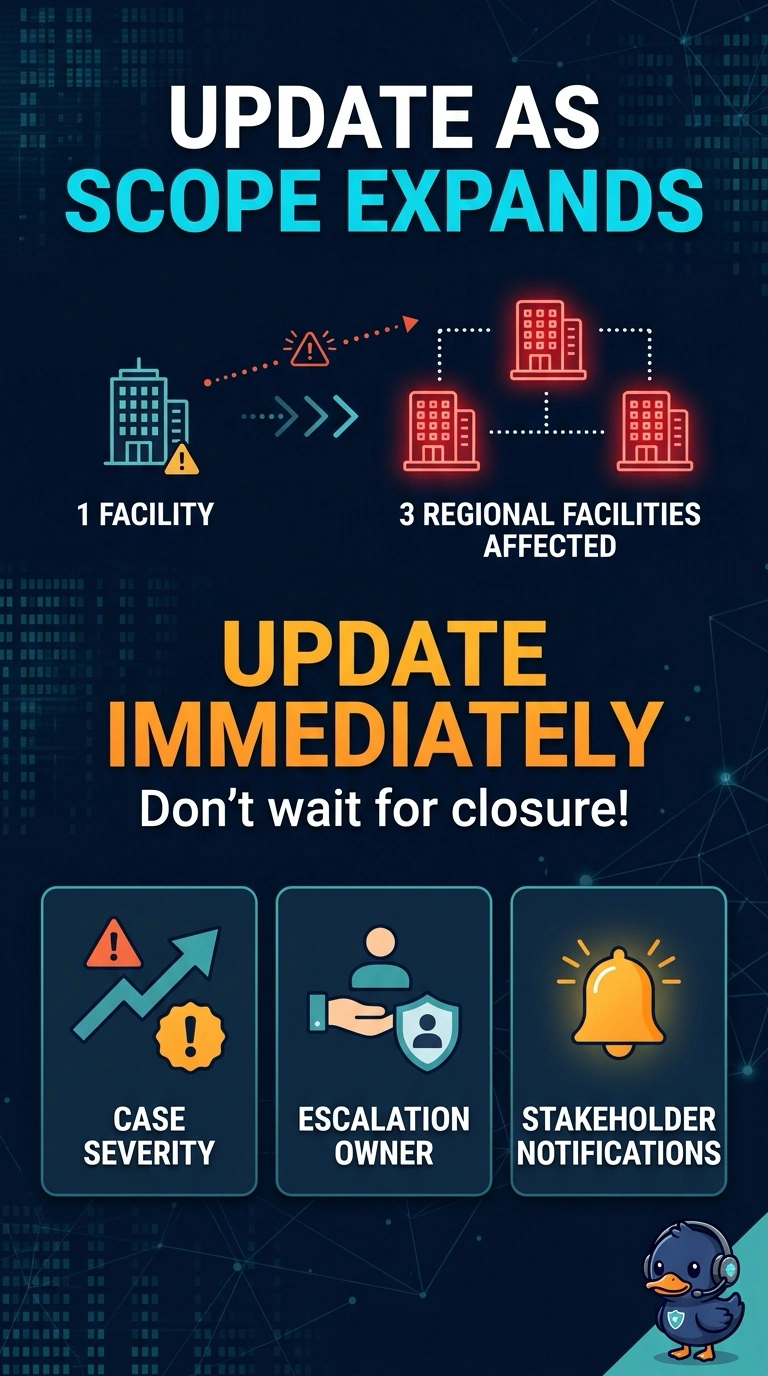
When a single-host fender bender turns into a multi-facility pileup, you cannot wait until the tow trucks leave to call for backup. Updating severity, ownership, and stakeholder records right away keeps your response team aligned while the clock is ticking.
Full Explanation
As soon as multi-facility exposure is confirmed, the analyst should Update case severity, escalation ownership, and stakeholder notifications immediately as scope expands rather than waiting for closure. Accurate live case metadata ensures that incident commanders, legal or privacy teams, and regional IT leads receive timely visibility and appropriate priority while containment is still underway. Choosing to Wait until all three facilities finish remediation before changing the initial single-host severity delays necessary escalation and leaves leadership unaware of active cross-site risk. Choosing to Open three separate unlinked cases so each regional facility tracks its own impact independently fragments shared indicators, timelines, and containment coordination across the same intrusion. Choosing to Remove the original workstation notes from the case file so leadership focuses only on the shared account erases the initial entry vector and breaks the chronological audit trail. As a caveat, update stakeholders with verified facts and clearly label areas still under active scoping so teams do not act on speculation. As an operational check, verify that the updated case record lists all affected facilities, current owner, and timestamped notification entries.
Prefer to study offline? Printable PDF study book + test engine ($7.50, unofficial). These questions stay free here.