
A healthcare clinic SOC analyst confirms that a malicious script ran on two billing workstations and hands the case to desktop support for cleanup. What should the analyst include in the case documentation so technicians can verify complete removal?
Select an answer to reveal the explanation.
Short Explanation
Handing off a vague alert label to desktop support is like telling a mechanic your car makes a funny noise without saying which wheel. Give technicians the exact artifacts so your cleanup is verifiable and complete.
Full Explanation
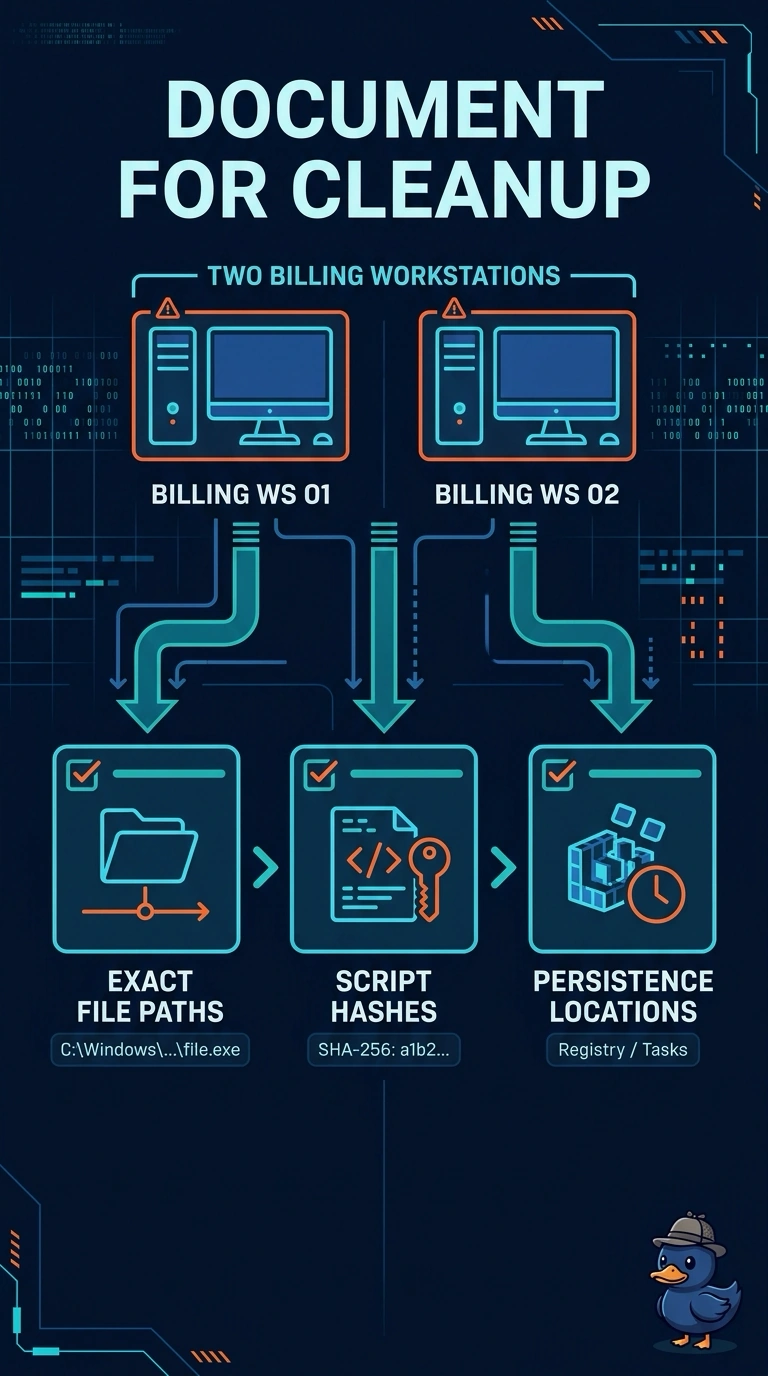
Effective handoff documentation translates SIEM findings into concrete, host-specific remediation targets. Including exact file paths, script hashes, and persistence locations observed on each workstation lets desktop support confirm they removed the right artifacts and check whether any scheduled tasks, startup entries, or copies remain. Providing only the generic threat-category name and the overall case severity rating from the SIEM leaves technicians guessing which files or registry entries to inspect. Attaching a raw export of all network flow events across the entire clinic for the past thirty days buries actionable cleanup details in unrelated traffic and slows down remediation. Issuing an instruction to reimage every workstation in the clinic without checking specific files causes unnecessary clinical disruption and skips verifying whether the script spread or persisted elsewhere. Caveat: if the attacker had administrative access or dropped additional payloads, technicians should verify host cleanliness with follow-up endpoint telemetry rather than relying solely on file deletion. Operational check: record each removed artifact's verification timestamp and confirm no related execution alerts recur on the two billing workstations.
Prefer to study offline? Printable PDF study book + test engine ($7.50, unofficial). These questions stay free here.