
During a multi-team incident at a manufacturing enterprise, network engineers block an external IP, identity admins revoke user tokens, and the SOC isolates two workstations. Why should the analyst record each action with its specific owner and timestamp in the case file rather than writing a general note that containment was completed?
Select an answer to reveal the explanation.
Short Explanation
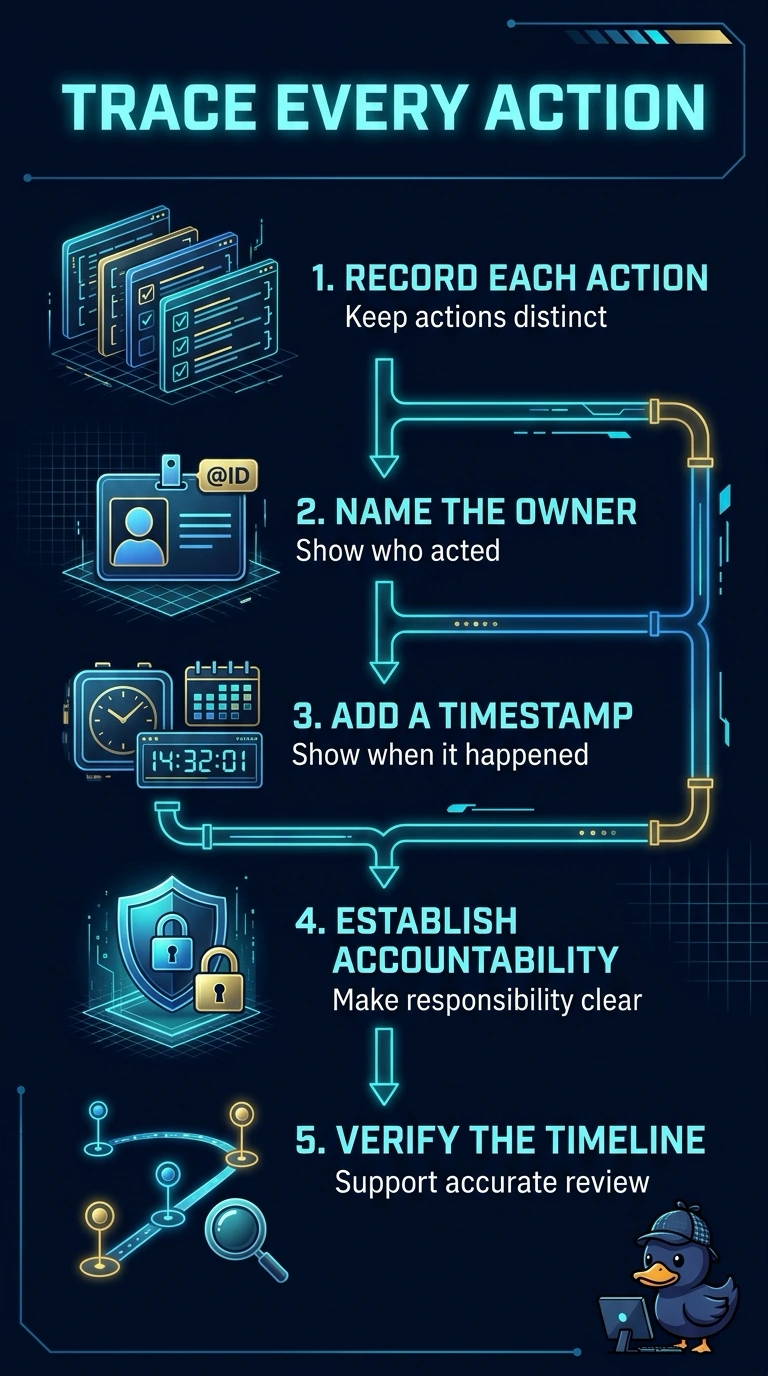
Writing 'containment completed' in a busy multi-team case is like signing a group project with nobody's name—when something still leaks, you will not know who ran what or when. Recording exact owners and timestamps lets your team verify whether an attacker acted before or after a block took effect. Do not skip attribution over myths about deleted notes or automatic playbooks.
Full Explanation
In a coordinated multi-team response, precise documentation matters because Attributing each action to an owner and timestamp establishes clear accountability and supports accurate timeline verification. When network, identity, and endpoint actions happen across different teams, exact timestamps let responders confirm whether suspicious post-containment events occurred before a token revocation or firewall block actually took effect, and named owners clarify whom to contact for verification. The claim that Falcon Next-Gen SIEM automatically deletes any case notes that do not include at least three separate team member usernames is false, as case management retains analyst notes regardless of contributor count. The claim that Recording specific owners and timestamps automatically converts the case file into a reusable Falcon Fusion SOAR playbook for future incidents confuses case documentation with SOAR workflow authoring. The claim that General summary notes prevent CQL correlation rules from triggering on the affected workstations during the next shift is incorrect because case notes do not suppress SIEM detection rules. Caveat: ensure different teams' timestamps are normalized to a single timezone such as UTC so sequence comparisons stay accurate. Operational check: verify each recorded containment step against its corresponding network, identity, or endpoint confirmation log before closing the case.
Prefer to study offline? Printable PDF study book + test engine ($7.50, unofficial). These questions stay free here.