
After containing a malware infection at a hospital, an executive asks the SOC analyst to name the specific threat group behind the attack in the investigative visual summary based on a single generic command-and-control IP. How should the analyst handle attribution in the summary?
Select an answer to reveal the explanation.
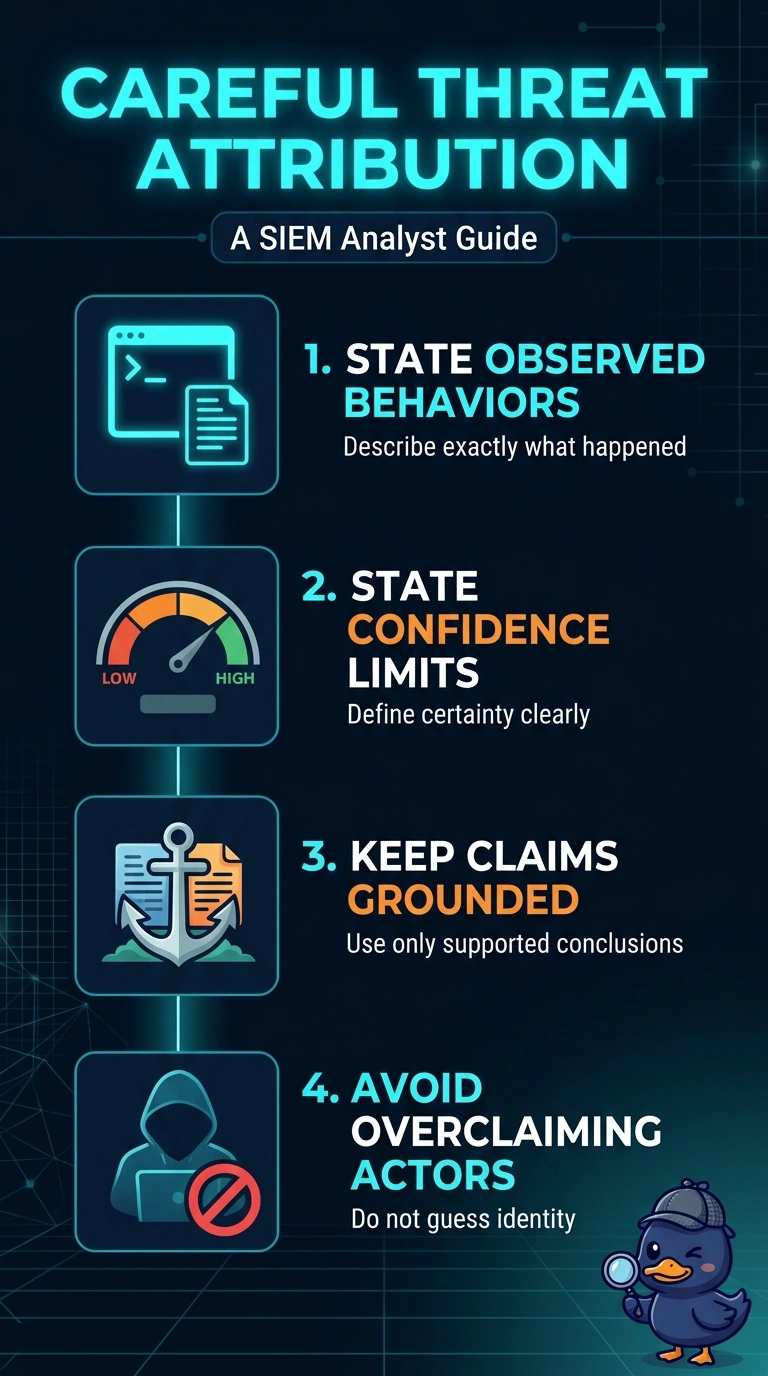
Short Explanation
You may want to give leadership a clean villain name, but one generic command-and-control IP is not enough to identify a threat group. Keep your summary useful by describing observed behaviors and clearly stating confidence limits rather than guessing; attribution should follow the evidence.
Full Explanation
Threat-actor attribution requires corroborated evidence across infrastructure, tooling, and tradecraft; a single generic command-and-control IP may be shared across cloud providers, proxies, or multiple campaigns. State observed behaviors and confidence limits clearly without overclaiming attribution, giving leadership accurate facts about impact and containment without misleading certainty. Assigning a well-known threat-group name based on the IP alone risks misinforming executives, legal teams, and regulators. Omitting all technical indicators and timeline details until formal attribution finishes delays essential operational reporting when leadership needs scope and remediation status. Copying an unverified vendor blog post’s threat-actor profile directly into the executive slide deck introduces external claims that may not match your environment’s telemetry. As an exam caveat, if leadership still needs threat context, you can note known associations for the observed malware family while marking formal attribution as unconfirmed. As a practical check, review the final summary to ensure every claim maps directly to verified case evidence.
Prefer to study offline? Printable PDF study book + test engine ($7.50, unofficial). These questions stay free here.