
Midway through investigating a suspected credential compromise at a retail company, an analyst must send an interim status update to executive leadership while the initial entry vector is still unconfirmed. What should the analyst include?
Select an answer to reveal the explanation.
Short Explanation
Executive updates work best when you separate what you know from what you are still testing, like a weather bulletin that reports current conditions without guessing next week's storm track. The trap is speculating on an unverified root cause that you may have to retract later.
Full Explanation
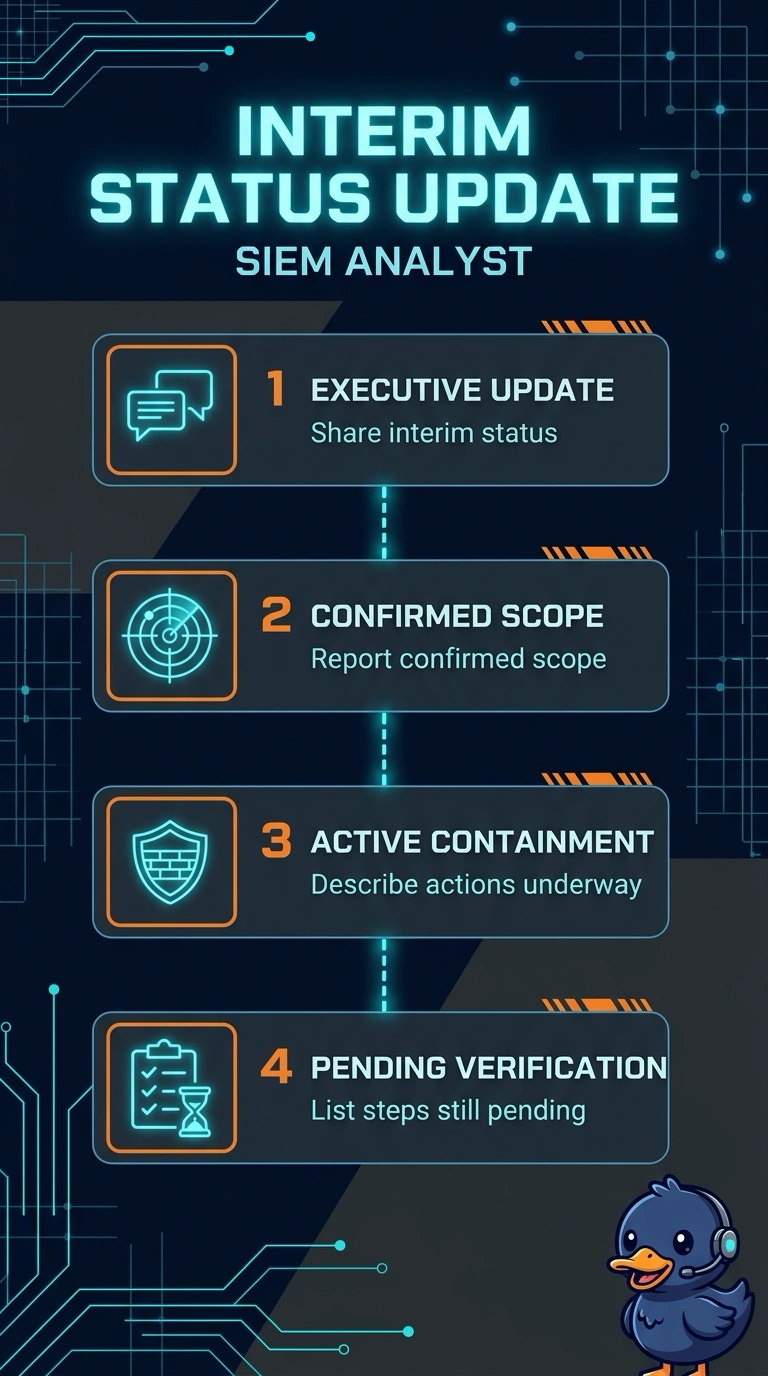
Clear incident communication keeps stakeholders informed without overstating unverified hypotheses, which is why Confirmed scope, active containment actions, and pending verification steps is the best choice. Summarizing verified impact, containment already in place, and remaining investigative milestones gives leadership actionable visibility while preserving accuracy. Including A provisional root-cause statement naming the most likely phishing campaign risks anchoring decision-makers on an unconfirmed theory that later evidence could overturn. Sending Raw CQL event records and full firewall logs so leaders can inspect the evidence overwhelms non-technical executives with unparsed technical detail instead of decision-ready context. Providing Only a brief message promising a full report once the case is closed leaves stakeholders without the current risk posture or containment status they need during an active event. As a caveat, label every open question clearly so leadership understands which findings remain preliminary. For an operational check, cross-check every metric in the update against verified entries in the case record before sending.
Prefer to study offline? Printable PDF study book + test engine ($7.50, unofficial). These questions stay free here.